market
Trump Threatens 100% Tariff on European Tech Tax Plans
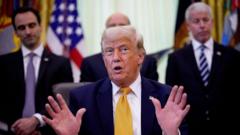
US President Trump threatens 100% tariff on European nations discussing tech tax levies, raising trade policy and technology sector questions.
US President Donald Trump has threatened to impose a 100% tariff on European nations over discussions of a European tech tax, according to BBC Business. The president stated that "numerous European countries" have been discussing bringing in such a levy, escalating trade policy tensions between the United States and Europe over technology sector taxation and digital economy regulation.
Key takeaways
US President Trump threatened a 100% tariff on European nations over tech tax discussions, according to BBC Business
The president stated that "numerous European countries" have been discussing bringing in such a levy
The announcement raises questions about trade policy, technology sector taxation, and transatlantic economic relations
Market readers may watch for European government responses, US trade policy details, and technology company reactions
Table of Contents
What happened
Political context
Who is affected
What to watch next
What happened
US President Donald Trump announced that he would threaten a 100% tariff on European nations over discussions of a European tech tax, according to BBC Business. The president stated that "numerous European countries" have been discussing bringing in such a levy, though the source context does not specify which countries, the proposed tax rate, the tax structure, the affected technology companies, or the timeline for implementation. The announcement represents a direct trade policy response to European digital taxation discussions.
The source context does not identify whether the tariff threat refers to existing European tech tax proposals, new discussions, or general policy direction. The available source context does not specify whether any European nation has formally enacted a tech tax, whether the United States has issued formal trade policy documentation, or whether the tariff threat applies to all European Union member states or a subset of countries. Readers should treat the announcement as a confirmed presidential statement with limited operational detail.
Political context
Technology taxation has been a recurring point of tension between the United States and European governments. Some European policymakers have argued that large technology companies should pay taxes based on where revenue is generated, not just where corporate headquarters are located. The United States has historically opposed unilateral digital services taxes, arguing that they disproportionately target American technology companies and undermine international tax coordination efforts. The source context does not specify whether the current tariff threat relates to specific European tax proposals or broader policy discussions.
For readers following broader market updates , trade policy announcements can matter because they may influence investor expectations about regulatory risk, cross-border commerce, technology sector profitability, and geopolitical economic relations. Tariff threats can create uncertainty for multinational companies, supply chain planners, and investors evaluating international revenue exposure. The source context does not identify whether the tariff threat has triggered formal diplomatic responses, trade negotiations, or policy adjustments.
Who is affected
The tariff threat could affect European governments considering technology taxation, US technology companies with significant European revenue, European consumers and businesses using US technology services, and investors evaluating technology sector risk. The source context does not specify which technology companies could face European tax exposure, which European countries are actively discussing tech tax proposals, or which products and services could be subject to tariffs. Without additional details, market readers should avoid assuming specific company impact, revenue exposure, or sector-wide effects.
Trade policy uncertainty can matter for investors because it may influence how companies allocate capital, manage regulatory risk, and plan international operations. Technology companies often generate significant revenue from international markets, and changes in tax policy or trade barriers can affect profitability, competitive positioning, and long-term growth strategies. The source context does not identify whether any technology company has issued a public response, whether European governments have adjusted tax proposals, or whether the United States has provided additional trade policy guidance.
What to watch next
Market readers may watch for several developments. European government responses to the tariff threat could clarify whether countries plan to proceed with tech tax proposals, adjust policy direction, or seek negotiated solutions. US trade policy details, including formal tariff documentation, affected product categories, and implementation timelines, would help investors assess the scope and likelihood of trade action. Technology company statements, earnings guidance updates, and regulatory filings could provide insight into how businesses are evaluating European tax risk and US trade policy uncertainty.
Investors may also monitor international tax coordination efforts, including Organisation for Economic Co-operation and Development (OECD) discussions on global digital taxation frameworks. Broader trade policy developments, including US-Europe economic relations, technology sector regulation, and cross-border commerce trends, could provide additional context for understanding the tariff threat. The source context does not specify whether the United States has set a deadline for European policy changes, whether formal trade negotiations are underway, or whether the tariff threat represents a negotiating position or a firm policy commitment. Readers should watch for future disclosures, official government statements, and company updates to assess the practical impact of the announcement.
Read original source