market
US Aid Ships Return to Venezuela After Twin Earthquakes
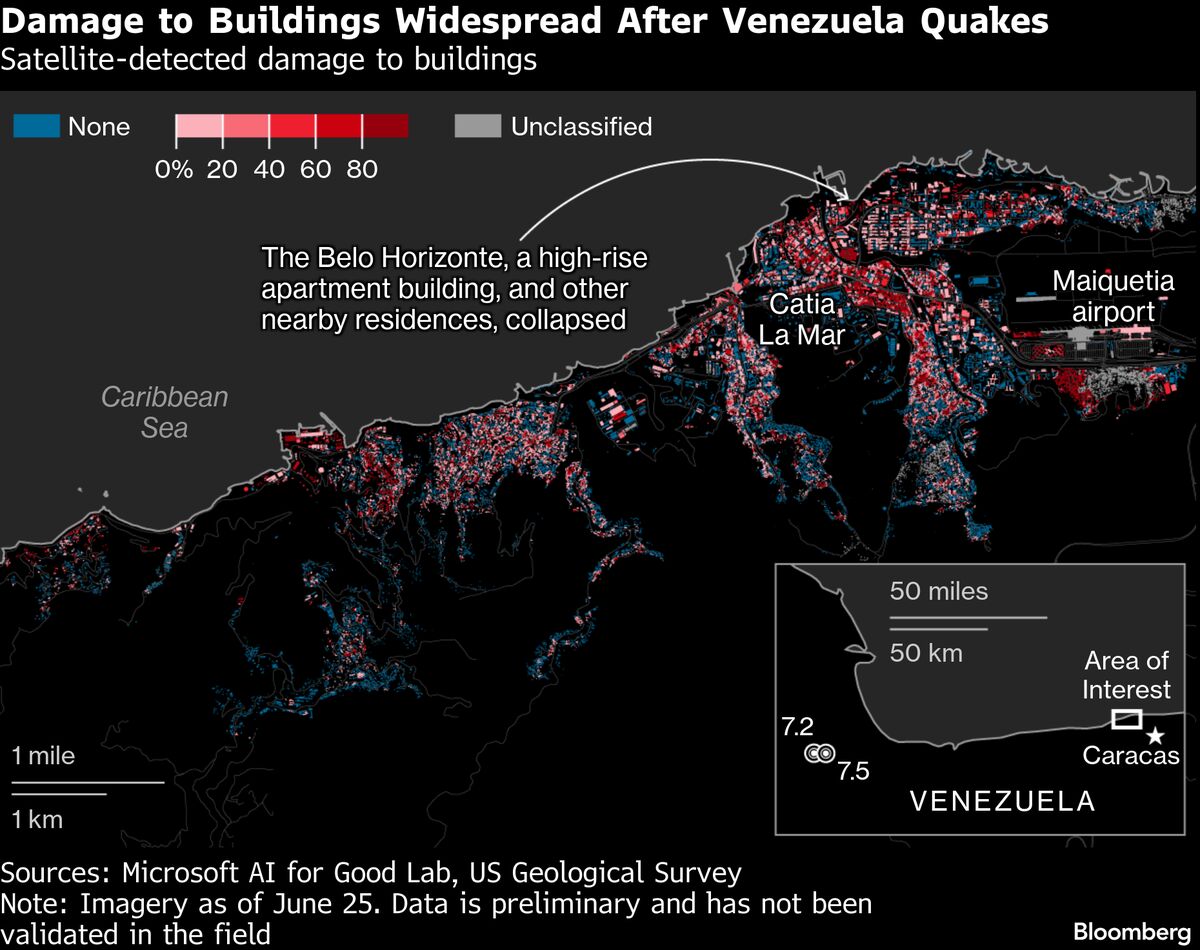
US military ships previously used in Venezuela blockade now carry rescue teams and medical aid after devastating twin earthquakes struck the country.
Two US military ships previously deployed in a blockade aimed at pressuring Venezuelan President Nicolás Maduro have redirected toward Venezuela carrying rescue teams, equipment, and medical aid following devastating twin earthquakes that struck the country this week, according to Bloomberg Markets. The shift from enforcement to humanitarian assistance marks a significant operational pivot as aid groups mobilize in response to the natural disaster.
Key takeaways
Two US military ships previously used in a Venezuela blockade are now carrying rescue teams, equipment, and medical aid
The deployment follows devastating twin earthquakes that struck Venezuela this week
Aid groups are mobilizing in what Bloomberg Markets describes as a search-and-rescue frenzy
The operational shift from blockade enforcement to humanitarian assistance reflects the scale of the disaster response
Table of Contents
Humanitarian Response Details
Political and Diplomatic Context
Impact and Implications
What to Watch
Humanitarian Response Details
Bloomberg Markets reported that two US military vessels that had been stationed as part of a blockade designed to apply pressure on the Maduro government are now heading back toward Venezuelan territory. The ships are carrying rescue teams, specialized equipment, and medical supplies in response to twin earthquakes that struck Venezuela during the current week. The source describes the broader aid mobilization as a search-and-rescue frenzy, indicating multiple organizations are responding to the disaster.
The available source does not specify the magnitude of the earthquakes, the specific regions affected within Venezuela, casualty figures, infrastructure damage assessments, or the exact timeline of when the earthquakes occurred beyond the general reference to this week. The source also does not identify which US military vessels are involved, their current locations, expected arrival times, the size of the rescue teams aboard, or the specific types of medical aid and equipment being transported.
Political and Diplomatic Context
The deployment of US military assets for humanitarian purposes follows a period during which those same vessels were used as part of a blockade strategy aimed at pressuring the Maduro government. The transition from enforcement operations to disaster relief reflects the international humanitarian response framework that often supersedes ongoing political tensions during acute crises. For readers following broader general market briefs , this type of geopolitical shift can matter because it illustrates how natural disasters can temporarily alter diplomatic and military postures between nations with strained relations.
Venezuela has faced prolonged economic challenges, international sanctions, and political isolation under the Maduro administration. Natural disasters in countries experiencing governance stress and limited infrastructure resilience can amplify humanitarian needs and complicate response coordination. The source does not specify whether the US government issued formal statements about the aid deployment, whether diplomatic channels were used to coordinate access, or whether the Maduro government has publicly responded to the assistance offer.
Impact and Implications
The immediate impact falls on Venezuelan citizens in earthquake-affected areas who require search-and-rescue operations, emergency medical care, and humanitarian relief. Aid groups mobilizing in response to the disaster will work alongside local authorities and international organizations to provide assistance. The source does not identify which specific aid organizations are participating, the scale of their operations, or the coordination mechanisms being used on the ground.
For investors and market readers, natural disasters in countries with existing economic vulnerabilities can influence regional stability assessments, commodity markets if production or export infrastructure is damaged, and humanitarian sector activity. The source does not provide information about economic impact, damage to oil production facilities, effects on Venezuela's export capacity, or broader regional economic consequences. Readers should treat the event as a confirmed humanitarian response with limited operational detail available from the current source.
What to Watch
Market readers and policy observers may monitor future disclosures regarding the scale of earthquake damage, casualty figures, infrastructure assessments, and the scope of international aid coordination. Additional details about US government policy toward Venezuela in the context of disaster relief, whether the aid deployment represents a temporary humanitarian exception or signals broader diplomatic engagement, and how the Maduro government responds to international assistance would provide useful context.
Future source updates may clarify which regions within Venezuela were most affected, the timeline for rescue operations, the number of aid personnel deployed, and whether additional international resources are being mobilized. Readers should watch for official statements from US government agencies, Venezuelan government responses, updates from international aid organizations, and any assessments of long-term reconstruction needs.
Read original source