tech-ai
US-Iran Peace Talks Resume After Strait of Hormuz Clashes
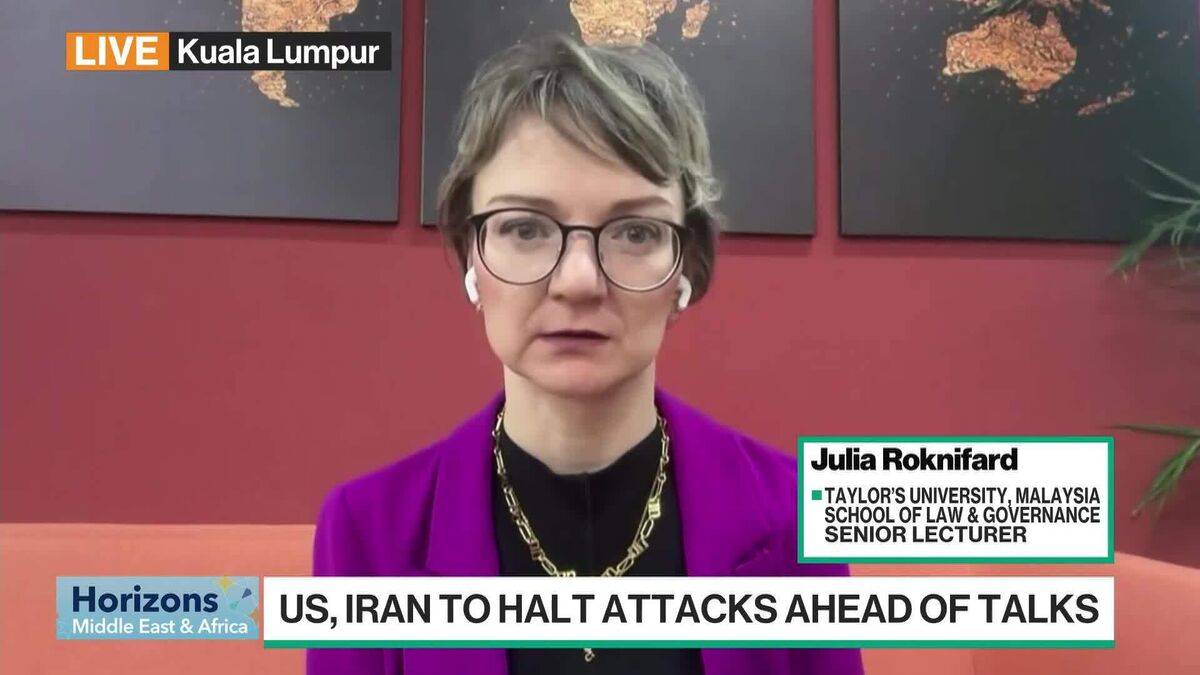
US and Iran agreed to cease attacks as peace talks resume after clashes over the Strait of Hormuz, Bloomberg Markets reported on June 29, 2026.
The United States and Iran have agreed to cease attacking each other as peace talks resume, following a series of exchanges over the Strait of Hormuz that began when the Islamic Revolutionary Guard Corps struck a container ship, according to Bloomberg Markets. The exchange prompted Washington to hit Iran, with both sides blaming the other for breaching the ceasefire, Bloomberg Markets reported on June 29, 2026.
Julia Roknifard, Senior Lecturer at the School of Law & Governance at Taylor's University, Malaysia, discussed the likely scenario ahead in an interview with Bloomberg's Jennifer Zabasajja on Horizons Middle East and Africa, stating that US-Iran talks will only be substantial if the fighting stops.
Key takeaways
The US and Iran agreed to cease attacks as peace talks resume, Bloomberg Markets reported
The exchange of attacks began over the Strait of Hormuz after the IRGC struck a container ship, prompting a US response
Both sides have blamed the other for breaching the ceasefire, according to Bloomberg Markets
Julia Roknifard stated that US-Iran talks will only be substantial if the fighting stops
Table of Contents
What Happened Over the Strait of Hormuz
Geopolitical Context and Market Implications
Who Is Affected by the Ceasefire Agreement
What to Watch Next
What Happened Over the Strait of Hormuz
Bloomberg Markets reported that the United States and Iran have agreed to cease attacking each other as peace talks resume. The exchange of attacks began over the Strait of Hormuz after the Islamic Revolutionary Guard Corps struck a container ship, prompting Washington to hit Iran, according to the source.
Both sides have blamed the other for breaching the ceasefire, Bloomberg Markets reported. The source did not provide details on the timing of the initial ceasefire, the specific targets of the US response, or the extent of damage from either side's actions.
Julia Roknifard, Senior Lecturer at the School of Law & Governance at Taylor's University, Malaysia, spoke to Bloomberg's Jennifer Zabasajja on Horizons Middle East and Africa about the likely scenario ahead. According to Bloomberg Markets, Roknifard stated that US-Iran talks will only be substantial if the fighting stops.
Geopolitical Context and Market Implications
The Strait of Hormuz is a critical maritime chokepoint for global energy markets, with a significant portion of the world's oil and liquefied natural gas passing through the narrow waterway. Disruptions to shipping in the Strait of Hormuz can influence energy prices, supply chain reliability, and geopolitical risk assessments.
For readers following broader market updates , geopolitical developments in the Strait of Hormuz can matter because they may influence energy market sentiment, shipping insurance costs, and investor attention to supply chain risk.
The source did not specify the type of container ship struck, the cargo involved, the nationality of the vessel, or include details on market reaction, energy price movements, or statements from shipping companies or insurers.
Who Is Affected by the Ceasefire Agreement
The ceasefire agreement and resumed talks could affect a range of stakeholders, including energy markets, shipping companies, regional governments, and investors monitoring geopolitical risk. The source did not specify which countries or organizations are participating in the peace talks, whether any mediators are involved, or what specific issues are on the agenda.
For energy markets, the Strait of Hormuz is a key focus because disruptions can influence oil and gas supply routes. For shipping companies, the security of the waterway can affect route planning, insurance costs, and operational risk. For regional governments, the talks could influence diplomatic relations, security arrangements, and economic cooperation.
Bloomberg Markets did not provide details on the duration of the ceasefire, the mechanisms for monitoring compliance, the consequences of further breaches, or statements from any of these groups regarding their responses to the ceasefire agreement.
What to Watch Next
Market readers may watch for future disclosures from the US government, Iranian officials, or international organizations regarding the format, scope, and progress of the peace talks. The source did not provide details on the timeline for the talks, the specific issues under negotiation, or the criteria for measuring success.
Readers may also monitor reports on shipping activity in the Strait of Hormuz, energy market reactions, and any statements from regional governments or international mediators. Bloomberg Markets did not include details on the likelihood of further ceasefire breaches, the prospects for a broader diplomatic agreement, or the potential impact on energy markets.
Julia Roknifard's statement that US-Iran talks will only be substantial if the fighting stops suggests that sustained de-escalation is a prerequisite for meaningful progress, according to Bloomberg Markets. Without additional details, the event should be treated as a confirmed headline with limited operational detail.
Read original source