market
US to Probe Gas Price Gouging Claims, Trump Says
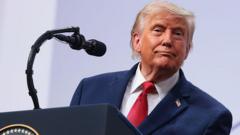
President Trump announces probe into gas price gouging claims as global oil prices remain elevated following US-Israel war with Iran.
According to BBC Business, the United States will investigate gas price gouging claims, President Trump announced. The president's remarks come as global oil prices have fallen but remain higher than before the US-Israel war with Iran. The announcement signals federal scrutiny of retail fuel pricing at a time when crude oil markets have declined from recent peaks yet consumers continue to face elevated costs at the pump.
Key takeaways
President Trump announced the US will probe gas price gouging claims
Global oil prices have fallen but remain higher than before the US-Israel war with Iran
The investigation targets the gap between crude oil price movements and retail gas costs
Price gouging probes typically examine whether retailers are maintaining margins beyond what wholesale cost changes justify
Table of Contents
What happened
Why it matters
What to watch next
What happened
President Trump stated that the United States will investigate gas price gouging claims, according to BBC Business. The announcement follows a period during which global oil prices have fallen but remain higher than before the US-Israel war with Iran. The president's remarks indicate that federal authorities will examine whether fuel retailers are charging consumers prices that do not reflect the recent decline in crude oil costs.
The timing of the investigation announcement coincides with a disconnect between wholesale energy markets and retail fuel prices. While global oil benchmarks have retreated from recent highs, the president's statement suggests that retail gas prices have not declined proportionally. This gap between crude oil price movements and what consumers pay at the pump has prompted the federal probe into potential pricing practices by fuel retailers and distributors.
Why it matters
Gas price gouging investigations examine whether retailers are exploiting market conditions to maintain profit margins beyond what changes in wholesale costs justify. In general market context, such probes typically focus on the lag between crude oil price declines and retail price adjustments, as well as whether competitive pressures are functioning properly in local fuel markets. Retailers often cite operational costs, supply chain factors, and inventory pricing methods when retail prices remain elevated despite falling crude costs.
The broader energy market context is important for understanding this investigation. Crude oil prices are set in global commodity markets and reflect supply-demand fundamentals, geopolitical risk premiums, and production decisions by major oil-producing nations. Retail gas prices, however, incorporate refining margins, distribution costs, taxes, and local competitive dynamics. When geopolitical events such as military conflicts drive oil prices higher, those increases typically pass through to consumers quickly. The speed and extent of price declines when crude falls, however, often becomes a point of regulatory and political scrutiny, particularly when consumers perceive that savings are not being passed along.
What to watch next
Observers should monitor which federal agencies will conduct the investigation and what specific pricing practices will be examined. Price gouging probes can involve the Federal Trade Commission, the Department of Energy, or state-level consumer protection authorities. The scope of the investigation will determine whether it focuses on refining margins, distribution markups, retail pricing strategies, or coordination among market participants. Transparency around the investigation's methodology and timeline will be important for market participants and consumers alike.
Additionally, the trajectory of global oil prices and the US-Israel conflict with Iran will remain relevant factors. If crude oil prices continue to decline, pressure on retail gas prices to follow suit will intensify, potentially reducing the pricing gap that prompted the investigation. Conversely, renewed geopolitical tensions or supply disruptions could push oil prices higher again, complicating the analysis of whether current retail prices reflect gouging or legitimate cost pressures. Investors and traders in energy markets will watch for any findings that could lead to regulatory changes affecting fuel pricing transparency or market structure.
Read original source