market
Wells Fargo Forecasts S&P 500 at 7,900 With Zero Rate Hikes
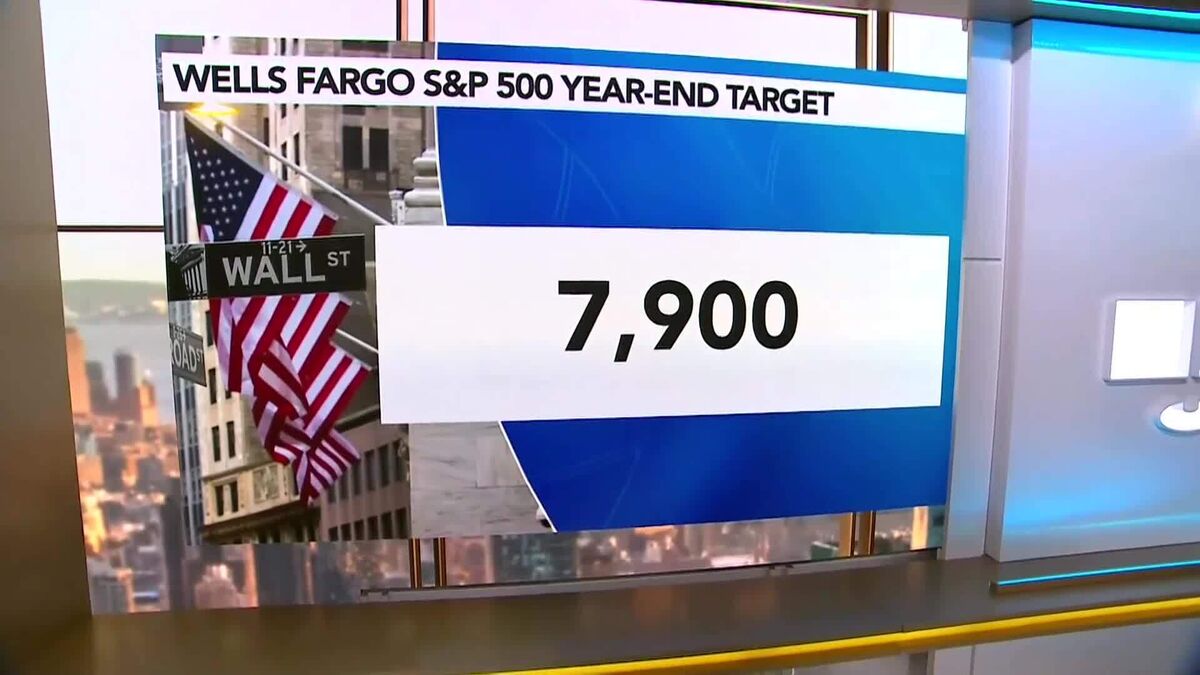
Wells Fargo's Darrell Cronk forecasts the S&P 500 will reach 7,900 by year-end, assuming zero Fed rate hikes and viewing current market moves as rotation.
According to Bloomberg Markets, Darrell Cronk, Chief Investment Officer at Wells Fargo Wealth and Investment Management, has set an S&P 500 forecast of 7,900 by the end of this year, with the projection built on an assumption of zero interest rate hikes by the Federal Reserve. Speaking on Bloomberg Surveillance on June 24, 2026, Cronk characterized current market dynamics not as a selloff but as a "rotation within equities," suggesting a shift in investor positioning rather than broad-based risk aversion.
Key takeaways
Wells Fargo forecasts the S&P 500 will reach 7,900 by the end of this year
The forecast assumes zero Federal Reserve interest rate hikes through year-end
Darrell Cronk describes current market activity as equity rotation, not a selloff
The outlook reflects Wells Fargo's view on monetary policy trajectory and equity market structure
Table of Contents
What happened
The Fed rate assumption behind the forecast
Equity rotation versus selloff dynamics
What to watch next
What happened
Darrell Cronk, Chief Investment Officer at Wells Fargo Wealth and Investment Management, outlined the firm's year-end S&P 500 target of 7,900 during a June 24, 2026 appearance on Bloomberg Surveillance. The forecast incorporates a specific monetary policy assumption: zero interest rate increases by the Federal Reserve for the remainder of the year. This projection represents Wells Fargo's institutional view on both equity valuations and the central bank's policy path over the coming months.
Cronk also addressed the nature of recent market movements, framing them as a rotation within equities rather than a broad selloff. This characterization suggests that Wells Fargo interprets current price action as investors reallocating capital between sectors, styles, or market capitalizations, rather than exiting equity positions altogether in favor of cash or defensive assets. The distinction matters for understanding whether market participants are reducing risk exposure or simply repositioning within the equity asset class.
The Fed rate assumption behind the forecast
The Wells Fargo S&P 500 forecast explicitly incorporates the assumption that the Federal Reserve will not raise interest rates through the end of this year. This monetary policy expectation forms a foundational element of the 7,900 target, as interest rate levels directly influence equity valuations through their impact on discount rates, corporate borrowing costs, and the relative attractiveness of bonds versus stocks. When strategists "bake in" a rate assumption, they are building their valuation models and earnings projections around a specific path for the federal funds rate.
A zero-hike scenario typically supports higher equity valuations by keeping the cost of capital stable for corporations and maintaining the yield differential that makes stocks attractive relative to fixed income. For investors evaluating Wells Fargo's forecast, understanding this embedded assumption is critical: if the Federal Reserve were to raise rates contrary to this expectation, the 7,900 target would likely require revision. Market participants often assess strategist forecasts by examining both the price target and the underlying macroeconomic and policy assumptions that support it.
Equity rotation versus selloff dynamics
Cronk's characterization of current market activity as "rotation within equities" rather than a selloff provides insight into how Wells Fargo interprets recent price movements. In market terminology, a rotation occurs when investors shift capital from one segment of the equity market to another—for example, from growth stocks to value stocks, from large-cap to small-cap, or from one sector to another—while maintaining overall equity exposure. By contrast, a selloff typically involves broad-based selling across equities, often accompanied by rising cash levels or flows into defensive assets such as government bonds.
The distinction has implications for market structure and investor sentiment. Rotations often occur when investors adjust positioning based on changing economic conditions, earnings expectations, or valuation disparities, but maintain confidence in the equity asset class overall. Selloffs, on the other hand, usually reflect deteriorating risk appetite or concerns about economic fundamentals. For traders and portfolio managers, identifying whether market weakness stems from rotation or genuine risk reduction helps inform positioning decisions and risk management strategies. Wells Fargo's interpretation suggests the firm sees current volatility as a rebalancing of equity exposures rather than a flight from risk assets.
What to watch next
Investors monitoring Wells Fargo's S&P 500 forecast should track Federal Reserve communications and economic data releases that could influence the central bank's rate path. The zero-hike assumption embedded in the 7,900 target makes the forecast sensitive to any shift in Fed policy expectations. Key indicators include inflation data, employment reports, and Federal Open Market Committee statements or press conferences that provide guidance on the committee's rate outlook. Any indication that the Fed is considering rate increases would challenge the monetary policy assumption underlying Wells Fargo's projection.
Additionally, observing the nature of equity market movements—whether capital continues to rotate between sectors and styles or whether broader selling pressure emerges—will help validate or challenge Cronk's characterization of current dynamics. Sector performance dispersion, volatility patterns, and fund flow data can all provide evidence of whether the market is experiencing rotation or a more fundamental shift in risk appetite. For portfolio managers and traders, reconciling Wells Fargo's bullish year-end target with evolving Fed expectations and market structure will be essential for positioning decisions in the months ahead.
Read original source