education
What a Trading Tools Marketplace Should Do
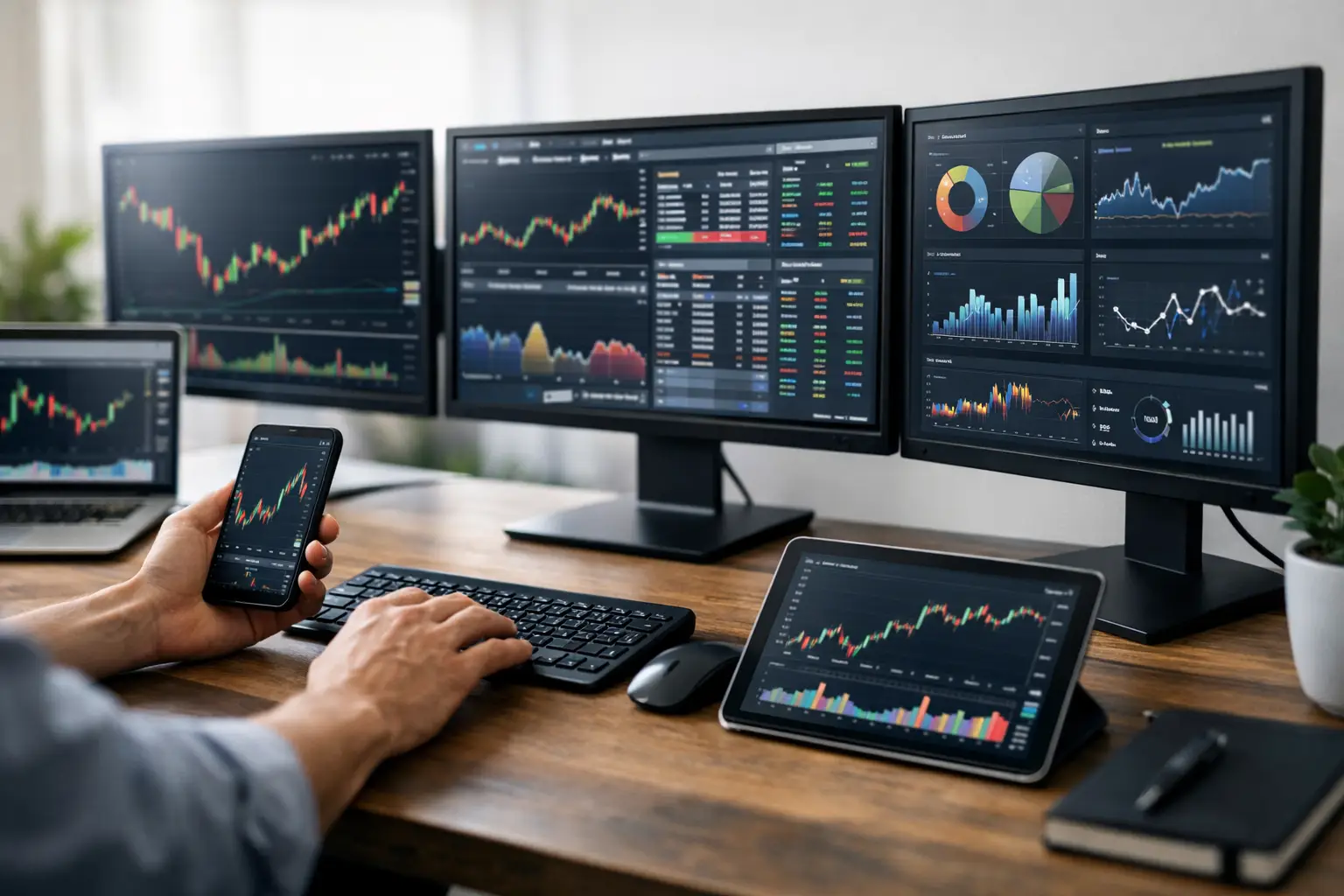
A trading tools marketplace should do more than list apps. It should connect trusted analytics, data, automation, and workflow in one place.
Most traders do not have a market problem. They have a workflow problem. Signals live in one app, charting in another, portfolio tracking somewhere else, and community discussion in a feed that may or may not be credible. A trading tools marketplace only matters if it fixes that fragmentation instead of adding one more tab to manage.
That distinction is where the category gets serious. A basic marketplace can display software listings and collect subscriptions. A modern trading environment needs more. It needs a structured layer where traders can discover tools, evaluate credibility, compare utility, and connect those tools to real decisions across stocks, crypto, forex, and broader macro exposure.
Why the trading tools marketplace model matters
The old model of trading software discovery is inefficient. Traders bounce between social posts, ad-driven reviews, Discord recommendations, and vendor landing pages, then try to figure out which products are real, which are overhyped, and which actually fit their process. Time gets wasted before analysis even begins.
A well-built trading tools marketplace changes that by turning discovery into an informed decision path. Instead of searching blindly, users can evaluate tools inside a context that includes market use case, workflow compatibility, transparency signals, and community feedback. That is not just a convenience feature. It directly affects execution quality, research speed, and risk management.
For newer traders, the value is guidance. They often do not know whether they need a scanner, a journaling product, portfolio analytics, AI market research, or automation support. For advanced participants, the value is efficiency. They already know what categories matter, but they need faster validation and better integration.
What separates a real marketplace from an app directory
A directory is passive. It lists products, maybe adds filters, and leaves the rest to the user. A serious marketplace should operate more like trading infrastructure. It should help participants discover, assess, and deploy tools with less friction and more confidence.
That starts with context. A scanner for momentum equities, an options analytics platform, and a crypto sentiment engine are not interchangeable. Product pages should explain who the tool is for, what problem it solves, how it fits into a workflow, and where its limits show up. Traders do not need marketing promises. They need operating clarity.
Verification also matters. In financial markets, bad information is expensive. If a marketplace cannot establish who built a tool, how it works at a practical level, or whether users engaging with it are real market participants, trust erodes quickly. This is why reputation systems, verified participation, and transparent feedback mechanisms are not cosmetic features. They are foundational.
The strongest marketplaces also reduce tool sprawl. If every product forces a separate onboarding flow, disconnected data environment, and isolated billing relationship, the user still ends up managing a fragmented stack. The marketplace only creates real value when it brings coherence to discovery and usage.
The categories that matter most in a trading tools marketplace
Not every trader needs the same stack, but most serious users evaluate tools across a few core functions. Research and analytics tools sit at the center because they shape decision quality before any trade is placed. This includes charting, market scanners, alternative data, AI-assisted analysis, macro dashboards, and asset-specific intelligence.
Execution support is another critical area. Some tools improve order planning, risk sizing, trade management, or automation logic. Others help traders route ideas from research into action with less delay and fewer mistakes. In fast markets, that transition matters.
Portfolio and performance analytics are often underrated until a trader scales activity. It is one thing to generate ideas. It is another to understand exposure, attribution, drawdown behavior, correlation, and repeatable edge. A marketplace that gives proper space to analytics tools supports longer-term performance development, not just short-term excitement.
Education and collaboration tools also belong in the conversation. Market participants increasingly learn through communities, live commentary, and shared workflows. But community without credibility becomes noise fast. A marketplace should surface tools that improve financial learning and collaboration while keeping transparency high.
Trust is the product, not just the feature
Financial technology has a distribution problem and a trust problem. The distribution problem is easy to see. There are too many tools and too little structure. The trust problem is harder and more important. Traders are constantly asked to rely on black-box indicators, unverifiable claims, and performance narratives that fall apart under scrutiny.
A trading tools marketplace that is built for serious users has to solve both. That means transparent product positioning, visible reputational signals, and communities where participation can be verified rather than fabricated. It also means reducing the gap between product marketing and real-world use.
This is where a connected platform model becomes stronger than a standalone marketplace. If tools exist inside an environment that also includes portfolio analytics, trader identity, community interaction, and market intelligence, it becomes easier to evaluate relevance and credibility. The marketplace stops being a digital shelf and starts functioning as part of a financial intelligence network.
Tyrian Trade fits naturally into that direction because the trust layer is not treated as an afterthought. In modern markets, trust has to be embedded into the infrastructure itself.
What traders should look for before using any marketplace
The first question is simple: does the platform help you make better decisions, or just expose you to more products? More choice is not always better. If discovery is noisy, biased, or overly promotional, the marketplace can increase confusion instead of reducing it.
Look closely at how tools are organized. Category filters should reflect real trading workflows, not vague software labels. A trader managing short-term crypto volatility needs a different discovery path than a long-term equity investor focused on portfolio construction. If the marketplace treats them the same, it is probably too generic.
Next, assess transparency. Can you understand who built the tool, how the tool is used, and what kind of trader it serves? Are reviews credible, or do they read like copywriting? Can you tell the difference between sponsored visibility and earned reputation? Those details shape whether the marketplace deserves trust.
Integration is another deciding factor. Some traders are comfortable assembling a custom stack across multiple providers. Others want a more unified environment where analytics, education, community, and tooling work together. Neither approach is universally right. It depends on experience level, strategy complexity, and how much operational friction a user is willing to tolerate.
The next phase of the trading tools marketplace
The next evolution will not be about adding more products. It will be about making the marketplace smarter. AI can help classify tools, personalize discovery, summarize functionality, and connect traders with software that matches actual behavior instead of broad demographics. Done well, this lowers search costs and improves relevance.
But intelligence without transparency creates a new problem. If recommendation systems become opaque, users are back to trusting a black box. The better model is guided discovery with visible reasoning - why a tool is being surfaced, what use case it serves, and where it may or may not fit.
We are also moving toward more connected market experiences. Traders increasingly expect research, discussion, analytics, and software access to exist in one ecosystem. That expectation is rational. Market participation is already complex enough. Fragmented infrastructure should not be the default.
A strong trading tools marketplace will reflect that reality. It will not just monetize software distribution. It will reduce friction across the full trading lifecycle, from idea discovery to analysis, execution support, review, and learning.
That is the standard worth aiming for. If a marketplace cannot help traders separate signal from noise, trust from hype, and workflow value from feature clutter, it is not solving a real market need. The platforms that matter next will be the ones that treat tool discovery as part of a broader financial intelligence experience, where better infrastructure leads to better decisions.