education
What Is a Unified Trading Ecosystem?
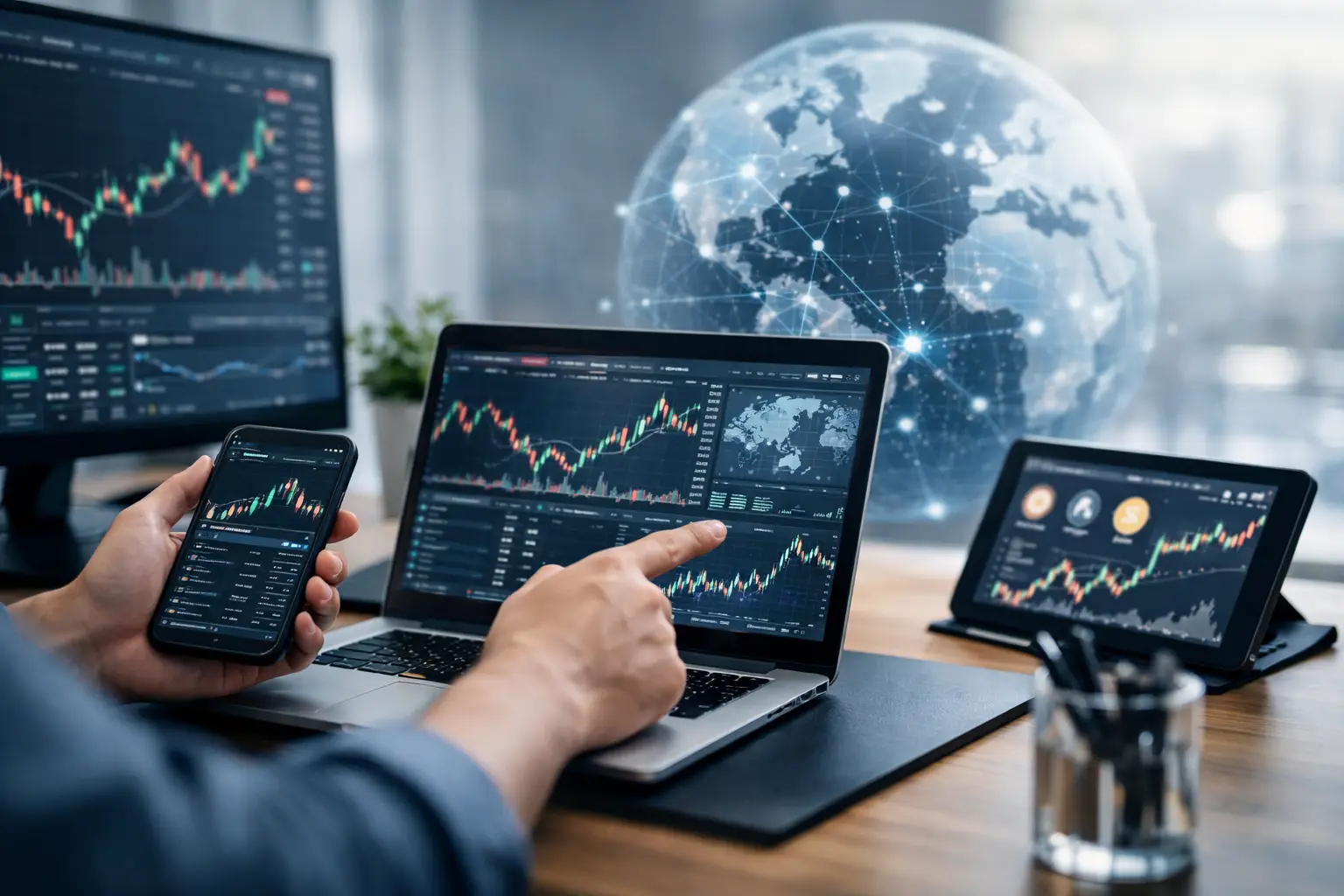
What is a unified trading ecosystem? Learn how it connects analysis, execution, community, and trust into one smarter trading experience.
A trader spots a breakout in crypto, checks stock index futures for risk sentiment, opens three tabs for charting, two more for news, another for portfolio tracking, then jumps into a chat room full of unverified opinions. That fragmented routine is exactly why more market participants are asking what is a unified trading ecosystem and why it matters.
At its core, a unified trading ecosystem is a connected environment where the essential parts of market participation live together instead of being scattered across disconnected tools. That usually includes market data, charting, portfolio analytics, trade discovery, education, community discussion, execution infrastructure, and increasingly, AI-assisted analysis. The value is not just convenience. The real shift is that context, trust, and decision-making improve when these functions operate as one system.
What is a unified trading ecosystem in practice?
In practice, a unified trading ecosystem is less about putting many features on one screen and more about creating continuity across the trading workflow. A trader researches an idea, validates it with data, compares it against portfolio exposure, discusses it with credible participants, and acts - all without rebuilding context every few minutes.
That distinction matters. Plenty of platforms bundle features, but bundling alone does not create an ecosystem. If the charting tool does not connect to portfolio analysis, if the community has no verification layer, or if market intelligence is detached from execution decisions, the user still does the hard work of stitching everything together manually.
A true ecosystem reduces that friction. It allows information to travel with the user. Watchlists inform research. Research informs analytics. Analytics shape risk decisions. Community feedback adds perspective. Reputation systems help filter noise. AI can surface patterns a user might miss, but within the same operating environment instead of in a separate product.
Why traders are moving away from fragmented stacks
Most active traders do not suffer from a lack of tools. They suffer from too many disconnected ones.
A fragmented stack creates hidden costs. Time is lost moving between apps. Trade ideas weaken when context gets dropped between platforms. Risk management becomes inconsistent when portfolio exposure sits in one dashboard while social signals live somewhere else. Education gets separated from execution, which is especially difficult for newer traders trying to build process rather than chase headlines.
There is also a trust problem. Open online trading communities can generate useful insight, but they can also reward performance theater. Screenshots can be edited. Market calls can be selective. Engagement often outruns accountability. For serious traders and investors, the issue is not whether social input has value. It does. The issue is whether the environment gives users a way to judge credibility.
That is where a unified ecosystem changes the equation. When identity, activity, reputation, analytics, and discussion are connected, trust becomes more measurable. You are no longer evaluating content in isolation. You are evaluating participants within a system.
The core components of a unified trading ecosystem
A credible unified model usually combines several functions that support each other.
Market intelligence is one layer. This includes real-time data, charting, signals, news flow, and AI-assisted analysis that helps traders interpret what is happening across asset classes.
Portfolio analytics is another. Traders need to understand performance, exposure, concentration, and behavior over time . Without that layer, it is hard to move from reaction to disciplined improvement.
Community infrastructure matters just as much. Not generic social posting, but structured interaction where traders can share ideas, discuss setups, learn from others, and evaluate credibility through verified participation and reputation signals.
Education is also part of the ecosystem, especially for self-directed investors. Good education inside a trading platform is not filler content. It should be connected to actual market activity, platform tools, and decision frameworks.
Then there is execution and tooling. The ecosystem does not always need to be a broker itself, but it should support the path from idea to action. If users discover an opportunity, the next steps should feel integrated rather than broken apart.
Finally, there is the infrastructure layer most users do not directly see but always feel: speed, reliability, data integrity, permissions, identity systems, and the ability to scale across global markets.
What makes an ecosystem unified instead of merely integrated?
This is where the nuance matters.
An integrated platform may connect multiple services through APIs or basic product partnerships. That can be useful. But a unified trading ecosystem is built around a shared operating logic. The user profile, market activity, research history, portfolio behavior, and community interactions inform each other within one system.
For example, imagine a trader following a high-volume stock move. In a unified environment, they might immediately see related sentiment, relevant technical signals, educational context, portfolio impact, and commentary from verified participants with established reputations. That is not just integration. That is coordinated intelligence.
The advantage becomes even clearer in multi-asset trading. Stocks, crypto, forex, and macro signals increasingly influence each other. Traders who operate across markets need infrastructure that reflects cross-market reality, not siloed products designed for one narrow use case.
The role of trust in a unified trading ecosystem
Trust is not a branding layer added after the product is built. In modern trading platforms, trust is infrastructure.
That means verified participation instead of anonymous signal dumping. It means transparent profiles, measurable track records where appropriate, reputation systems that reward consistency over hype, and community design that reduces spam and manipulation. It also means giving users enough context to understand why a market idea deserves attention.
This is especially relevant as AI-generated content spreads across financial media and social platforms. AI can improve research speed and pattern recognition, but it can also multiply low-quality content at scale. In a unified ecosystem, AI works best when it supports transparency rather than replaces it. Traders need tools that explain, contextualize, and prioritize information, not just flood the feed.
For platforms built around modern financial participation, trust and intelligence now belong together. That combination is becoming a competitive requirement, not a premium add-on.
Who benefits most from this model?
The obvious audience is active traders, but the benefits extend across experience levels.
Beginners gain structure. Instead of learning markets through scattered videos, forums, and disconnected apps, they can build understanding inside an environment where education, data, and community are linked. That lowers confusion, though it does not remove the need for discipline .
Intermediate traders gain efficiency. They usually already have a process, but their workflow is often fragmented. A unified environment can tighten feedback loops and improve how quickly they move from idea validation to risk assessment.
Advanced traders gain visibility and signal quality. They tend to care less about feature count and more about information density, execution logic, and whether the platform improves judgment. If the ecosystem helps them filter noise, monitor exposure, and evaluate credible market participants faster, it creates real edge.
There is one caveat. Not every trader wants a single environment for everything. Some professionals still prefer highly specialized tools for specific functions, especially in high-frequency or institution-specific workflows. So the right question is not whether unification is always better. It is whether the ecosystem improves decision quality for the user’s actual style and markets.
What to look for when evaluating a unified trading ecosystem
If a platform claims to offer a unified experience, the test is simple: does it reduce fragmentation without reducing depth?
Look at whether analytics connect to actual portfolio behavior. Look at whether community participation is credible or just loud. Look at whether AI features generate useful insight or generic output. Look at whether the platform supports market discovery, education, and decision-making in a way that feels continuous.
It is also worth examining how the platform handles transparency. Can users understand who they are following and why those voices matter? Is reputation visible? Is market discussion tied to real analysis rather than empty engagement?
A strong ecosystem should make traders faster, better informed, and more accountable to their own process. If it only adds more dashboards, it is not solving the core problem.
This is the direction platforms like Tyrian Trade are built around: not simply adding social features to trading or adding charts to a community, but creating a connected intelligence layer where market analysis, verified participation, portfolio visibility, and modern fintech infrastructure reinforce each other.
The future of trading platforms will not be defined by who offers the most features. It will be defined by who connects trust, intelligence, and execution in a way that helps people make better decisions under real market pressure. That is the real answer to what is a unified trading ecosystem - a system designed to bring the full trading experience into one credible operating environment, where insight does not get lost between tabs.