education
Why Do Traders Need Transparency to Trade Smarter?
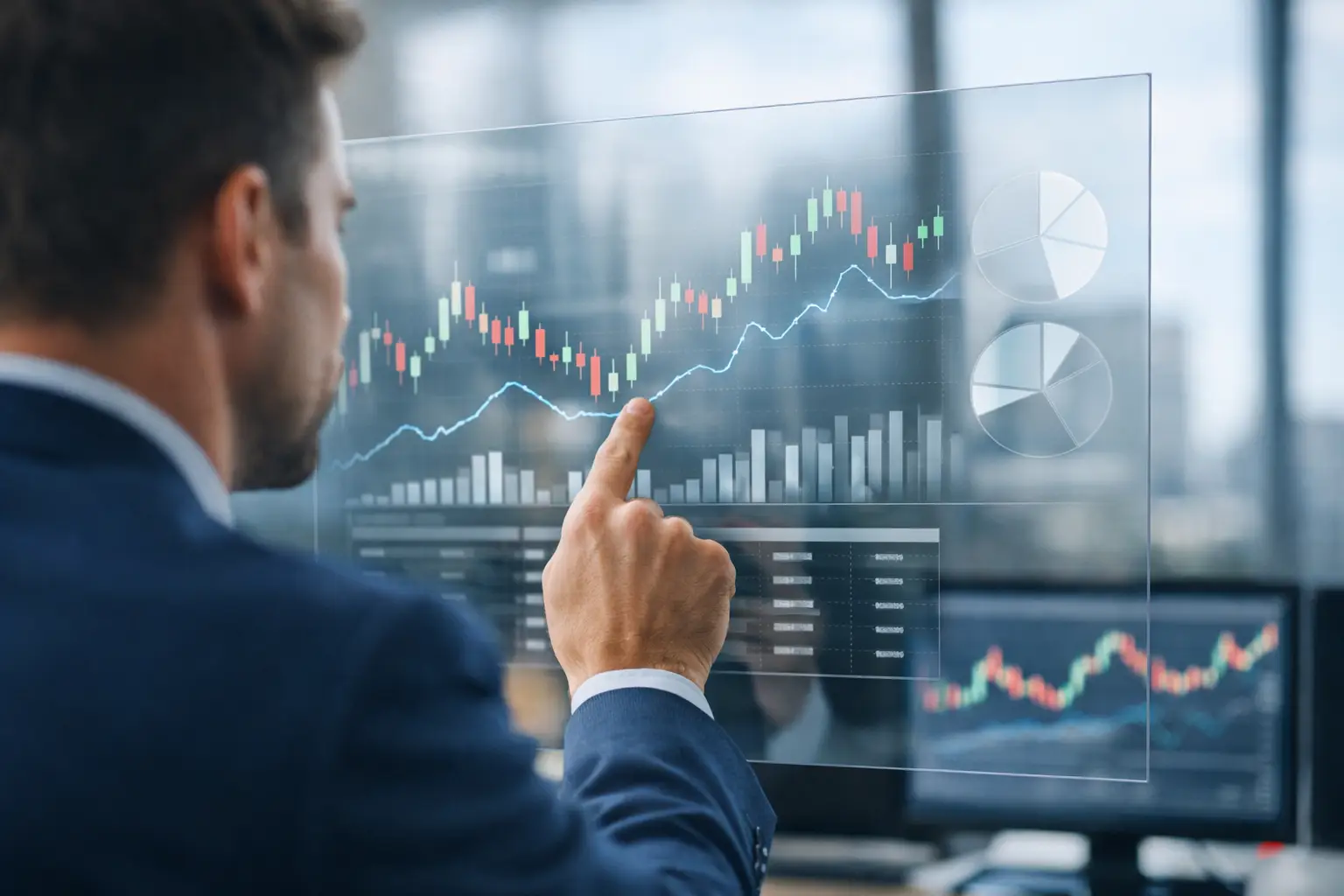
Why do traders need transparency? See real performance, risk, and incentives clearly so every trading decision rests on evidence, not noise or hype alone.
A trading idea can look exceptional in a screenshot and fail completely under live conditions. A single winning position says little about position sizing, drawdown, exits, prior losses, or whether the trade was ever executable at the price shown. That gap is why do traders need transparency is more than a question of ethics. It is a question of decision quality, risk control, and whether a market community can earn trust at scale.
For active traders, information moves quickly and conviction often arrives before verification. Social feeds amplify this problem. Bold claims, polished charts, and selective results can attract attention, but they do not create a reliable basis for putting capital at risk. Transparency changes the standard. It asks what happened, when it happened, what risk was taken, and whether the result can be independently understood.
Why Do Traders Need Transparency in Market Communities?
Trading is already an environment of incomplete information. No participant sees every order, knows every institutional flow, or predicts every macro surprise. The goal is not perfect certainty. The goal is to reduce avoidable uncertainty created by hidden incentives, unverified claims, and fragmented data.
In a transparent community, traders can distinguish between an idea and a proven process. An idea may be useful even when it loses money. A process becomes credible when others can see the reasoning, timing, risk parameters, and outcome over a meaningful sample of trades. That distinction protects newer participants from treating market commentary as a guarantee and gives experienced traders a clearer way to evaluate signal quality.
Transparency also creates accountability without demanding perfection. Every serious trader has losing trades. In fact, a track record with no visible losses should invite more questions, not less. Honest performance data shows how a trader responds when the market invalidates a thesis, how much capital is exposed, and whether losses remain within a defined risk framework.
Verified Performance Is Different From Marketing
A large percentage gain can be technically true and still be misleading. If it came from a very small account, an oversized leveraged position, a single concentrated bet, or an unreported series of losses, it does not tell another trader much about repeatability.
Useful performance transparency provides context. It includes the period measured, realized versus unrealized profit and loss, drawdown, position concentration, frequency of trading, and the role of leverage. It should also make clear whether a strategy is discretionary, systematic, long-term, or event-driven. A crypto scalper, a forex swing trader, and a long-only stock investor should not be evaluated through the same lens.
This does not mean every participant must expose every account balance or reveal a proprietary strategy. Privacy and intellectual property matter. The practical standard is sufficient evidence to assess claims without forcing traders to surrender sensitive personal or competitive information. Verified execution records, aggregated portfolio metrics, timestamped trade ideas, and clear methodology can provide that middle ground.
For followers, context prevents a common error: copying an outcome instead of understanding the conditions that produced it. A trader may have entered before a catalyst, held through volatility that another investor cannot tolerate, or used a hedge that was not visible in the headline result. Transparency turns performance from a promotional asset into a source of market intelligence.
Drawdown Shows the Cost of a Strategy
Returns attract attention. Drawdown explains durability. Two traders can post the same annual return while taking radically different paths to get there. One may use disciplined sizing and accept modest losses. Another may experience repeated deep declines before recovering through a high-risk position.
For serious participants, the second profile carries a different level of risk even if the final percentage is identical. Transparent drawdown data helps users evaluate whether a strategy aligns with their own capital, time horizon, and risk tolerance. It replaces the question, “How much did this trader make?” with the more useful question, “What did it cost to produce that return?”
Transparency Exposes Incentives Before They Become Risk
Markets are full of incentives, and incentives are not automatically bad. A trader may earn revenue from subscriptions, education, software, affiliate relationships, partnerships, or asset management. The issue is whether those relationships are visible when they could influence an opinion or trade idea.
If a market commentator holds a position, receives compensation from a project, or benefits when an audience acts on a recommendation, that context changes how the audience should interpret the message. Disclosure does not make the analysis invalid. It allows the audience to weigh it correctly.
The same principle applies to social trading. A popular trader may be rewarded for audience growth rather than risk-adjusted results. That can encourage dramatic calls, excessive trade frequency, and content designed for engagement instead of execution. Transparent reputation systems should reward consistency, clarity, verified participation, and responsible risk communication, not just followers or viral posts.
Real-Time Context Reduces the Screenshot Problem
Markets are dynamic. An entry shared after a major price move is not equivalent to an entry published before it. A chart annotated after the fact may describe price action accurately while offering no evidence that the trader acted on the thesis in real time.
Timestamped ideas and live market discussions create a stronger record. They show the original thesis, the price environment, the invalidation point, and the evolution of the trade as new information appears. Traders can then evaluate decision-making rather than being asked to trust a retrospective narrative.
There is a trade-off. Real-time disclosure can expose a strategy to crowding, front-running concerns, or unwanted attention. It can also create pressure to comment on every market move. The answer is not to demand that every trade be broadcast live. It is to build clear standards for what is shared, when it is shared, and how outcomes are documented afterward.
Better Data Creates Better Decisions
Transparency is not only a community feature. It is an analytical advantage. When verified activity, portfolio behavior, market research, and discussion exist in connected systems, traders can compare an idea with evidence rather than relying on isolated posts.
For example, a bullish thesis on a stock becomes more useful when the trader can review the author’s prior exposure to the sector, historical holding period, risk profile, and response to invalidated setups. A crypto market signal becomes more credible when it is paired with clear assumptions about liquidity, volatility, and leverage. AI-powered analysis can help organize these inputs, identify patterns, and surface relevant context, but it should not obscure the underlying evidence.
This is where financial technology should serve judgment rather than replace it. AI can summarize sentiment , detect changes in portfolio exposure, or flag unusual market behavior. A transparent platform makes it clear what data informed those outputs and where uncertainty remains. Traders should be able to challenge a signal, inspect the logic behind it, and make the final call themselves.
Building a Trust Layer for Modern Trading
A credible trading ecosystem needs more than market access. It needs infrastructure for identity, reputation, evidence, and informed participation. That includes verified profiles where appropriate, transparent performance frameworks, visible disclosures, portfolio analytics , and moderation standards that discourage manipulation and fabricated expertise.
Tyrian Trade is built around this trust layer: connecting market intelligence, trading tools, educational content, and real-time community participation in one environment. The objective is not to turn every trader into a public figure or imply that transparency eliminates loss. It is to make the information surrounding a trading decision more accountable, comparable, and useful.
The strongest communities do not promise certainty. They make uncertainty easier to measure. When traders can see the record behind a claim, the risk behind a return, and the incentives behind a recommendation, they can participate with clearer judgment. That is the kind of transparency that helps a market community become more intelligent with every decision.