tech-ai
Yen Hits Four-Decade Low Against Dollar in Historic Slide
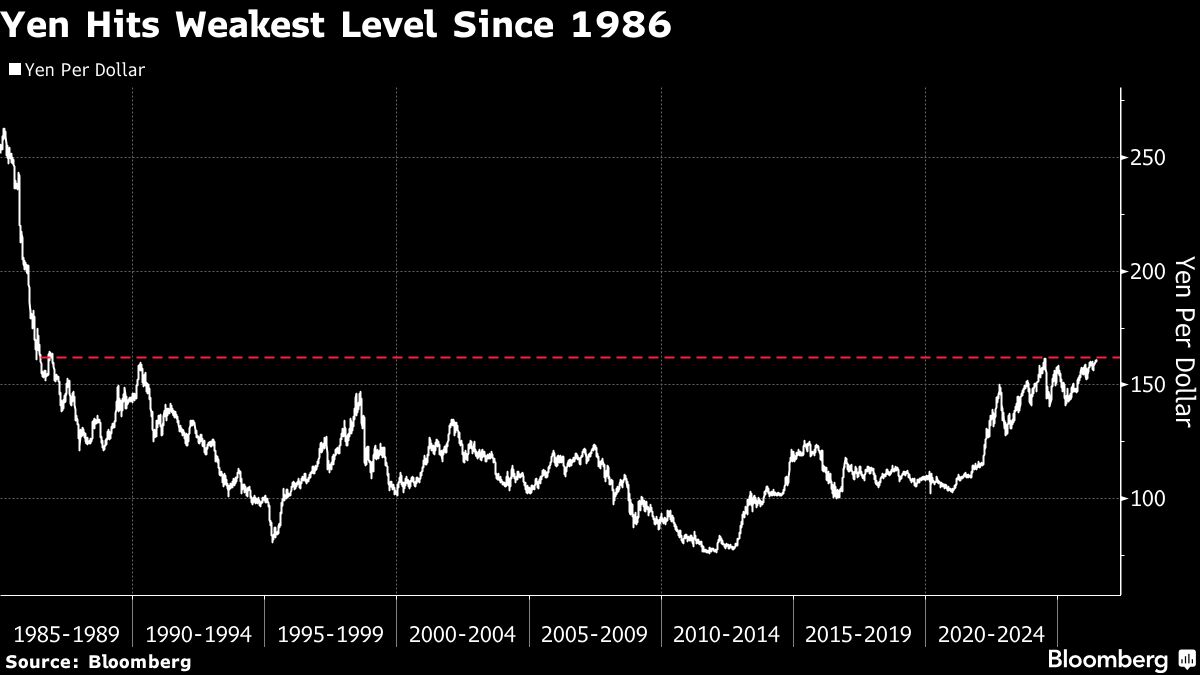
The yen weakened to its lowest level against the dollar since 1986, raising concerns in Japan and putting traders on alert for potential intervention.
The Japanese yen weakened to its lowest level against the U.S. dollar since 1986, according to Bloomberg Markets, marking a historic milestone that has generated unease in Japan and put currency traders on high alert for potential market intervention by authorities. The yen dollar exchange rate reached a four-decade low, underscoring the currency's sustained decline and raising questions about policy responses.
Key Takeaways
The yen slid to its weakest level against the dollar since 1986, according to Bloomberg Markets.
The milestone has generated unease in Japan and put traders on alert for potential intervention.
Currency intervention remains a tool that authorities can deploy when exchange rate moves become disorderly.
Market readers should watch for official statements, intervention signals, and further exchange rate developments.
Table of Contents
Market Move
Why the Yen Weakness Matters
Intervention Risk and Trader Positioning
What to Watch Next
Market Move
Bloomberg Markets reported that the yen weakened to its lowest level against the dollar since 1986, a four-decade milestone that marks a significant point in the currency's recent decline. The exchange rate move reflects sustained pressure on the yen, which has been trading at historically weak levels against the dollar. The source context confirms the milestone but does not provide the specific exchange rate level, intraday trading range, or percentage decline associated with the move.
The yen's slide to a four-decade low represents a continuation of the currency's broader weakness, which has been a focus for currency traders, policymakers, and market participants monitoring foreign exchange dynamics. The milestone is notable because it places the yen at levels not seen since the mid-1980s, a period when global currency markets operated under different monetary policy and economic conditions. For readers following broader market updates , currency moves of this scale can influence cross-border capital flows, trade competitiveness, and investor sentiment across asset classes.
Why the Yen Weakness Matters
Currency depreciation can matter for several reasons. A weaker yen can make Japanese exports more competitive in global markets by reducing the price of goods sold abroad when converted into foreign currencies. However, it also raises the cost of imports, including energy and raw materials, which can contribute to inflationary pressure and affect household purchasing power. For investors, currency moves can influence the returns on foreign assets, the valuation of multinational companies, and the relative attractiveness of domestic versus international investments.
The source context states that the milestone has generated unease in Japan, suggesting that the scale and pace of the yen's decline have raised concerns among policymakers, businesses, and the public. While the source does not specify the nature of the unease or identify which groups are most affected, currency weakness at historic levels can prompt debates about monetary policy, intervention strategy, and the balance between supporting export competitiveness and managing import costs. Market participants often monitor official statements and policy signals when currencies reach levels that could trigger government or central bank action.
Intervention Risk and Trader Positioning
Bloomberg Markets reported that the yen's slide to a four-decade low has put traders on high alert for authorities wading into the market. Currency intervention refers to actions taken by a government or central bank to influence the exchange rate, typically by buying or selling currency in the foreign exchange market. Intervention can be used to stabilize a currency, slow the pace of depreciation or appreciation, or signal policy intent. The source context indicates that traders are watching for potential intervention, but does not confirm whether authorities have intervened or announced plans to do so.
Traders often adjust positioning and risk management strategies when intervention risk rises. The anticipation of intervention can influence short-term currency volatility, bid-ask spreads, and the behavior of speculative positions. However, the effectiveness of intervention depends on factors including the scale of the action, coordination with other central banks, and the underlying drivers of currency moves such as interest rate differentials, capital flows, and economic fundamentals. Without additional details from the source context, the article treats intervention risk as a confirmed area of trader focus rather than a guaranteed policy outcome.
What to Watch Next
Market readers should monitor several developments following the yen's slide to a four-decade low. Official statements from Japanese authorities, including the Ministry of Finance and the Bank of Japan, could provide insight into policy views on the exchange rate and the conditions under which intervention might be considered. Traders often watch for verbal intervention, where officials comment on currency moves, as well as actual market intervention, which can be confirmed through official disclosures or market observations of unusual trading activity.
Additional data on the yen dollar exchange rate, including intraday volatility, trading volumes, and positioning by institutional investors, would help clarify whether the currency move is stabilizing or continuing. Broader economic indicators such as inflation data, trade balances, and monetary policy decisions in both Japan and the United States can also influence the outlook for the yen. For readers tracking currency markets, the yen's historic weakness serves as a reminder that exchange rate moves can reach levels that prompt policy attention and market reassessment.
Read original source