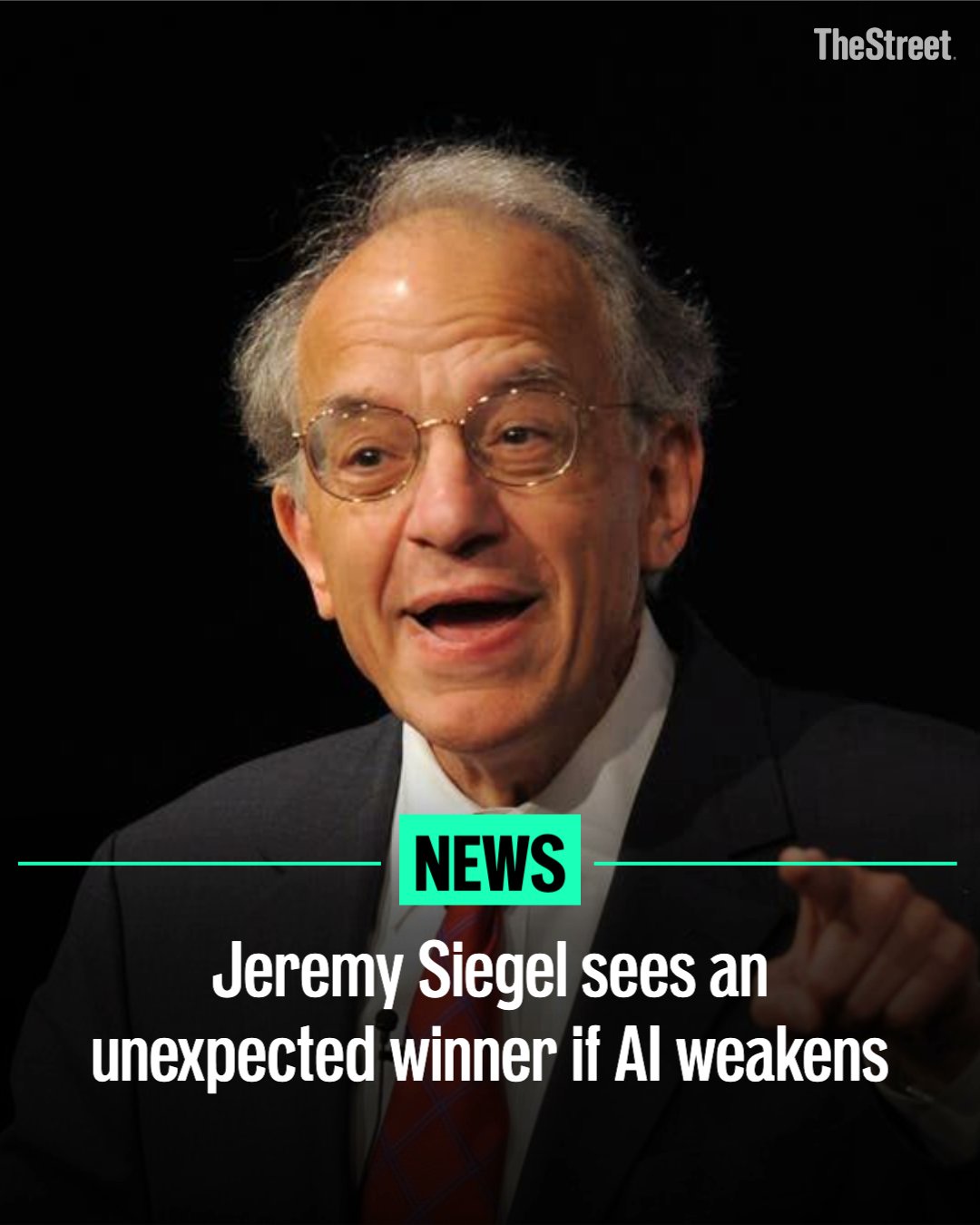
Jeremy Siegel Says an AI Downturn Could Benefit Bonds and Value Stocks
Wharton professor emeritus Jeremy Siegel argues that investors could still benefit even if the artificial intelligence boom loses momentum. Speaking on the Oct. 30 episode of the “Behind the Markets” podcast, Siegel said weaker AI enthusiasm could push long-term Treasury yields lower and create opportunities in bonds and value stocks.
Siegel believes the enormous capital requirements of AI infrastructure spending have contributed to higher real interest rates. If companies scale back investments in data centers, processors, networking equipment, and AI systems, financing demand could decline, potentially easing pressure on interest rates and inflation.
In his Oct. 26 WisdomTree commentary, Siegel noted that the 10-year Treasury yield had fallen below 5% as investors questioned the sustainability of the AI investment boom. Meanwhile, the S&P Value Index and Russell Value Index had reached record highs despite a significant Nasdaq selloff. He also pointed to the dot-com crash, when value stocks gained ground after the Nasdaq peaked in March 2000 and subsequently fell around 60% over the following year.
“If AI goes down, yields will go down,” Siegel said. He considers bonds and value stocks potential hedges against AI-related weakness. Although he does not expect a repeat of the dot-com collapse, he has previously warned that an AI failure could trigger a 20% to 30% decline in the Nasdaq. His broader message is that investors should consider diversification rather than relying entirely on AI beneficiaries such as $NVDA, $MSFT, $GOOGL, and $AMZN.