Higher Rates Could Add Nearly $6 Trillion to U.S. Deficits by 2036
The U.S. fiscal outlook is becoming increasingly sensitive to interest rates.
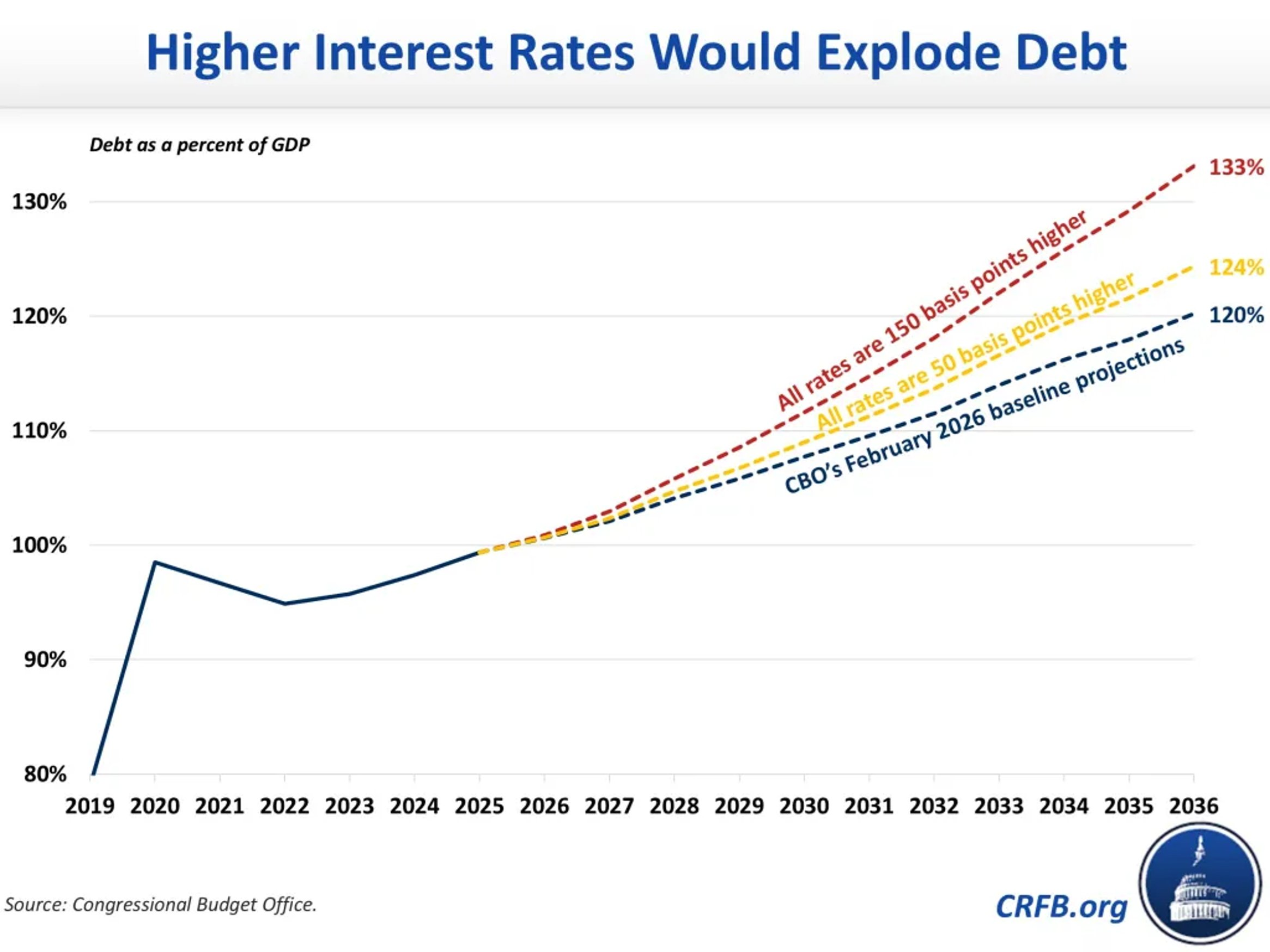
If borrowing rates average 150 basis points above the CBO’s February projections through 2036, cumulative federal deficits could increase by nearly $6 trillion.
Under that scenario, the annual deficit would reach roughly 8.8% of GDP by 2036, an unusually high level outside major crisis periods.
Public debt could also rise to about 133% of GDP, compared with roughly 100% currently.
Even a smaller 50 basis point increase above projected rates could add nearly $2 trillion to cumulative deficits and push debt-to-GDP toward 124% by 2036.
The problem is that recent market rates have already been running well above those assumptions.
The 10-year Treasury yield recently traded near 5.3%, roughly 100 basis points above the CBO’s average projected rate over the coming decade.
Higher yields do not immediately reprice the entire federal debt stock, but as existing securities mature and are refinanced, elevated borrowing costs gradually feed into federal interest expense.
That creates a difficult fiscal feedback loop: higher rates increase interest costs, larger deficits require more Treasury issuance, and heavier issuance can itself keep upward pressure on long-term yields.
Lower interest rates would therefore provide significant fiscal relief.
But Fed rate cuts alone do not guarantee lower long-term Treasury yields, especially if markets remain concerned about inflation, deficits and the growing supply of government debt.