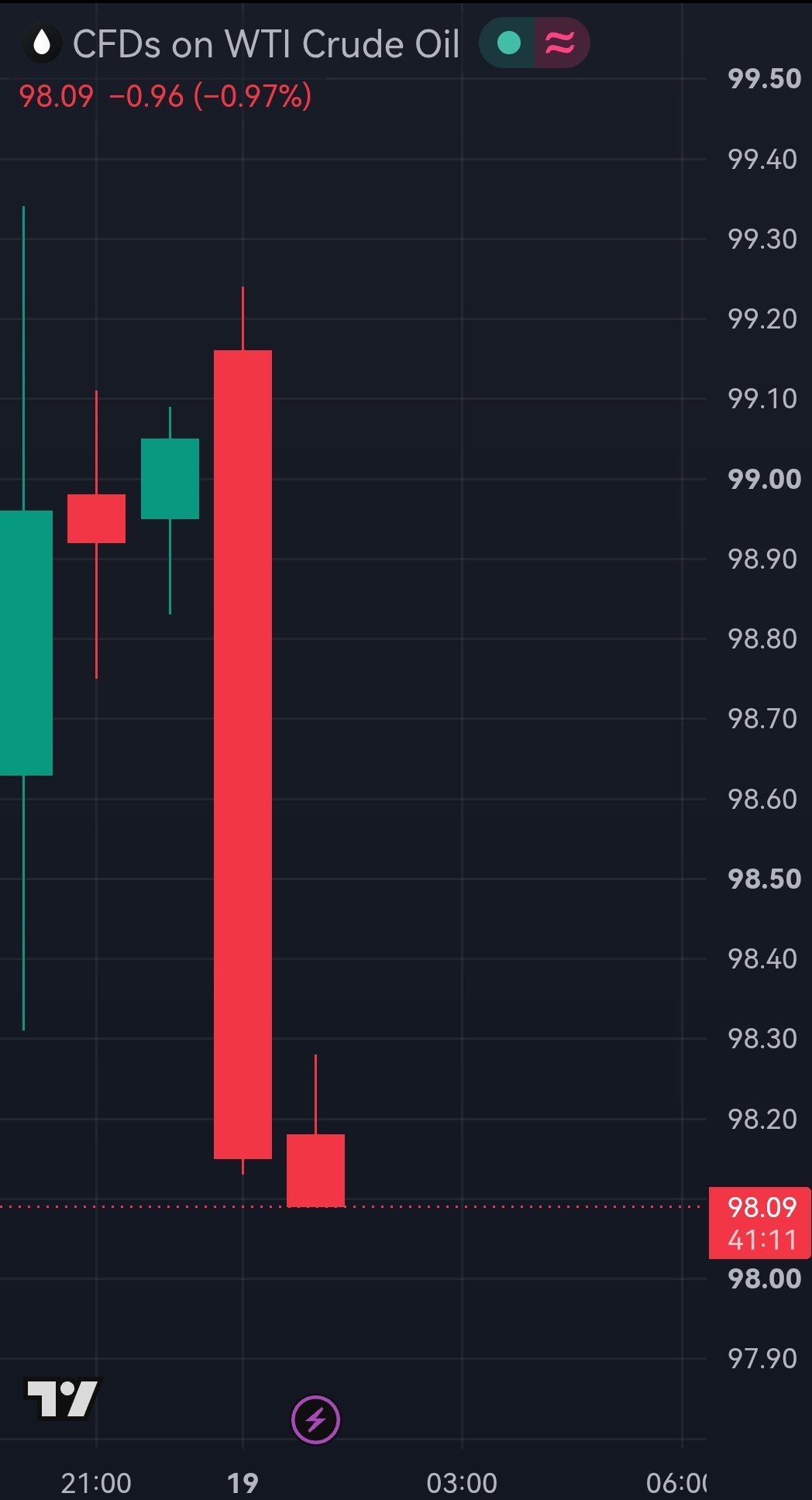
Oil Falls Despite Multiple New Supply-Side Geopolitical Risks
Oil prices are moving lower despite another wave of geopolitical risks that would normally be considered bullish for crude.
Ukraine has reportedly struck a major Russian oil export terminal, adding another potential disruption to Russian energy infrastructure.
At the same time, reports say an oil tanker struck a mine near the Strait of Hormuz and caught fire.
Egypt is also moving closer to potential military involvement against the Houthis as tensions around Saudi Arabia and Red Sea shipping intensify.
Taken together, these developments affect three major areas of the global energy system: Russian exports, Hormuz flows and Red Sea shipping.
Yet crude opened lower.
That disconnect suggests traders may currently be placing more weight on expectations for available supply, diplomacy, demand or existing positioning than on the latest geopolitical headlines.
It is also a reminder that geopolitical escalation does not automatically produce higher oil prices if those risks are already priced in or traders believe physical supply will remain available.
Still, with multiple energy chokepoints under pressure at the same time, the gap between geopolitical risk and oil price action is becoming increasingly unusual.