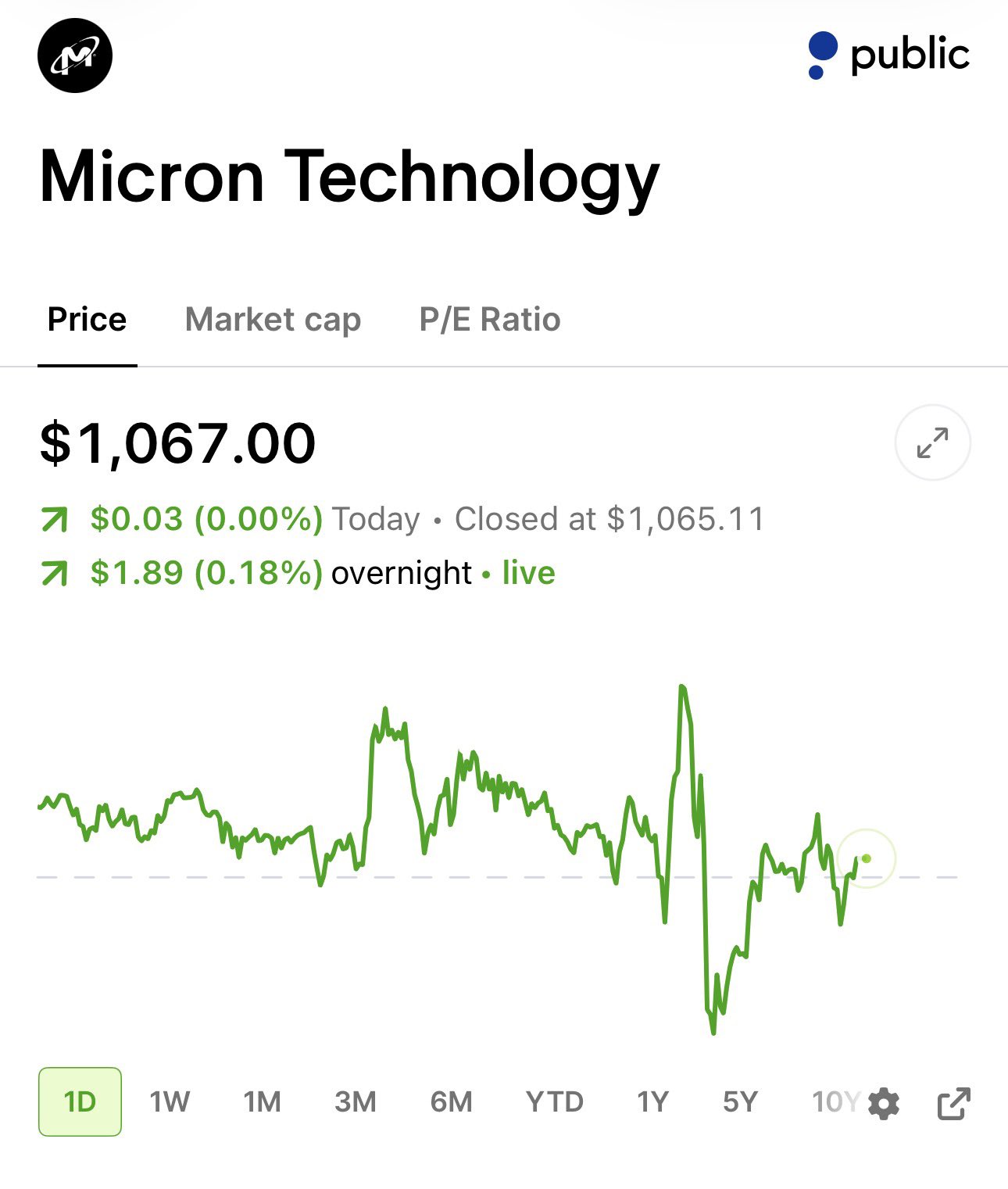
$MU’s Earnings Still Look Price-Driven, but Supply Visibility Is Changing the Cycle Debate
One reason $MU is not reacting more strongly to earnings may be that much of the Q4 growth was still driven by pricing rather than unit volumes.
DRAM revenue increased 27% while bit shipments grew only in the mid-single digits.
NAND revenue rose 42%, with roughly 30% of that increase coming from higher pricing.
That keeps alive the traditional memory-cycle concern: once supply catches up, pricing falls and earnings retreat from the peak.
But management gave investors substantially more visibility this quarter into why the current cycle could last longer than expected.
More than 75% of next year’s output is already committed, supply agreements are extending as far as 2031, margins are expected to improve after Q1 and meaningful new cleanroom capacity is not expected to arrive until late 2028.
That combination could keep supply tighter for longer even as AI-driven memory demand continues growing.
The bullish valuation thesis is that if $MU can sustain something near $200 in forward EPS, the market would not need to assign an aggressive multiple for the stock to reprice dramatically.
At 10x earnings, that framework would imply roughly $2,000 per share.
The key question is whether the market eventually stops treating current profitability as a temporary memory peak and starts viewing it as a structurally higher earnings base.