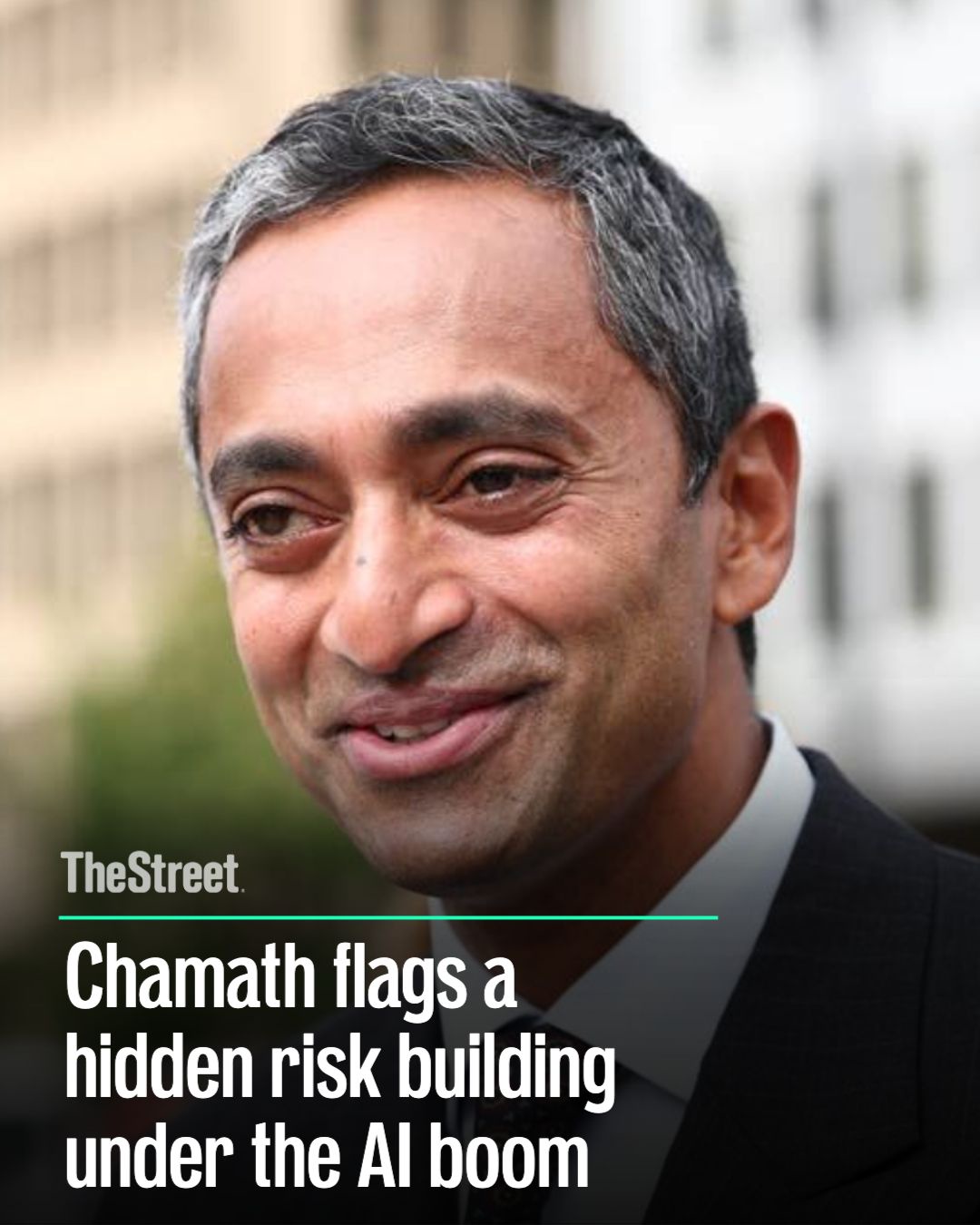
Chamath Warns AI Spending Boom Could Create a Hidden Financing Risk
Billionaire investor Chamath Palihapitiya warns that the AI infrastructure boom is creating a growing financing risk for Big Tech and the broader market.
Speaking on the October 30 episode of the All-In Podcast, he estimated that the AI industry already has roughly $340 billion to $400 billion in debt tied to capital markets.
Key developments highlight the growing pressure:
- Microsoft, Alphabet ($GOOGL), Amazon ($AMZN), Meta ($META), and Oracle generated $542.9 billion in operating cash flow during the first nine months of 2026.
- Their combined capital expenditures reached $556.9 billion, exceeding operating cash flow for the first time in data going back to 2011.
- Combined free cash flow shifted from a $143.5 billion surplus a year earlier to a $14 billion deficit.
- Stock buybacks plunged 83% to $13.6 billion, reducing a major source of shareholder returns.
Meta ($META) illustrates the potential strain. S&P Global Ratings changed its credit outlook to negative, citing rising capital spending and uncertainty over future free cash flow. Meta disputed the assessment and emphasized AI's commercial potential.
Palihapitiya also warned that AI companies' future funding needs could compete with U.S. government borrowing for capital, potentially pushing up financing costs.
Microsoft ($MSFT) offers a contrasting signal: Azure revenue grew 48% in its latest quarter, demonstrating strong demand for AI infrastructure.
The central risk is not necessarily that AI demand will collapse, but that infrastructure spending, borrowing costs, and declining free cash flow could make the boom increasingly expensive to sustain. Investors will be watching whether AI revenue and profits grow fast enough to justify the investment.