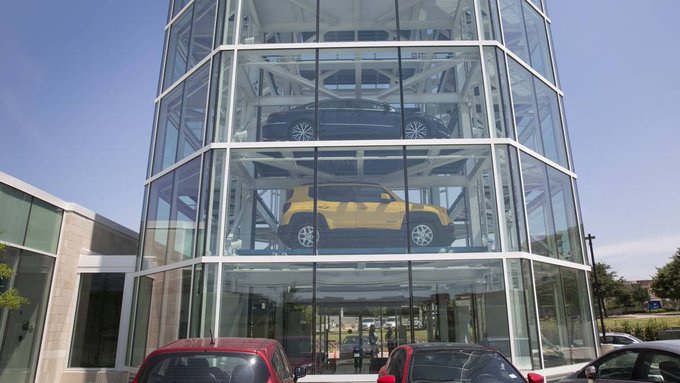
Carvana ($CVNA) CEO Sees AI Transforming the Used-Car Buying Experience
Carvana ($CVNA) CEO Ernie Garcia believes artificial intelligence could fundamentally change how Americans buy used cars by simplifying the process of finding a vehicle, valuing a trade-in, securing financing, and arranging delivery.
During the company’s October 28 earnings call, Garcia described a future in which AI agents could handle much of the purchasing process and present buyers with a complete proposal, including the down payment, monthly payment, and delivery options. He said AI could “effectively reduce digital friction to zero while leaving physical friction largely unchanged,” meaning online transactions could become easier even though vehicle inspection and delivery would still require physical operations.
Carvana’s latest results provide momentum for this strategy. The company sold a record 217,385 retail vehicles in the third quarter of 2026, up 39% year over year, while revenue rose 42% to $8.04 billion. Net income reached $483 million, and adjusted EBITDA hit a record $800 million. Management described the broader used-car market as roughly flat, suggesting Carvana gained market share.
AI could also help shoppers compare the full cost of competing offers, including dealer fees, trade-in values, and financing terms. In September, the Federal Trade Commission issued guidance clarifying that advertised vehicle prices must include mandatory dealer charges, with certain government-required charges excluded. Greater price transparency could make it easier for consumers to evaluate offers before committing to a purchase.
Affordability remains a challenge. The average used-car asking price reached $27,235 in September, according to Cox Automotive data cited by Autotrader. Edmunds reported that used-car borrowers in the third quarter financed an average of $30,703 at an annual percentage rate of 10.6%, with average monthly payments of $582.
Carvana says it has reduced customer interest rates by more than one percentage point over two years, although borrowing costs remain sensitive to benchmark rates. For buyers, comparing the total purchase price, APR, and overall loan cost remains essential, rather than focusing solely on monthly payments.
For investors, Carvana’s opportunity extends beyond attracting more shoppers online. Garcia said the company still accounts for just over 2% of the used-car market, leaving room for further growth. However, expanding vehicle inventory, inspection, reconditioning, and delivery capacity will be critical to meeting demand.
Profitability also warrants attention. Carvana’s adjusted EBITDA margin declined to 10% from 11.3% a year earlier, reflecting pressure from fuel and logistics costs and efforts to improve financing terms for customers. Management expects full-year adjusted EBITDA toward the upper end of its $2.7 billion to $3 billion guidance range.
AI could make used-car shopping more convenient and transparent, but Carvana’s long-term success will depend on converting sales growth into sustainable profits while maintaining the operational capacity to deliver vehicles efficiently.