Less Fed Guidance May Be Shifting More Pressure Into Long-Term Yields
The Fed appears to be backing away from an October rate hike, but the long end of the Treasury curve is not responding the way policymakers might hope.
Market-implied odds of an October hike have fallen sharply, yet long-term yields remain under heavy pressure.
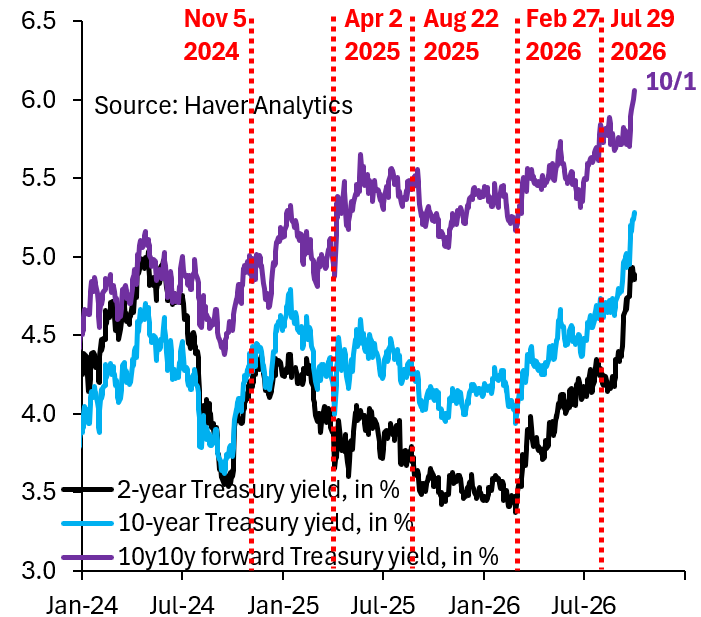
The U.S. 10-year yield has climbed above 5.3%, reaching its highest level since 2002 even as expectations for an immediate Fed hike have declined.
One possible explanation is the Fed’s reduced reliance on forward guidance.
When policymakers provide fewer clues about future meetings, markets have to price each meeting more independently, potentially keeping the risk of additional tightening embedded further out the curve.
That may help explain why measures such as the 10y10y forward yield, which reflects expectations for 10-year rates a decade from now, have moved well above their summer levels.
The Fed may be trying to create room to pause in October, but the market can still respond by demanding higher yields further out.
In that sense, less communication does not necessarily mean less monetary tightening through financial conditions. It may simply move more of the adjustment into the long end of the curve.