Oil's 7% plunge echoes March selloff as Iran peace hopes ease market fears
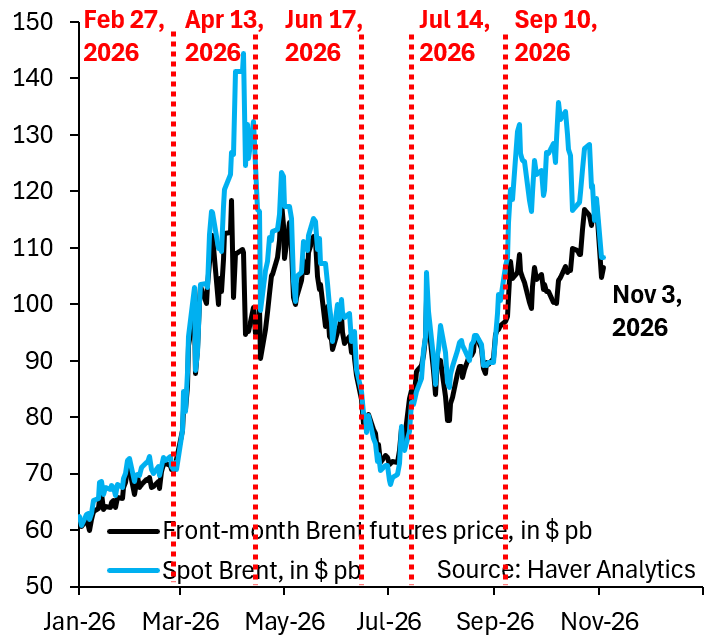
Oil's sharp decline on November 2 bears similarities to the selloff at the end of March, when signs of a possible diplomatic breakthrough with Iran briefly eased fears across financial markets.
Brent crude fell 7.6% to $104.77 a barrel on Monday, while US West Texas Intermediate dropped 7.4% to $96.46, as renewed negotiations raised hopes of reduced disruptions to Middle Eastern oil supplies.
A similar shift occurred in late March, when oil prices retreated after Washington signaled a willingness to delay military strikes and pursue negotiations with Tehran.
In both cases, the decline reflected a rapid reassessment of geopolitical risk rather than a sudden change in underlying oil demand.
That distinction matters for broader markets. Elevated energy prices have added to inflation concerns, complicated central bank policy and increased operating costs for businesses.
A sustained decline in crude could ease some of those pressures, particularly for energy-intensive industries and oil-importing economies.
However, Monday's move does not guarantee a lasting reversal. Negotiations remain uncertain, and disruptions to regional production and shipping continue to constrain supply.
The latest selloff is a reminder that geopolitical risk premiums can unwind quickly when expectations change, even before physical supply conditions improve.
Source: Reuters, Bloomberg (November 2–3, 2026)