Japan Prepares for Prolonged Oil Disruptions as Hormuz Risk Reshapes Energy Policy
Japan is preparing for the possibility that disruptions to global oil supplies could persist much longer than initially expected.
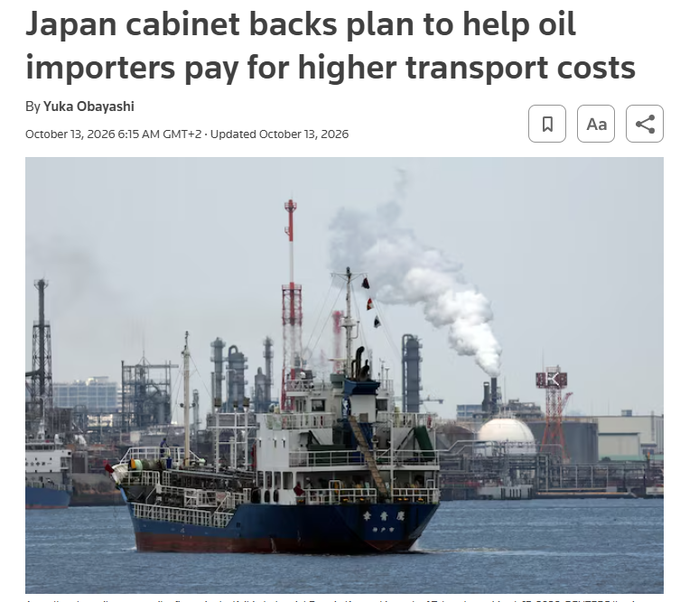
The government has approved legislation aimed at strengthening energy security, including support for higher transportation costs when crude is rerouted away from the Strait of Hormuz.
Other measures would help cover tanker insurance risks and support investment in alternative energy supply routes.
The vulnerability is significant.
Japan sources roughly 94% to 95% of its crude oil from the Middle East, leaving the economy heavily exposed to disruptions around Hormuz.
Diversifying supply can reduce that dependence, but alternative routes and more distant suppliers generally come with higher transportation and insurance costs.
That means Japan may have to pay structurally more for energy simply to improve supply security.
The timing is particularly difficult because higher energy costs can feed directly into inflation while Japanese government bond yields are already under upward pressure.
With Japan carrying one of the largest public debt burdens in the developed world, persistently higher inflation and borrowing costs create an increasingly difficult policy tradeoff.
The longer disruption around Hormuz persists, the greater the risk that an energy-security problem becomes an inflation and bond-market problem as well.