Author Argues Iran Is Targeting the U.S. Bond Market as 7-Month Hormuz Closure Pushes Yields and Inflation...
The author argues Iran is attacking the funding source of the U.S., the bond market, with a plan to create a massive supply shortage that increases inflation and drives surging interest rates.
The U.S. went into the war in pretty bad shape, with debt-to-GDP of over 100%, deficits of 6% of GDP and rising unemployment. But seven months of Hormuz being closed has made it worse:
- 10-year yield is up about 1%
- Diesel is up about 100%
- Inflation is the highest since 2023
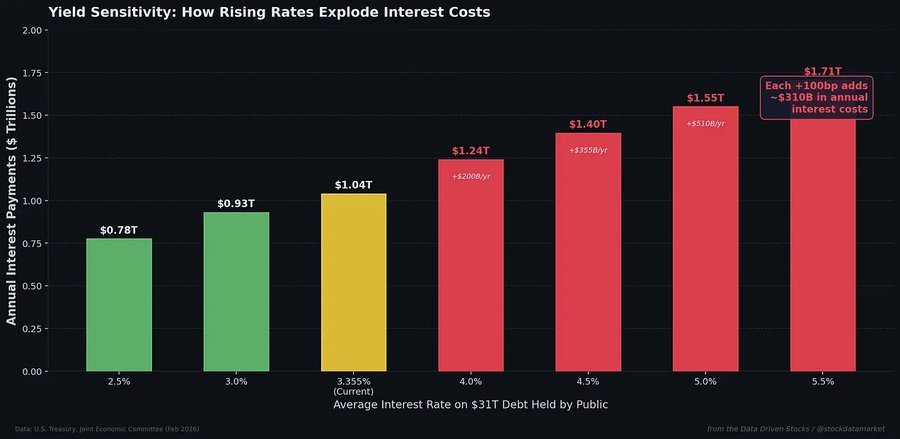
For every 1% increase in interest rates, interest expenses eventually surge by about $400 billion annually. Because the U.S. government is mainly financed on the short end, rate increases directly translate into higher deficits.
Within the next 12 months, about 33% ($10 trillion) of U.S. debt has to be refinanced, preferably at higher rates, if you ask the Iranians.
The author describes the cycle as higher inflation, higher yields, higher deficits, more issuance, and even higher yields.
According to the author, Trump can declare victory as often as he wants, but if Hormuz remains closed, bond yields will spike and crush the U.S. economy.
The author adds: "We don't own enough gold for what's coming."