education
AI Trade Alert Review for Serious Traders
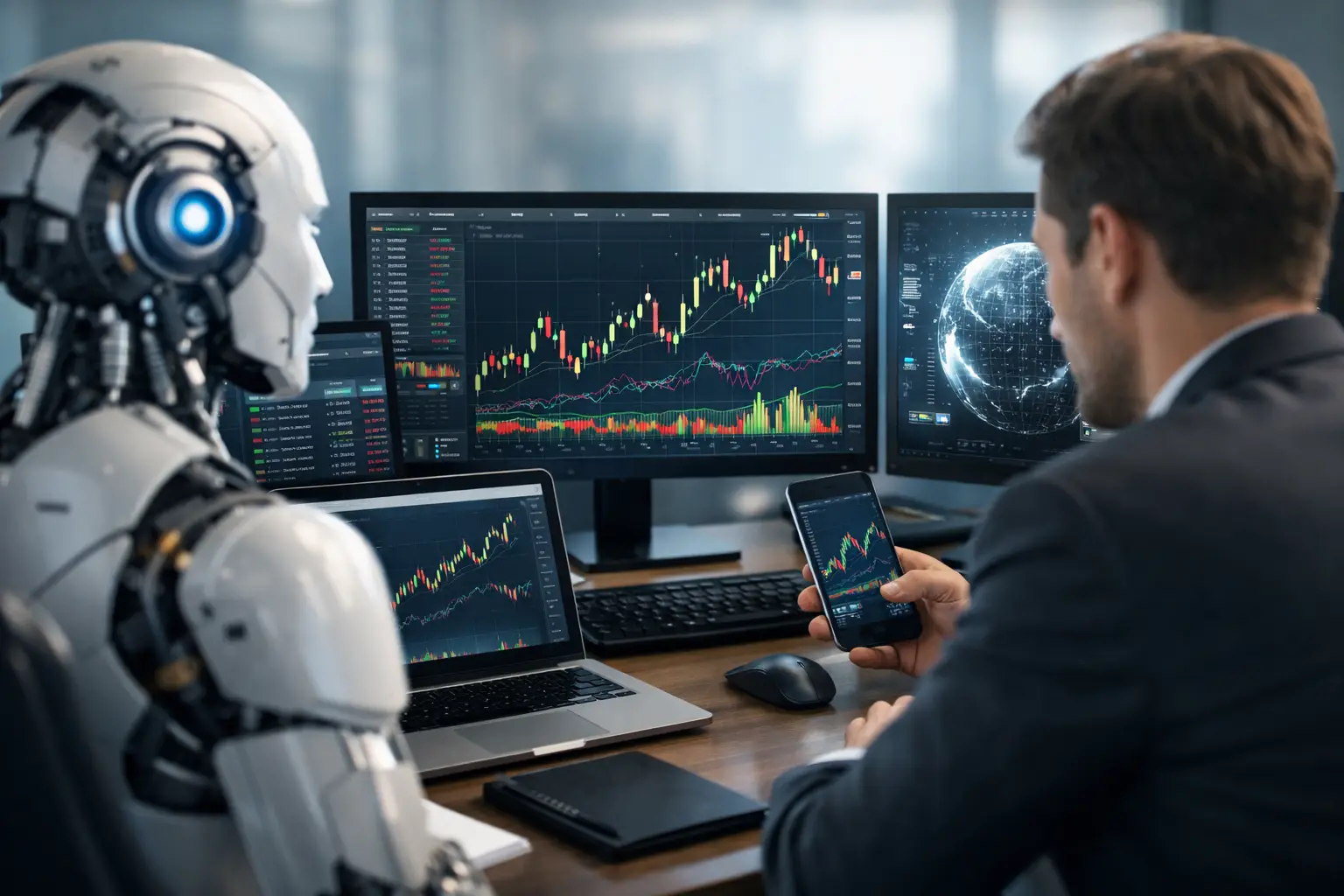
An AI trade alert review for traders who value verified data, clear risk rules, transparent performance, and signals that fit a real workflow each day.
A useful ai trade alert review is not about whether an algorithm can generate a compelling buy or sell message. Most can. The real question is whether the alert gives a trader enough context to make a disciplined decision under live market conditions: what changed, why it matters, where the trade is invalidated, and how the result will be measured.
For active participants across stocks, crypto, and forex, alert quality is increasingly a trust problem. A signal without timestamps, methodology, risk parameters, or verified outcome data is not market intelligence. It is content. Serious traders need a standard that separates AI-assisted analysis from automated noise.
What an AI Trade Alert Should Actually Deliver
An AI trade alert should reduce the time between market movement and informed action. It should not pretend to remove uncertainty. Markets remain probabilistic, liquidity changes quickly, and even a strong setup can fail because of a macro release, an unexpected headline, or a broader risk-off move.
At minimum, an actionable alert identifies the instrument, direction, entry logic, timeframe, and invalidation level. A stronger system also explains the conditions behind the signal. For example, it may flag an unusual increase in relative volume, a shift in options positioning, a technical breakout confirmed by sector strength, or a volatility event that changes the trade's risk profile.
That context matters because the same alert can mean very different things to different traders. A crypto scalper may treat a momentum spike as a short-duration opportunity. A swing trader may wait for a retest. A long-term investor may use the alert as a prompt for further research, not as an order instruction. AI can prioritize information, but the trader still owns the decision.
AI Trade Alert Review: The Standards That Matter
The best way to evaluate an AI alert product is to review its operating model rather than its headline win rate. A platform can publish a high percentage of winning trades while hiding poor risk-reward ratios, excluding stopped-out positions, or counting partial exits selectively. Performance without a clear measurement framework has limited value.
Start with the source of the intelligence. Is the model analyzing price action alone, or does it incorporate market breadth, order flow, volatility, news sentiment, fundamental data, and cross-asset behavior? More inputs do not automatically produce better signals. They do, however, make it easier to understand what the model is designed to detect and where its blind spots may be.
Next, examine alert timing. An alert that arrives after the primary move may still be useful for research, but it should not be presented as an executable entry. Timing should be visible through precise timestamps, including the market conditions at the time the signal was generated. This is especially critical in fast-moving crypto markets and around earnings, central bank decisions, or major economic releases.
Then look for explicit risk structure. A credible alert communicates more than upside potential. It states where the thesis fails, what position size may be appropriate relative to account risk, and whether the setup is intended for a five-minute chart or a multi-week holding period. If an alert has no invalidation point, it is not a complete trading idea.
Transparent Results Beat Selective Screenshots
Screenshots of profitable trades are marketing assets, not a performance record. Traders should expect a complete archive of alerts with original publication times, target levels, stop criteria, and final status. The archive should preserve losing trades alongside winning trades and show whether positions were closed manually, stopped out, or adjusted.
A meaningful record also distinguishes realized and unrealized performance. A position that briefly reaches a target before reversing is different from a trade that was actually closed at that level. Likewise, a strategy with a 75% win rate may be inferior to one with a 45% win rate if the losses are substantially larger than the gains.
Review the distribution, not just the average. How often do drawdowns occur? What is the largest losing sequence? Are results concentrated in a specific market regime, such as a sustained crypto bull market or a low-volatility equity environment? AI models can perform well when the conditions they learned from remain intact and struggle when the regime changes.
The Hidden Cost of Alert Execution
An AI alert can be analytically sound and still be impractical to trade. Execution is where many impressive backtests meet the real market.
A small-cap stock alert may be generated at a price that is unavailable by the time a retail trader sees it. A forex signal may not account for spreads during a news event. A crypto alert may look profitable before fees, funding rates, slippage, and liquidity constraints are included. These are not minor details. They determine whether an apparent edge survives contact with a live account.
Ask whether the platform's stated performance includes realistic assumptions. For liquid large-cap equities, this may mean modeling the bid-ask spread and modest slippage. For lower-liquidity tokens or fast futures markets, the execution assumption needs to be much more conservative. A transparent provider makes those assumptions visible instead of treating all instruments as equally tradable.
Alert frequency deserves scrutiny as well. A high-volume feed can create the impression of constant opportunity while producing decision fatigue. Traders who receive dozens of signals per day may begin to chase activity rather than follow a defined process. Quality filters, watchlists, and personalized risk settings are often more valuable than another stream of generic notifications.
AI Is Most Valuable When It Improves Judgment
The strongest use case for AI trade alerts is not blind automation. It is decision support within a connected market workflow.
AI can scan more instruments than a person can monitor, identify correlations across sectors and asset classes, summarize changing sentiment, and surface setups that meet predefined criteria. It can also help traders challenge their own assumptions by showing when a position conflicts with volatility conditions, broader market structure, or portfolio concentration.
That value increases when alerts connect to a trader's existing information environment. A signal should sit alongside chart analysis, portfolio exposure , community discussion, research notes, and post-trade review. Fragmented tools force traders to rebuild context every time an alert appears. Connected infrastructure makes it easier to assess the signal before capital is committed.
Tyrian Trade is built around this more accountable model of market participation: combining AI-assisted intelligence with portfolio analytics, verified community activity, and real-time market discovery. The objective is not to replace independent thinking. It is to give traders a clearer view of the information, reputation, and risk behind the ideas competing for their attention.
Verification Changes the Social Trading Equation
Social trading communities can add real value when they expose traders to different frameworks, asset classes, and market perspectives. They can also amplify hype when anonymous accounts publish unverified calls with no record of outcomes.
Verification creates a higher standard. A trader's ideas should be connected to a visible history, and performance claims should be distinguishable from opinion. The same principle applies to AI-generated alerts. Users should be able to see how often a model's conditions led to valid setups, when it failed, and whether its logic aligns with their own trading horizon.
This does not mean every successful trader must disclose every position or reveal a proprietary strategy. It means the community should have enough evidence to evaluate credibility. Transparent participation turns market conversation into a more useful layer of financial intelligence.
Build a Process Around Alerts, Not Around Excitement
Before acting on any AI signal, define its role in your process. An alert can be a scanner, a confirmation tool, a risk warning, or a trade trigger. These functions are not interchangeable.
A practical approach is to create a small set of rules before the alerts arrive. Decide which asset classes you trade, what timeframes you accept, how much capital you risk per position, and what evidence you require before entering. For one trader, a high-conviction alert paired with volume confirmation may qualify. For another, the same alert may only earn a place on a watchlist until price retests support.
Keep a record of alerts you acted on and those you passed over. Over time, the data will reveal whether the model helps your specific approach or tempts you into trades outside it. That personal evidence is more useful than a platform-wide success claim because it reflects your execution speed, risk tolerance, and market focus.
The right AI alert will not make trading effortless. It will make your next decision more observable, more structured, and easier to defend when the market moves against you.