education
Best Platform for Self Directed Investors
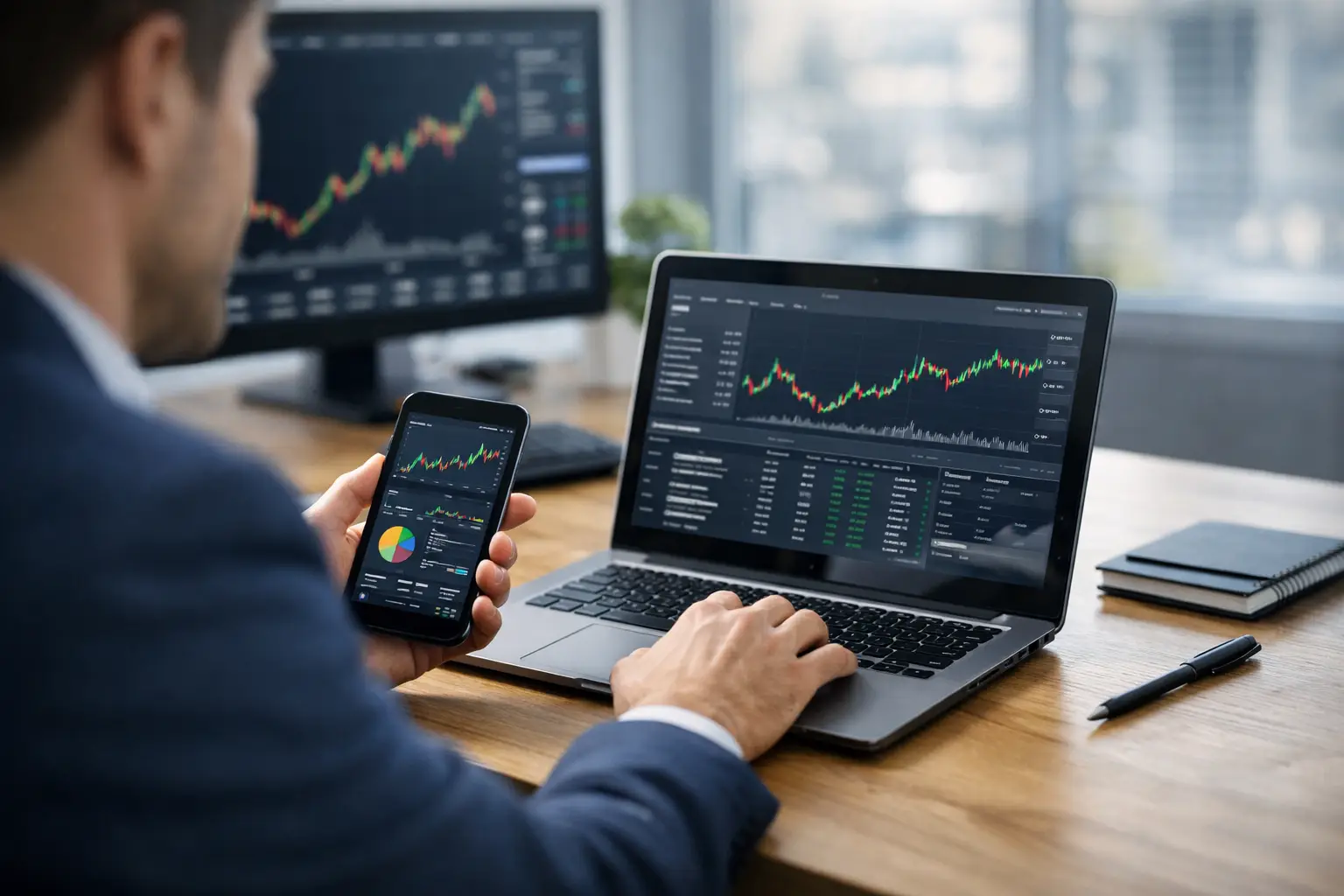
Find the best platform for self directed investors by comparing analytics, trust, community, execution, and tools that support better decisions daily.
A self-directed investor can place a trade in seconds. Building conviction before that trade is the harder problem. The best platform for self directed investors is not simply the one with the lowest commission or the longest product list. It is the platform that helps you research faster, evaluate risk clearly, verify the quality of market discussion, and maintain a connected view of your decisions over time.
For active participants across stocks, crypto, forex, and global markets, fragmented tools create a real operational disadvantage. A charting app in one tab, a brokerage account in another, a social feed full of unverified claims in a third, and portfolio data that never quite matches the full picture is not an efficient workflow. It is a source of friction, missed context, and avoidable risk.
What Makes the Best Platform for Self Directed Investors?
The right platform depends on how you invest. A long-term investor who rebalances quarterly has different needs from a trader managing short-term volatility. But both need reliable market data, transparent information, thoughtful portfolio visibility, and tools that support disciplined decision-making rather than emotional reactions.
The strongest platforms bring these capabilities into a connected environment. They do not treat research, community, analytics, education, and market activity as separate experiences. They recognize that an investor's process moves continuously between discovery, analysis, execution, review, and learning.
A platform should therefore be judged less by a single feature and more by the quality of its operating system for investment decisions.
Market intelligence that creates context
Raw market data is available almost everywhere. Context is not. Price movement without an explanation, earnings headlines without peer comparisons, or a crypto trend without liquidity and sentiment signals can encourage impulsive decisions.
Look for market intelligence that helps turn information into a working thesis. This may include real-time market monitoring, AI-assisted analysis , technical indicators, fundamental data, watchlists, event tracking, and tools that surface relevant changes across assets. The goal is not to outsource judgment to an algorithm. It is to reduce the time spent sorting noise from useful evidence.
AI can be especially valuable when it organizes large volumes of information, identifies changing market conditions, or helps investors monitor positions at scale. It should support a transparent research process, however, not become a black box that asks for blind trust.
Portfolio analytics that expose the real risk
Many investors know what they own but have a less complete view of what their portfolio is actually exposed to. Holdings can look diversified by ticker count while remaining concentrated by sector, asset class, geography, correlation, or macroeconomic sensitivity.
Useful portfolio analytics make these relationships visible. They help an investor assess allocation, performance over multiple periods, realized and unrealized results, concentration, drawdowns, and the impact of individual positions on the broader portfolio. For active traders, the same principle applies at a shorter time horizon: understand what is working, what is not, and whether results are driven by repeatable process or isolated outcomes.
This is where a platform shifts from being a trading interface to becoming decision infrastructure. The ability to review behavior and outcomes objectively can be more valuable than another speculative market alert.
A community built on verification, not volume
Social trading can accelerate learning, but it also creates one of the market's largest trust problems. Anonymous accounts can present selective screenshots, recycled opinions, or promotional content as expertise. High engagement does not prove a credible track record.
For self-directed investors, community features should be evaluated through the lens of transparency. Can you identify whether contributors are verified? Is there a visible history of their ideas, market participation, or analytical work? Are incentives clear? Can useful discussion be separated from hype?
A credible financial community does not eliminate disagreement. In fact, informed disagreement is often valuable. It gives investors competing views, tests assumptions, and reveals where a thesis may be weak. The standard should be accountable participation, not artificial consensus.
Tools that fit the way you actually work
A platform can have sophisticated features and still fail because its workflow is disconnected. The practical test is simple: when an opportunity or risk emerges, can you move from discovery to research to collaboration to action without rebuilding the same context across multiple tools?
For some investors, the priority is advanced charting and alerts. For others, it is portfolio reporting, educational content, market scanners, trading journals, or access to specialist tools. A marketplace for financial software can add real value when it allows users to find and integrate capabilities that match their strategy rather than forcing every investor into the same rigid setup.
The best experience is modular but connected. It gives beginners a clear path to learn while giving experienced market participants the depth to refine their process.
Questions to Ask Before You Commit
Do not choose a platform solely because it is popular or because a particular influencer uses it. Instead, assess whether it supports the decisions you need to make repeatedly.
Start with asset coverage. If you trade stocks, crypto, and forex, a platform that treats each market as an isolated silo will limit your view of cross-market conditions. Global investors should also consider market hours, data depth, currency support, and the relevance of news and analysis to the assets they follow.
Next, examine transparency. Understand what data is available, how performance metrics are presented, how community participants are verified, and whether promotional content is clearly labeled. Trust is not a marketing claim. It is a product design choice visible in the platform's incentives and information architecture.
Then evaluate the speed of the research workflow. Can you create watchlists, track catalysts, inspect a chart, review related discussion, and examine portfolio implications without unnecessary switching? Small delays compound when markets are moving.
Finally, consider your growth path. A beginner may need structured education and simple portfolio views now, while an active trader may prioritize detailed analytics and collaborative market intelligence. The right platform should remain useful as your skill level and strategy evolve.
Why a Connected Investment Ecosystem Matters
The old model of investing separated the market into disconnected destinations: a broker for execution, a news outlet for information, a chat group for ideas, a spreadsheet for tracking, and separate subscriptions for analytics. That model still functions, but it places the burden of integration on the investor.
A connected platform changes the equation. Research can be linked to market activity. Community discussion can be evaluated through reputation and verification. Portfolio analytics can inform the next decision rather than becoming a report reviewed after the fact. Educational content can be consumed in the context of live markets, where lessons are tested against real conditions.
This does not mean a single platform must replace every specialized tool. Some advanced investors will always use dedicated systems for execution, charting, tax reporting, or institutional research. The advantage comes from having a central intelligence layer that reduces fragmentation and preserves context across the investment process.
Tyrian Trade is built around this connected model, combining verified community participation, AI-powered market intelligence, portfolio analytics, financial education, live market discussion, and access to trading tools in one environment. For investors who see trust and information quality as part of performance, that architecture addresses a gap conventional platforms often leave open.
The Trade-Offs Worth Taking Seriously
More features are not automatically better. A broad platform can create complexity if navigation is unclear or if every signal competes for attention. Self-directed investors should be selective about alerts, feeds, and social activity. The purpose of technology is to improve signal quality, not create a faster route to distraction.
There is also a difference between insight and instruction. A quality platform can present data, surface patterns, and connect investors with credible perspectives. It cannot remove uncertainty or guarantee outcomes. Every trade and investment still requires independent judgment, an understanding of risk, and a plan for what happens if the market invalidates the original thesis.
Costs matter as well, but the lowest visible price is not always the lowest total cost. Consider subscription fees, trading costs, data access, time spent managing disconnected workflows, and the potential cost of acting on poor information. A platform that improves process may justify a higher price for an active investor. For a passive investor with straightforward needs, simpler and lower-cost tools may be the better fit.
The best choice is the one that makes your process more disciplined, more transparent, and easier to review. If a platform helps you see the market clearly while keeping your own judgment at the center, it is doing more than enabling trades. It is helping you build a better investment practice.