market
Big Tech Apprehension Still Exists: Raymond James' De
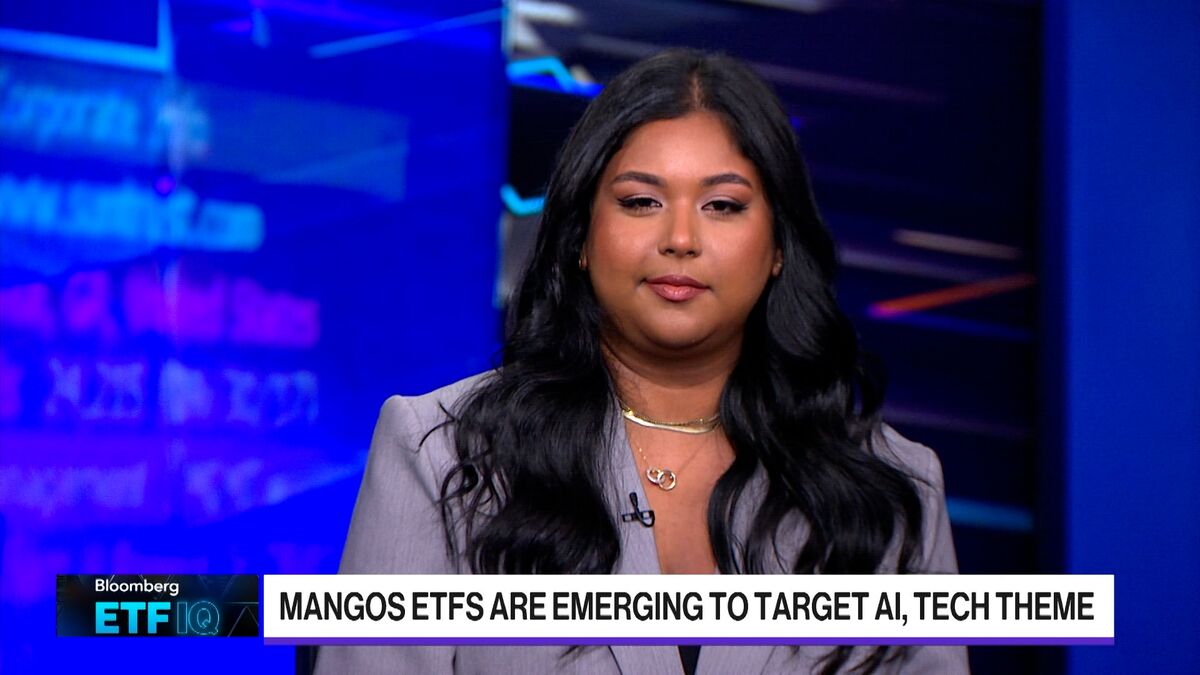
Raymond James ETF strategist discusses MANGOS acronym and Big Tech apprehension in Bloomberg interview covering Meta, Apple, Nvidia, Google, OpenAI, SpaceX.
According to Bloomberg Markets, investor caution surrounding major technology companies remains a significant theme as market participants grapple with a new grouping of dominant players. Mayuranki De, vice president of ETF strategy at Raymond James, discussed the emerging MANGOS acronym—representing Meta, Apple, Nvidia, Google, OpenAI, and SpaceX—during an appearance on Bloomberg ETF IQ with hosts Scarlet Fu and Katie Greifeld on June 22, 2026.
Key takeaways
Raymond James ETF strategist Mayuranki De addressed ongoing Big Tech apprehension in a Bloomberg interview
The MANGOS acronym groups Meta, Apple, Nvidia, Google, OpenAI, and SpaceX as the new dominant technology cohort
The discussion reflects evolving market frameworks for tracking concentrated technology sector influence
Investor concerns about Big Tech concentration persist despite the sector's market leadership
Table of Contents
The MANGOS Framework Emerges
Big Tech Concentration Concerns
ETF Strategy Implications
What to Watch Next
The MANGOS Framework Emerges
The MANGOS acronym represents a notable evolution in how market observers categorize the most influential technology companies. Unlike previous groupings such as FAANG (Facebook, Amazon, Apple, Netflix, Google) or the more recent Magnificent Seven, this new framework includes OpenAI and SpaceX—two privately held companies that have gained substantial influence despite lacking public market listings. The inclusion of these private entities alongside publicly traded giants Meta, Apple, Nvidia, and Google reflects the expanding definition of technology market leadership beyond traditional equity market boundaries.
This shift in nomenclature suggests that market strategists are recognizing the broader ecosystem impact of major technology players, regardless of their listing status. OpenAI's prominence in artificial intelligence development and SpaceX's dominance in commercial space operations have positioned both companies as systemically important to the technology sector's trajectory, even without public shareholders.
Big Tech Concentration Concerns
De's commentary on persistent Big Tech apprehension highlights ongoing investor concerns about market concentration risk. The technology sector has commanded an outsized portion of major equity index weightings, with a handful of companies accounting for significant percentages of benchmark returns. This concentration creates vulnerability for diversified portfolios, as broad market performance becomes increasingly dependent on a narrow group of mega-cap technology names.
The apprehension De referenced likely stems from multiple factors including valuation concerns, regulatory scrutiny, and the sustainability of growth trajectories for companies that have already achieved massive scale. Antitrust investigations, privacy regulations, and geopolitical tensions have all contributed to uncertainty around the Big Tech investment thesis, even as these companies continue to generate substantial revenue and earnings growth.
ETF Strategy Implications
As vice president of ETF strategy at Raymond James, De's perspective carries particular relevance for investors utilizing exchange-traded funds to gain technology sector exposure. The concentration of market capitalization among MANGOS constituents means that cap-weighted technology ETFs inevitably carry heavy allocations to these names, limiting diversification benefits within the sector.
This dynamic has implications for portfolio construction, as investors seeking technology exposure must decide whether to accept the concentration inherent in market-cap-weighted products or pursue equal-weight or thematic alternatives that distribute risk more evenly. The inclusion of private companies in the MANGOS framework also highlights a limitation of public equity ETFs, which cannot directly access the growth potential of influential private technology firms.
The discussion on Bloomberg ETF IQ underscores the ongoing challenge for ETF strategists in balancing client demand for technology exposure against concentration risks that have become more pronounced as a small number of companies have grown to dominate sector benchmarks.
What to Watch Next
Investors should monitor whether the MANGOS framework gains broader adoption among market strategists and whether it influences product development in the ETF industry. The inclusion of private companies in market leadership discussions may signal growing interest in vehicles that provide exposure to pre-IPO technology giants, though such access remains limited for most retail investors.
Additionally, the persistence of Big Tech apprehension despite strong fundamentals suggests that market participants will remain sensitive to regulatory developments, valuation metrics, and any signs of growth deceleration among these dominant players. How ETF flows respond to concentration concerns will provide insight into whether investors are actively seeking to reduce Big Tech exposure or remain willing to accept the risks in pursuit of sector returns.
Read original source