education
Can AI Predict Markets? What Traders Should Trust
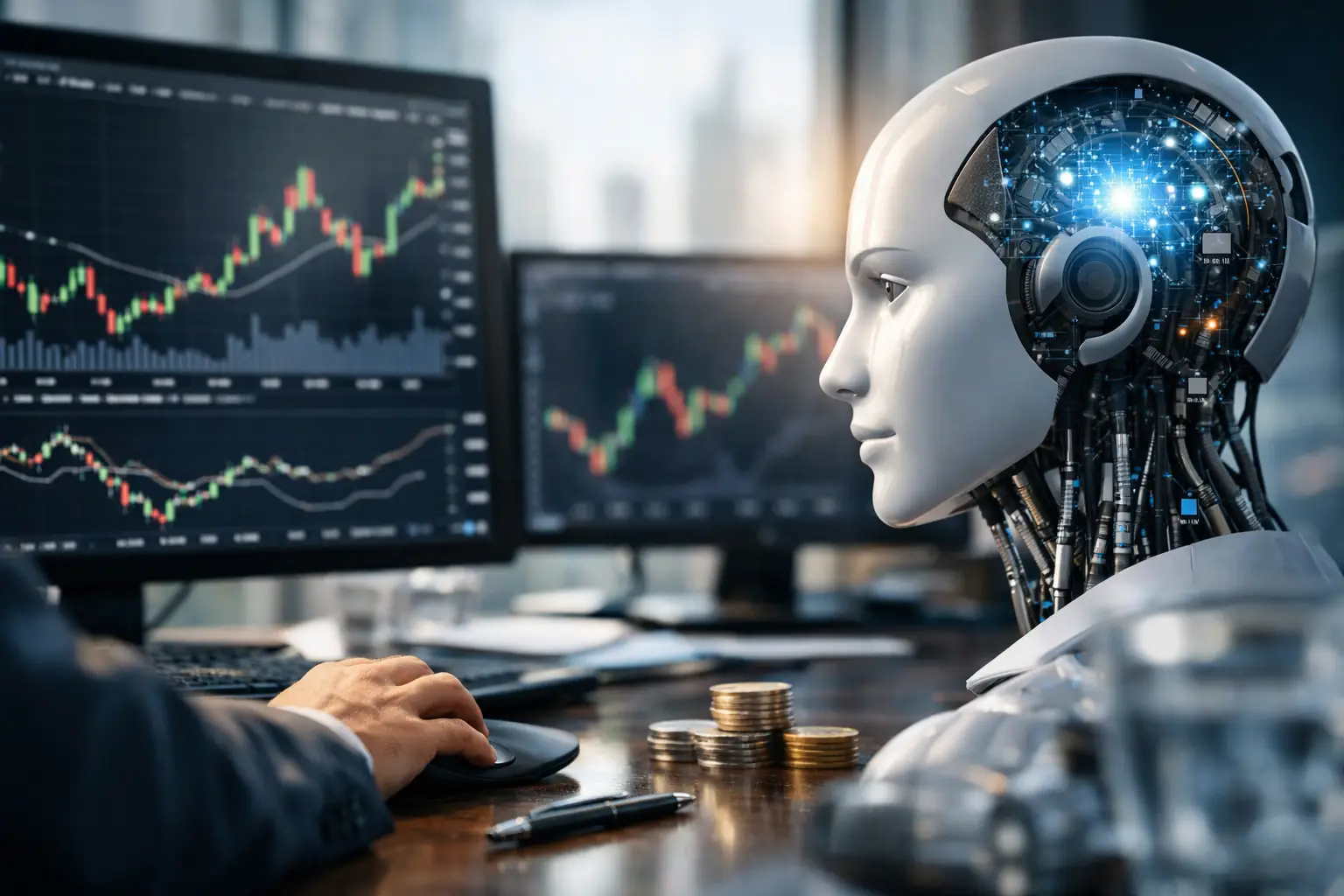
Can AI predict markets? Learn where models find real signal, where they fail, and how traders can apply AI insight with disciplined risk controls each day.
A model flags unusual options activity before a stock moves. Another detects a shift in crypto sentiment while price is still flat. For active participants, the question is no longer whether AI belongs in the trading workflow. It is: can AI predict markets well enough to support a real decision with real capital at risk?
The honest answer is yes, sometimes - but not in the way the most aggressive marketing claims suggest. AI can identify patterns, estimate probabilities, process information faster than a person, and surface conditions that deserve attention. It cannot remove uncertainty, know an unexpected headline before it exists, or turn a weak risk process into a durable edge.
For traders and investors, the value of AI is less about finding a machine that declares tomorrow's price and more about building a better decision system around evidence, timing, risk, and transparent review.
Can AI Predict Markets? It Can Forecast Probabilities
Markets are not a single predictable system. They are a live interaction between earnings, interest rates, liquidity, positioning, policy, headlines, institutional flows, and human behavior. The influence of each variable changes across assets and market regimes.
That distinction matters. A useful AI model does not say, “Bitcoin will be at a specific price next Tuesday.” It may instead estimate that, given volatility, derivatives positioning, on-chain activity, and current momentum, the chance of an upside breakout over the next defined period has increased. That is a probability forecast, not a promise.
This is where AI can be materially useful. Machine learning systems can analyze more variables than an individual trader can monitor manually. Natural language models can classify earnings-call language, central bank communication, news flow, or community discussion. Pattern-recognition models can detect relationships in price, volume, correlation, volatility, and order-flow data that are difficult to see on a chart alone.
The output still needs context. A 62% probability is not an instruction to take maximum exposure. It is an input that should be weighed against expected reward, downside, liquidity, time horizon, and the cost of being wrong.
Where AI Has a Real Advantage
AI performs best when the task is defined, the data is relevant, and the outcome can be measured. In market intelligence, that often means narrowing the problem instead of asking a model to predict everything.
A model may be effective at identifying volatility regimes, detecting unusual volume relative to an asset's history, ranking stocks by factor exposure, or highlighting when portfolio correlations are rising. It may help a forex trader monitor macro releases across currencies or help a crypto participant distinguish a broad risk-off move from a token-specific event.
Speed is another advantage. Markets generate more information than any single participant can process: filings, price movements, social discussion, economic releases, wallet activity, derivatives data, and technical signals. AI can organize that information into a timely watchlist or risk alert. The trader retains responsibility for determining whether the signal is credible and actionable.
The strongest applications are often operational rather than theatrical. AI can help standardize trade journals, identify repeated execution errors, summarize portfolio exposure , or flag when a position breaches predefined risk limits. These uses improve discipline even when no price forecast is involved.
Why Market Prediction Breaks Down
The same features that make markets attractive also make them hard to model. Market participants adapt. Once a pattern becomes widely known and traded, its advantage can shrink or disappear. Historical relationships can also fail when inflation, policy, liquidity, or market structure changes.
This is known as regime change. A strategy trained during a low-rate, high-liquidity period may behave very differently during a credit event or aggressive tightening cycle. In crypto, a model built around prior exchange flows may struggle when regulation, stablecoin confidence, or market access shifts. In equities, a strong historical earnings signal can be overwhelmed by a sector-wide macro repricing.
AI also has a data problem. Financial datasets may be incomplete, delayed, biased, or contaminated by future information. A backtest can look exceptional if it accidentally uses data that would not have been available at the time of the trade. It can also look compelling after repeated optimization, even though it has learned noise rather than a durable market relationship.
Then there are shocks. A geopolitical event, exchange outage, fraud revelation, policy announcement, or surprise economic print can change prices in seconds. AI can rapidly interpret the resulting information, but it cannot reliably forecast every discontinuity. Any platform or signal provider claiming otherwise deserves scrutiny.
The Difference Between a Signal and a Trading System
An AI signal is not a complete strategy. It may identify an opportunity, but a trading system also defines position size, entry conditions, invalidation level, exit logic, portfolio exposure, and what happens when the signal conflicts with broader market conditions.
Consider an AI model that identifies bullish momentum in a technology stock. That finding may be useful. But it becomes a trade only after practical questions are answered: Is the move already extended? Is earnings tomorrow? How much of the portfolio is already exposed to the same sector? Is the potential loss acceptable if the signal fails?
This is why trusted AI-assisted trading requires traceability. Users should understand the time frame of the model, the type of data informing the output, its historical limitations, and whether performance is measured after realistic fees and slippage. A black-box score without context may be interesting, but it is not enough to support a high-conviction decision.
Transparency does not mean exposing every line of proprietary code. It means presenting intelligence in a way that can be challenged, compared, and reviewed. Serious market participants need to see the logic around the signal, not just its conclusion.
How to Use AI Without Outsourcing Judgment
The most effective approach is to treat AI as a research and risk layer. Let it scan, rank, summarize, monitor, and stress-test. Do not let it replace the process that determines what you can afford to lose.
Start by matching the model to your horizon. A day trader needs information that reacts to intraday liquidity and volatility. A swing trader may prioritize trend, catalysts, and positioning. A long-term investor may benefit more from earnings analysis, portfolio concentration alerts, and changing fundamentals. A model can be technically sound and still be useless if its time frame does not match yours.
Next, demand validation. Look for out-of-sample testing, performance across different market conditions, realistic transaction assumptions, and a clear record of drawdowns. Accuracy alone is a weak metric. A model that is right often but occasionally produces large losses may be unsuitable for a leveraged strategy. The quality of risk-adjusted outcomes matters more than a headline win rate.
Finally, retain a decision journal. Record what the model indicated, why you acted or did not act, how much risk you took, and what happened. Over time, this separates a helpful tool from an attractive narrative. It also reveals whether your own behavior - late entries, oversized positions, ignored stops - is reducing the value of otherwise useful analysis.
Trust Is the Missing Infrastructure
AI-generated market insight is becoming easier to produce. Trusted market insight remains scarce. The difference is verification: who generated the idea, what evidence supports it, whether performance can be evaluated, and whether the community can distinguish analysis from promotion.
That is why connected financial infrastructure matters. On Tyrian Trade, AI-assisted intelligence can be more useful when it sits alongside portfolio analytics, market discussion , educational context , and verified participation rather than existing as an isolated prediction feed. The objective is not more noise. It is a clearer path from market data to informed action.
The right question is not whether AI can predict every market move. It cannot. The better question is whether AI can help you see relevant information earlier, evaluate it more consistently, and manage uncertainty with greater discipline. Used that way, it becomes less of an oracle and more of a serious advantage.