tech-ai
Chinese Startup Photon Matrix Develops AI Laser Mosquito System
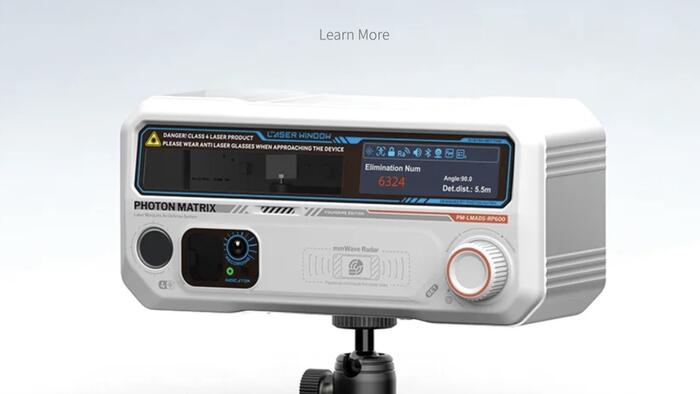
Chinese startup Photon Matrix has developed an AI-powered laser system to kill mosquitoes, securing 5,000 prepaid orders for the device.
A Chinese startup, Photon Matrix, has reportedly developed an AI laser mosquito system designed to eliminate mosquitoes using artificial intelligence and laser technology. According to ZeroHedge, citing The NY Times, the Changzhou-based company has already secured 5,000 prepaid orders for its "Laser Mosquito Air Defense System" and is preparing for large-scale manufacturing, while also seeking regulatory clearance in China, Europe, and the United States.
Key takeaways
Photon Matrix, a Chinese startup, has developed an AI-powered laser system to target and disable mosquitoes.
The system, priced at $1,000, uses lidar and AI to identify targets and employs a Class 4 laser.
The company has received 5,000 prepaid orders and is pursuing regulatory approvals in multiple regions.
Safety concerns regarding the powerful laser are being addressed with sensors, cameras, and mandatory safety quizzes.
Table of Contents
What Happened: AI-Powered Mosquito Control
Why It Matters: Innovation in Pest Control and AI Applications
Safety Considerations and Regulatory Hurdles
Broader Implications and What to Watch Next
Frequently Asked Questions
What Happened: AI-Powered Mosquito Control
Photon Matrix, a startup based in Changzhou, China, has introduced what it describes as a $1,000 machine capable of autonomously hunting mosquitoes. The device, named the Laser Mosquito Air Defense System, integrates artificial intelligence with laser technology to address the long-standing issue of mosquito infestations. The company has reportedly garnered significant early interest, securing 5,000 prepaid orders, and is now gearing up for large-scale production. This development marks a notable step in applying advanced technology to a common household and public health challenge.
The system's operational mechanics involve leveraging technology similar to that found in autonomous vehicles. It utilizes lidar to continuously monitor a designated area, enabling it to detect and track tiny moving targets such as mosquitoes. Once an insect is located, the system emits 100,000 low-intensity laser pulses per second for precise targeting. Subsequently, a much stronger laser beam is directed at the mosquito's wings, effectively destroying their ability to fly, though not necessarily killing them instantly. Company founder Wang Chuan noted that some disabled mosquitoes might remain alive for several days after being hit.
Why It Matters: Innovation in Pest Control and AI Applications
The introduction of an AI-powered laser system for mosquito control represents a significant technological leap in pest management. Traditional methods often involve chemical sprays or physical barriers, which can have environmental impacts or limited effectiveness. A laser-based solution, if proven safe and effective at scale, could offer a more targeted and potentially eco-friendlier alternative. For investors and technology enthusiasts, this highlights the expanding practical applications of artificial intelligence and sensor technology beyond conventional sectors like automotive or industrial automation.
This innovation also underscores the ongoing trend of applying advanced computing and optical systems to solve everyday problems. The ability to precisely identify and neutralize small, fast-moving targets demonstrates the growing sophistication of AI algorithms and sensor fusion. While the immediate focus is on mosquito control, the underlying technological framework could be adapted for other purposes, such as identifying and intercepting small drones. This potential for broader application suggests a versatile platform that could attract further research and development in various fields.
Safety Considerations and Regulatory Hurdles
A critical aspect of the Laser Mosquito Air Defense System is its safety profile, given that it employs a Class 4 laser. This type of laser is powerful enough to cause severe eye injuries almost instantaneously upon direct exposure. To mitigate this substantial risk, Photon Matrix has integrated several safety features into the device. These include cameras and sensors designed to recognize the presence of people, animals, and potentially hazardous reflective surfaces, enabling the system to automatically block the laser when necessary to prevent accidental exposure.
Beyond the embedded safety mechanisms, the company is also implementing user-side precautions. Owners of the device will be required to pass a mandatory safety quiz before they can unlock and operate the system, which is secured by fingerprint authentication. This multi-layered approach to safety, combining hardware, software, and user education, is crucial for securing regulatory clearance. Photon Matrix is actively working to obtain these necessary approvals in key markets including China, Europe, and the United States, which will be a significant hurdle for commercial deployment.
Broader Implications and What to Watch Next
While the immediate market for Photon Matrix's invention is mosquito control, the core technology has broader implications. The system's capacity to identify and intercept small, moving targets could be adapted for other applications, such as defense systems against small drones. This potential versatility could open up new market segments for the company beyond consumer pest control. The concept of using lasers for mosquito control is not entirely new; Intellectual Ventures demonstrated a similar idea in 2010, but it did not reach commercialization. Photon Matrix is banking on advancements in AI, sensors, and manufacturing to finally bring this concept to market successfully.
Traders and investors interested in technology innovation should monitor Photon Matrix's progress in securing regulatory clearances in China, Europe, and the United States. These approvals will be critical milestones for the company's ability to scale manufacturing and distribution. Additionally, observing the real-world performance and safety record of the deployed systems will be important. The long-term success of this tech solution will depend on its effectiveness, user adoption, and the company's ability to manage the inherent risks associated with powerful laser technology in consumer applications.
Frequently Asked Questions
What is the Laser Mosquito Air Defense System?
The Laser Mosquito Air Defense System is an AI-powered device developed by Chinese startup Photon Matrix that uses lidar and a Class 4 laser to detect and disable mosquitoes by targeting their wings.
How much does the system cost?
The system is priced at $1,000, and Photon Matrix has already secured 5,000 prepaid orders for the device.
What are the main safety concerns?
The primary safety concern is the use of a powerful Class 4 laser, which can cause serious eye injuries. Photon Matrix addresses this with sensors to detect people and animals, automatic laser blocking, and mandatory safety quizzes for owners.
Where is Photon Matrix seeking regulatory approval?
Photon Matrix is working to secure regulatory clearance for its system in China, Europe, and the United States.
What other applications could this technology have?
Beyond mosquito control, the underlying technology could be adapted for broader applications, such as systems capable of identifying and intercepting small drones.
Read original source