education
A Guide to Trader Transparency Tools That Matter
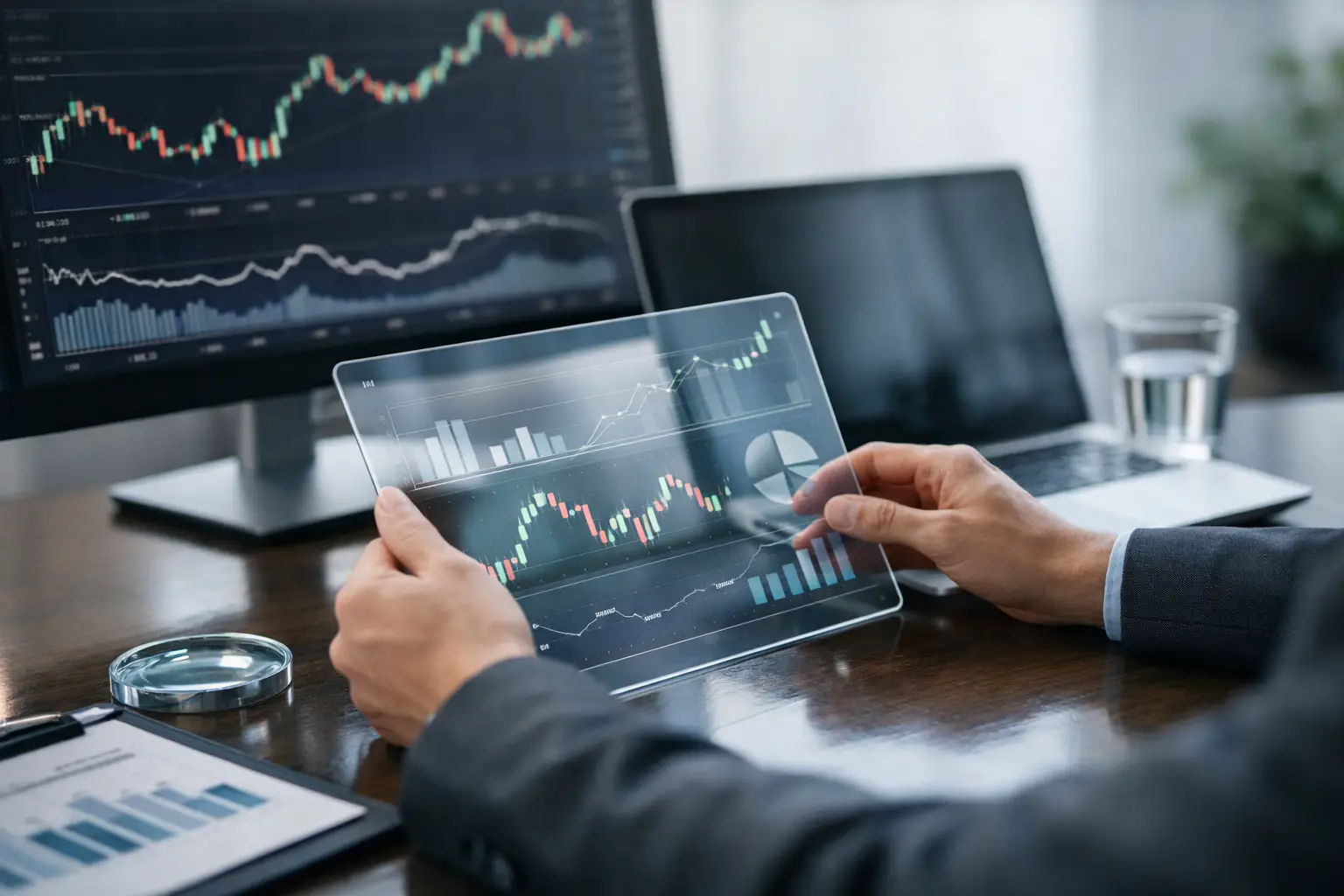
This guide to trader transparency tools shows how verified records, risk data, and portfolio analytics help investors assess market claims clearly now.
A profitable screenshot can travel through a trading community in seconds. What it rarely shows is the position size, the losing trades around it, the duration of the trade, or whether the account is real. That gap is where costly decisions begin. A guide to trader transparency tools starts with a simple standard: market claims should be evaluated through evidence, not presentation.
For active traders and self-directed investors, transparency is not a cosmetic feature. It is the infrastructure that makes social trading, shared research, and market education more credible. The right tools make it possible to inspect performance, understand risk, verify participation, and separate a repeatable process from a well-timed post.
Why trader transparency changes the quality of market decisions
Trading communities create a useful information advantage when ideas move quickly, people explain their reasoning, and different market perspectives can be tested in public. They also create noise. Anonymous accounts can overstate results, remove losing calls, publish delayed entries as if they were live, or build influence around a single volatile win.
Transparency tools reduce that asymmetry. They give viewers a framework for asking better questions: Was this trade documented before the move? Is the reported return based on realized profit or open profit? How much capital was at risk? Has the trader performed through different market conditions?
This does not mean a verified trader will always be right. No tool can remove market uncertainty or replace independent judgment. It does mean the community can assess ideas using a fuller record, rather than relying on confidence, follower counts, or selective charts.
The core tools in a guide to trader transparency tools
A meaningful transparency stack connects identity, activity, performance, and risk. Each layer answers a different question, and the strongest evaluation comes from viewing them together.
Verified identity and participation
Verified profiles establish that a participant is tied to a real, accountable presence on the platform. Depending on the platform and applicable requirements, verification may involve identity checks, account ownership confirmation, or other participation controls. This matters because accountability changes behavior. A trader who cannot simply abandon a profile after a bad streak has a stronger incentive to communicate accurately.
Verification should not be mistaken for an endorsement of skill or a guarantee of safety. It tells you more about who is participating than whether their next idea will work. Still, it is a critical first filter when comparing educational content, social trading profiles , or potential collaborators.
Look for clear distinctions between verified identity, verified brokerage or exchange connections, and self-reported information. These are not interchangeable labels. A platform that explains the difference is giving users a more honest basis for trust.
Trade history and timestamped disclosures
The most useful performance record is not a polished recap. It is an auditable sequence of decisions. Timestamped entries, exits, updates, and thesis changes let a viewer see whether a trade was communicated in real time or reconstructed after the result was known.
A complete history also reveals behavior that headline returns can conceal. Does the trader cut losses consistently? Do they add to losing positions? Do they hold positions for minutes, days, or months? Are gains concentrated in one event-driven trade? The answers shape whether a strategy is relevant to your own timeframe and risk tolerance.
Context matters here. A day trader’s record cannot be judged by the same expectations as a long-term investor’s portfolio, and a crypto strategy may experience volatility that would be unusual in a diversified equity account. Transparency is useful precisely because it preserves those distinctions instead of forcing every participant into one score.
Portfolio analytics and risk metrics
Profit and loss is the beginning of analysis, not the end. Portfolio analytics translate a return number into the risk taken to produce it. Tools that show drawdown, win rate, average gain and loss, exposure, concentration, volatility, holding period, and risk-adjusted performance provide a clearer picture of the underlying process.
Maximum drawdown is especially valuable. A strategy that returns 25% but experiences a 55% drawdown may be unsuitable for an investor who would exit during the decline. Likewise, a high win rate can be misleading if the occasional loss is far larger than the average gain. Risk metrics make these trade-offs visible.
For portfolios holding stocks, crypto, forex, and derivatives, exposure data is equally essential. Several positions can appear diversified while still carrying the same directional bet. A portfolio long crypto miners, Bitcoin-related equities, and a broad digital asset fund may be more concentrated than it first appears.
Broker, exchange, and data connections
Connected account data can reduce manual reporting and make performance records harder to manipulate. Where users choose to connect supported brokerage or exchange accounts, activity can be reflected through source data rather than copied from a spreadsheet or screenshot.
There are trade-offs. A connected account may not capture every external holding, and users should understand what data is shared, how it is protected, and whether a record is read-only or capable of initiating activity. Privacy controls are not separate from transparency. Users need control over what is visible, to whom, and at what level of detail.
A thoughtful platform can support both credible verification and selective disclosure. For example, a trader may choose to share aggregate performance and risk statistics without exposing account balances, exact position sizes, or every holding. That protects legitimate privacy while preserving evidence that the track record is grounded in real activity.
Reputation signals and community review
Reputation becomes more useful when it is earned through durable participation rather than raw popularity. Helpful signals can include a history of published analysis, consistency between stated thesis and execution, peer feedback, educational contributions, and an established record of updating views when conditions change.
Community feedback needs structure. Unmoderated comments can become an echo chamber, while popularity systems can reward entertaining calls over disciplined research. The best reputation models give more weight to traceable contribution and verified activity than to viral engagement alone.
How to evaluate a trader without overtrusting the data
Transparency tools improve due diligence, but they do not create a shortcut to certainty. Start by reviewing a sufficiently long sample period. A strong three-week record during a risk-on rally says far less than a record that includes changing volatility, losing periods, and different market regimes.
Then compare the trader’s approach with your own objectives. A leverage-heavy forex strategy may be internally consistent for an experienced participant with strict risk limits, yet entirely wrong for an investor building a retirement-focused equity portfolio. The question is not only whether the trader made money. It is whether their method, drawdown profile, and time commitment fit your plan.
Pay close attention to exclusions. Are losing trades missing? Is performance net of fees, funding costs, commissions, and slippage? Are open positions presented as completed gains? Is the performance figure tied to one account, a model portfolio, or a collection of selected trades? Clear methodology is a positive signal. Vague language is a reason to slow down.
Finally, treat transparent information as research input, not a trade instruction. A well-documented idea can help you identify a setup, challenge an assumption, or understand a sector catalyst. Your own risk parameters, position sizing, and research process still determine whether action makes sense.
Building a more trusted trading workflow
The practical value of transparency increases when it is integrated into the trader’s daily workflow. Instead of moving between disconnected social feeds, charting platforms, spreadsheets, and private chat groups, participants benefit from a connected view of market discussion, verified activity, portfolio analytics, and research tools .
This is the model behind platforms such as Tyrian Trade: a financial intelligence environment where community discovery can be supported by analytical context, reputation, and technology designed for accountable participation. The goal is not to turn every trader into a public portfolio manager. It is to give serious market participants clearer signals when they choose to share, follow, learn, or collaborate.
For beginners, that can mean learning to recognize the difference between a trade idea and a documented process. For advanced traders, it can mean presenting research and performance with enough context to build long-term credibility. For every participant, it creates a better market conversation: less dependent on noise, more grounded in evidence.
The next time a compelling trading claim appears in your feed, do not ask only whether it sounds convincing. Ask what the record shows, what the risk looked like, and whether the evidence would still hold up after the chart stops moving.