education
How to Follow Profitable Traders Intelligently
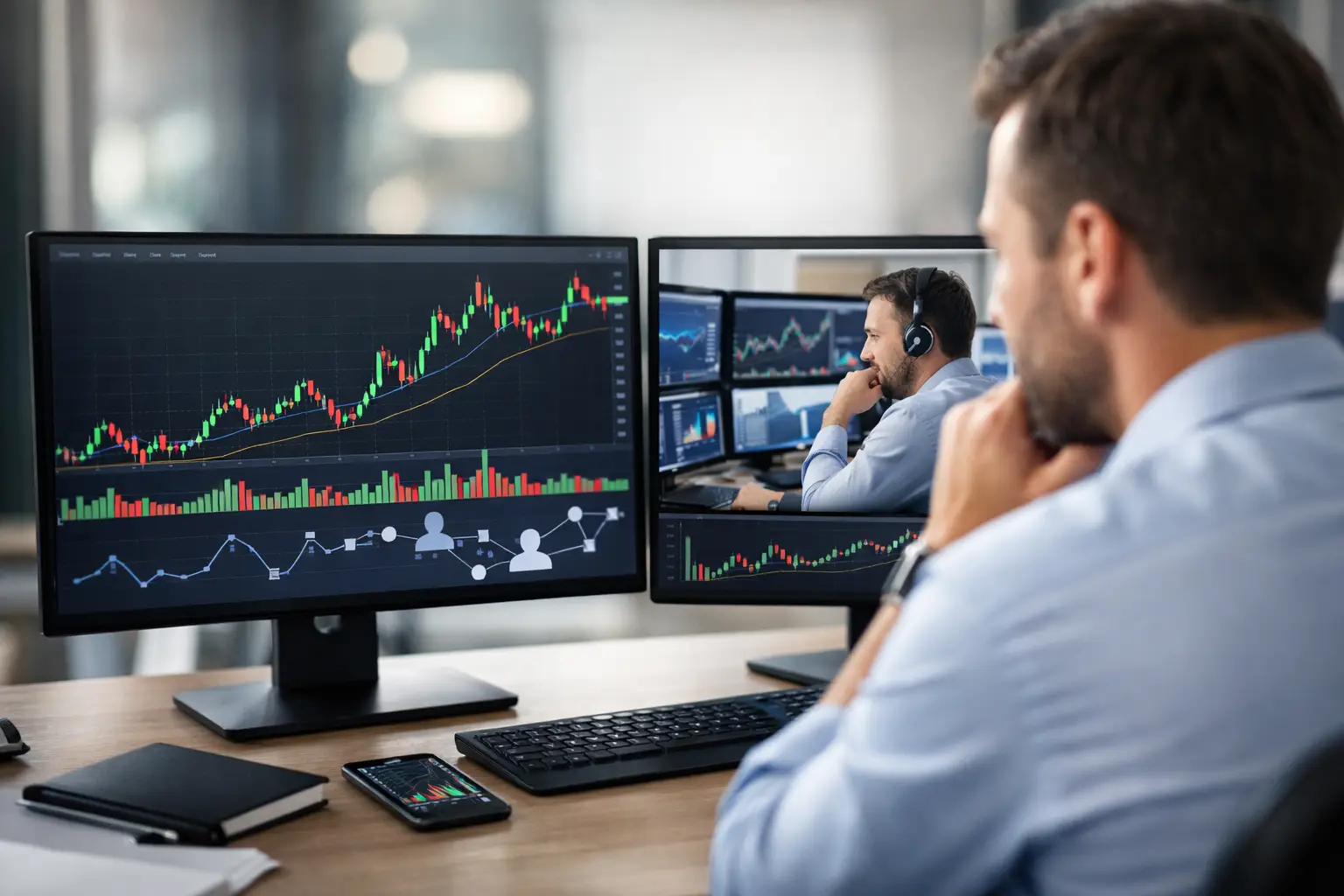
Learn how to follow profitable traders using verified performance, risk context, and real-time insights without copying trades blindly or chasing hype.
A profitable trader posts a winning position. Within minutes, the idea is reposted, the ticker trends, and late entries start piling in. That is not market intelligence. It is often a liquidity event.
To follow profitable traders effectively, you need more than a leaderboard, a screenshot, or a high-conviction post. You need context around performance, risk, timing, strategy, and incentives. The objective is not to mirror another person’s trades. It is to build a higher-quality decision process by observing participants who consistently demonstrate skill.
For active traders and self-directed investors, this distinction matters. Markets move fast, but trust should move slower. A credible social trading environment makes it easier to separate repeatable market insight from noise, promotion, and selective storytelling.
What “Profitable” Actually Means
Profitability is a starting point, not proof of trading quality. A trader can produce a large short-term gain through concentrated risk, favorable market conditions, or a single outsized position. That result may be real, but it does not automatically make the approach repeatable or appropriate for your portfolio.
The stronger signal is risk-adjusted consistency. Look for a track record that shows how returns were generated across different periods, market regimes, and drawdowns. A trader who compounds steadily while controlling downside may offer more useful insight than someone whose account has doubled after one volatile crypto trade.
It also depends on your own goals. A short-term momentum trader may be highly profitable while using entry and exit windows that are impossible for a long-term investor to replicate. A forex trader’s process may rely on overnight liquidity and macroeconomic releases that do not translate to equities. The right person to follow is not simply the one with the highest return. It is the one whose process you can understand, evaluate, and potentially apply within your own risk limits.
How to Follow Profitable Traders Without Copying Them
The most valuable traders to follow show their work. They explain the thesis, identify what could invalidate it, and update their view when conditions change. This creates an evidence trail that lets you evaluate decision-making rather than judge a person by the outcome of one trade.
Start by observing how they frame a setup. Do they identify a catalyst, key price level, earnings event, economic release, trend signal, or liquidity condition? Do they distinguish between a trade idea and an investment thesis? A disciplined trader knows that a strong company can still be a poor short-term trade, and a technically attractive setup can fail despite a sound chart.
Then watch what happens after entry. Many accounts are highly visible when a position is working and absent when it is not. Credible participants discuss adjustments, hedges, partial exits, and invalidation. Their transparency during drawdowns is often more informative than their confidence during a rally.
Following does not mean copying. By the time a post reaches your feed, the price may have changed materially. Your account size, buying power, tax situation, liquidity access, and tolerance for loss may also be different. Treat another trader’s activity as a research input, not an execution command.
Verify Performance Before You Trust It
A screenshot can be edited. A single winning trade can be cherry-picked. Even a public feed can create a distorted picture if losses, closed positions, or account-level exposure are missing.
Verified participation changes the quality of the conversation. Where available, prioritize performance data that is connected to actual trading activity and presented with enough history to evaluate. Review returns alongside the size and duration of drawdowns, win rate, average gain versus average loss, holding period, and exposure concentration.
No single metric tells the full story. A high win rate can conceal occasional large losses. A low win rate can still be viable if average winners are meaningfully larger than average losers. High returns may come from leverage, a narrow sector bet, or a market environment that rewarded one specific style.
Ask practical questions: How long has this track record existed? How much capital is at risk in a typical position? Does the trader hold positions through earnings or major economic events? Are losses cut according to a stated process? Are results measured before or after fees, funding costs, and slippage?
A trustworthy profile should make these questions easier to investigate, not harder.
Read the Process, Not Just the P&L
The best market participants often have a recognizable operating system. They may use macro catalysts to set directional bias, technical levels to manage entries, options flow to assess positioning, or portfolio analytics to control correlated exposure. You do not need to adopt their exact method. You need to understand whether there is a method.
Pay attention to whether a trader is consistent about risk. If every position is described as a “high conviction” opportunity, that is not a framework. If stop levels move only after a trade turns negative, that is not disciplined position management. Clear rules do not guarantee profits, but they make performance more interpretable.
Timing also deserves scrutiny. A trader may identify trends early but execute poorly, or trade well intraday while offering little value to someone who checks markets twice a day. Follow people whose cadence matches yours. Long-horizon investors should prioritize research quality, portfolio construction, and thesis updates. Active traders may place greater weight on real-time commentary, execution discipline, and reaction speed.
Build a Focused Intelligence Network
Following hundreds of accounts rarely produces better decisions. It usually produces conflicting signals and a feed dominated by the loudest voices. A smaller network of credible participants is easier to monitor and more useful over time.
A practical network can include traders with different but complementary perspectives: a technical analyst who maps key levels, a macro-focused investor who tracks central-bank policy, a sector specialist who understands earnings dynamics, and a risk-conscious trader who discusses positioning and drawdowns. The goal is not consensus. It is better visibility into the factors moving a market.
Use this network to challenge your assumptions. If several experienced traders are bullish on an asset, ask whether they share the same thesis or are reacting to the same momentum. If your view differs, identify the evidence that would prove you wrong. Strong communities improve conviction through scrutiny, not through applause.
On Tyrian Trade, the value of a connected market intelligence environment comes from bringing trader reputation, portfolio analytics, market discussion, educational content, and tools into a more transparent workflow. The result should be a clearer path from market observation to independent analysis.
Turn Observation Into a Repeatable Routine
A feed becomes useful when you give it structure. Review followed traders at defined intervals instead of reacting to every alert. Compare their current ideas with prior calls, note whether their stated risk parameters held, and track which types of insight have been most relevant to your own decisions.
Keep a short research journal. Record the original thesis, the market context, your interpretation, and the eventual outcome. Over time, this reveals whether a trader is particularly strong at spotting breakouts, identifying macro inflection points, managing volatility, or explaining sector fundamentals. It also reveals where their approach does not fit your style.
Avoid measuring value only by whether you copied a trade and made money. A trader can provide exceptional value by helping you avoid a poor entry, recognize a crowded position, or understand why a market is behaving differently than expected. Those lessons can compound long after a single trade is closed.
Watch for Signals That Deserve Caution
High engagement is not a substitute for credibility. Be cautious when an account promotes urgency without a clear thesis, advertises outsized gains without discussing losses, constantly shifts narratives, or treats risk management as weakness. The same applies to traders who offer vague predictions that cannot be evaluated after the fact.
Conflicts of interest matter as well. A trader may have incentives related to a token, product, community, or sponsored campaign. Disclosure does not automatically invalidate an idea, but it gives you necessary context. Transparent participants make their incentives visible and let the analysis stand on its own.
Markets do not reward blind loyalty. Even skilled traders experience losing periods, and strategies that worked in a low-volatility trend can struggle when liquidity contracts or correlations change. Continue evaluating the process as conditions evolve.
The trader worth following is not the person who promises certainty. It is the person who makes uncertainty legible: what they see, why they see it, where they are wrong, and how they manage the risk. That standard gives you something far more durable than a trade alert - a sharper way to think before capital is at risk.