general
How to Transition from Hobby to Serious Trading in 2026
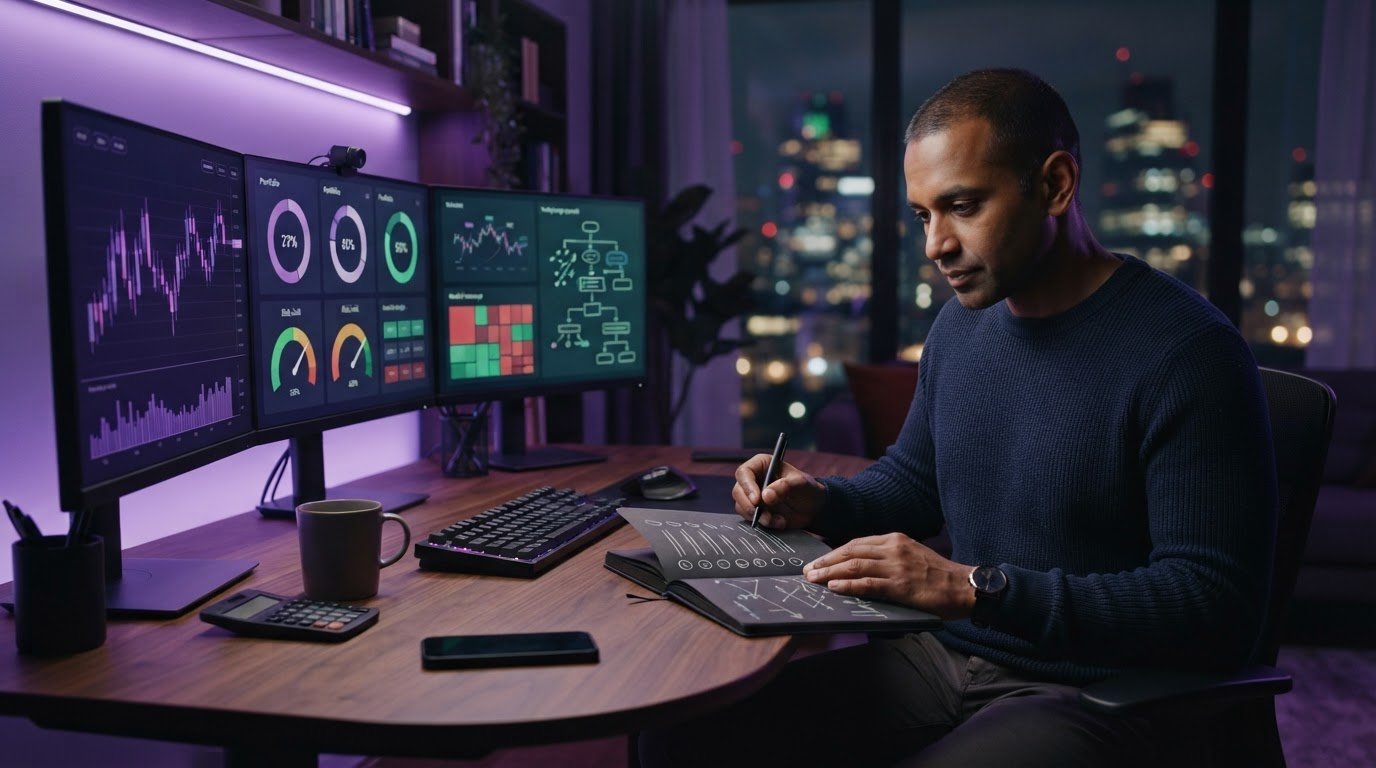
Discover how to transition from hobby to serious trading with disciplined risk management, clear written rules, and repeatable routines for long-term success.
Serious trading doesn’t start when you quit your job. It starts when your process can withstand scrutiny. If you’re asking how to transition from hobby to serious trading, more screen time isn’t proof of readiness. A repeatable routine, clear risk limits, and honest performance reviews are stronger signs that you’re building a disciplined approach.
It makes sense to want a clear next step when inconsistent decisions make results hard to evaluate, or a run of wins makes trading feel ready to take center stage. But isolated wins don’t tell the whole story, and emotional risk-taking can turn a setback into a larger problem. You can take trading more seriously without deciding today to leave your job.
This guide will help you create written trading rules, build a routine you can sustain, and assess your results using evidence rather than memorable trades. You’ll also consider how to set risk boundaries, choose research and review tools, and decide on a transition pace that fits your finances and responsibilities. The goal is a stronger process, not a promise of profit or a shortcut to full-time trading.
Key Takeaways
Learn how to transition from hobby to serious trading by building a repeatable process, not simply spending more hours watching markets.
Test your approach in a clear sequence: define a setup, write rules, record decisions, review patterns, and revise with care.
Choose tools based on the task they support. Sophisticated software can’t replace risk limits or independent judgment.
Use practical readiness checks for process consistency, risk controls, record quality, and personal obligations before increasing your commitment.
Research tools and accountable community participation can support your review, but they can’t substitute for your own trading decisions.
Table of Contents
Transition to Serious Trading Without Rushing
Build a trading process you can test before increasing commitment
Compare trading tools by the job they solve, not their complexity
Should you quit your job to trade? Use readiness gates, not a deadline
Use Tyrian Trade to support research, review, and accountable participation
Transition to Serious Trading Without Rushing
Serious trading isn’t a job title, a full-time schedule, or a promise that trading will replace your income. It’s a way of working: decisions follow clear rules, risk is considered before a trade, and results are reviewed for patterns. That shift can happen while trading remains a part-time pursuit.
If you’re exploring how to transition from hobby to serious trading, start by separating two questions: “Am I improving my process?” and “Should trading become my main source of income?” The first is about discipline and evidence. The second involves broader financial and personal circumstances, and it doesn’t have to be the next step.
What changes when trading becomes a serious practice?
A casual observation might be, “This stock looks strong.” A documented hypothesis is more specific: what market condition supports the idea, what would invalidate it, and how will you manage risk if the trade moves against you? A written trading strategy gives you a framework for evaluating decisions instead of relying on memory or mood.
That framework matters even if you trade after work or only when your schedule allows. Recording your reasoning before acting makes it easier to compare your plan with what you did. It can also reveal whether a result followed from sticking to your rules or departing from them.
Keep process quality separate from a single outcome. A trade that followed your plan can still lose; an impulsive trade can still win. Neither result alone proves your approach works or doesn’t. Review a body of records for repeated strengths, recurring mistakes, and market conditions that may affect your decisions.
Does serious trading mean becoming a full-time trader?
No. You can bring structure to your trading while retaining a job or another source of income. Keeping those roles separate can help you assess your process without treating every trade as a test of whether you can pay your bills.
Going full-time is a distinct life and financial decision, not a badge you earn by logging more hours. It can change how you handle income variability, time, and pressure. There’s no universal earnings threshold or timeline that makes the move right for everyone, so don’t let someone else’s story set your pace.
Uncertainty is part of evaluating any new commitment. You may not yet know whether your results are consistent, how much time a disciplined routine will take, or how financial pressure would affect your decisions. Treat those as questions to investigate, not reasons to rush or panic. Build a reviewable process first; let evidence, responsibilities, and personal circumstances guide any larger change.
Build a trading process you can test before increasing commitment
A process turns an idea into something you can examine. Work through it in order: define a setup, write the rules, record each decision, review patterns, then revise cautiously. Changing rules after every loss or win makes it difficult to tell whether your approach needs improvement or you’re reacting to noise.
Turn a trading idea into written rules
Make the idea specific enough that you can recognize it before acting. For example, “buy when the market looks strong” leaves too much room for interpretation. Write down the conditions that define the setup, what must happen before an entry, what would invalidate the idea, how you’ll decide when to exit, and when to stand aside. Set risk boundaries in advance, based on your own circumstances and tolerance. There’s no single limit that fits everyone.
Before considering live exposure, examine how the rules would have worked in historical data or a simulated setting. Use those results to spot unclear rules and potential weaknesses, not as proof of future performance.
Record decisions, then review the evidence
A useful journal captures more than the outcome. For each decision, note:
- Rationale: Which setup and rules informed the decision?
- Conditions: What was happening in the market, including volatility or broader trends?
- Risk and execution: Where were your planned invalidation and exit points, and did you follow them?
- State of mind: Were you patient, uncertain, frustrated, or reacting to a previous trade?
A trading journal helps you review your process; it can’t guarantee returns. Its value is in making decisions comparable. A short winning streak may reflect favorable conditions or chance, while a losing stretch doesn’t automatically invalidate a method you followed consistently. Look at a meaningful body of comparable decisions, check whether you followed your rules, and account for changing market conditions. Don’t treat one setup in one environment as evidence about every situation.
When reviewing, separate decision quality from the result. Did the trade meet your written criteria? Did you respect your risk boundaries? Compare similar setups where possible, and note where conditions differ. Then adjust one part of the process at a time so you can observe what changes. For deeper guidance on documenting and presenting your records, see how to build a trading track record.
This evidence-led loop is a practical foundation for how to transition from hobby to serious trading. If community discussion helps you test your thinking, you can also explore Tyrian Trade’s social trading network as an optional source of perspectives. Evaluate any market information independently and keep your own rules at the center.
Compare trading tools by the job they solve, not their complexity
Tools should make a sound process easier to follow, not make trading feel more professional by adding screens. As you consider how to transition from hobby to serious trading, match each tool to a specific task: recording decisions, examining market information, or hearing perspectives from other participants. If a tool doesn’t improve a task you already understand, it may add clutter rather than clarity.
When are basic tracking tools enough?
A spreadsheet or journal can be enough when you need to capture your setup, reasoning, market conditions, planned risk, execution, and outcome. Use the same fields each time. A consistent format lets you compare decisions and check whether you followed your rules. Scattered notes and disconnected dashboards can make that review harder.
Charting and analytics tools serve a different purpose: they help organize or visualize market information. Add them when you can name the question you want answered, such as whether a setup behaves differently under changing volatility. Don’t choose software just because it looks advanced. Complexity can add inputs without improving your judgment.
When can analytics and community tools add context?
Analytics can help surface patterns, but a display or summary isn’t a conclusion. Check what information it uses, whether the output is clear and understandable, and whether it fits your own records. AI-assisted analysis can support research, but it still requires independent evaluation. For a broader overview of AI-powered trading tools, consider what each tool can and can’t tell you before adding it to your routine.
Community platforms bring in other viewpoints, not automatic verification or instructions to follow. A discussion can help you spot questions you hadn’t considered, but treat claims as prompts for your own research. Learn more about the evolution of social trading platforms, including the role of transparency and participation.
Before adopting any tool, check four things: data clarity , ease of use , transparency about what it shows , and fit with your existing routine . Tyrian Trade brings together community discussion, verified participation, analytics, AI-assisted market analysis, and a trading terminal. These capabilities can support research and review, but they can’t replace a tested method, personal risk limits, or critical judgment. If that mix fits the task you’re trying to solve, explore Tyrian Trade’s financial tools and community features as optional support for your workflow.
Should you quit your job to trade? Use readiness gates, not a deadline
No. Serious trading doesn’t require leaving employment. Treat increased discipline and a full-time career shift as separate decisions: you can improve your routine, research, and review while keeping other income and responsibilities in place.
Instead of setting a resignation date, use readiness gates. Check whether your written process holds up across different market conditions, whether you respect your risk controls, and whether your records are complete enough to evaluate decisions. Then look beyond trading: consider available time, emotional resilience, household responsibilities, financial obligations, and how you’d respond to a stretch of losses.
What should you assess before trading more actively?
Ask whether you can follow your rules when markets are volatile, when you’re tired, and after an upsetting result. Review your records for gaps, and note whether you’re making decisions under pressure. Avoid funding trades with money needed for essential expenses, and don’t borrow on the assumption that future trading profits will cover the debt. The aim is to understand your capacity and constraints before increasing exposure or commitment.
How can a gradual transition reduce avoidable pressure?
Expand your research and review routine in manageable stages while retaining work and other commitments. For example, first make time to prepare and document decisions consistently, then reassess whether the added workload is sustainable. Choose personal review points based on your schedule and circumstances, not a universal timeline or performance threshold.
Financial runway, tax treatment, and regulatory obligations depend on individual facts and jurisdiction. Before making a major employment or financial change, speak with qualified tax, legal, or financial professionals who can assess your situation. No checklist can guarantee trading income or eliminate risk.
For anyone considering how to transition from hobby to serious trading, the next step doesn’t have to be a dramatic leap. Keep commitments manageable, evaluate your process at planned intervals, and let evidence inform your choices. To support research and community learning as you refine your approach, explore Tyrian Trade’s market and community tools . Evaluate information independently and make your own trading decisions.
Use Tyrian Trade to support research, review, and accountable participation
Once you’ve established a process and considered what level of commitment fits your circumstances, tools can help organize research and connect your work with broader market discussions. Tyrian Trade combines verified participation, community discussion, portfolio analytics, AI-assisted market analysis, a trading terminal, and a financial tools marketplace. These capabilities can support a disciplined workflow, but they can’t make trading decisions for you.
Which platform capabilities may support a disciplined workflow?
Portfolio analytics can help organize information about your activity for review, while a trading terminal provides a place to work with market information. Use these capabilities to support your own process, such as checking whether your records align with your written rules. They don’t establish that a method is effective or suitable for you.
AI-assisted analysis can help examine market information and generate questions to investigate. Treat its output as input for your research, not as an instruction or a substitute for independent judgment. Verified participation adds context about who is contributing, but verification doesn’t prove that a person’s analysis is accurate or that their approach will succeed.
How can community participation stay transparent and responsible?
Community discussion can expose you to different perspectives and help you identify assumptions worth checking. Before relying on a claim, ask what evidence supports it, what context may be missing, and whether it fits your own rules. Don’t blindly copy another participant’s decisions. Their circumstances, objectives, and risk limits may differ from yours.
The financial tools marketplace can help users discover tools for their workflow. Check current availability and evaluate any tool independently before using it. Platform features support research and review; they aren’t a shortcut to readiness. Tyrian Trade is not a brokerage and doesn’t execute trades, provide trading signals, or guarantee outcomes.
If you’re considering how to transition from hobby to serious trading, keep your written process and judgment at the center. Explore the platform’s capabilities as optional support, and decide whether they fit the way you research, review, and participate. Explore Tyrian Trade and assess whether its tools suit your workflow.
Make Your Next Trading Step Evidence-Led
The practical answer to how to transition from hobby to serious trading isn’t to rush into full-time trading. Build written rules, record your decisions, and review patterns across changing market conditions before increasing your commitment. Keep employment and trading as separate decisions, guided by your process, personal obligations, and the evidence you collect.
Choose tools for the work they support, not how sophisticated they look. Tyrian Trade brings together verified participation and reputation infrastructure, community discussion, AI-assisted market analysis, portfolio analytics, a trading terminal, and a financial tools marketplace. These features can support research, review, and accountable participation, but they don’t replace independent judgment or guarantee outcomes.
Ready to bring more structure to your workflow? Explore Tyrian Trade and build a more informed trading workflow . Keep your decisions grounded in your own rules, stay curious, and let careful review guide your next move.
Frequently Asked Questions
Can I become a serious trader without quitting my job?
Yes. Serious trading means applying a consistent, reviewable process, not making trading your full-time job. You can set written rules, record decisions, and review results while keeping your employment and other income. This separation may also reduce pressure to depend on individual trades to cover everyday expenses. Treat a future move to full-time trading as a separate personal and financial decision, not a required milestone for taking your process seriously.
How do I know if I am ready to trade more seriously?
Look for evidence of a repeatable process, not confidence after a winning streak. To assess how to transition from hobby to serious trading, check whether you follow written rules across different market conditions, respect risk limits, and keep complete records of your decisions. Also consider whether the time commitment is sustainable and whether trading pressure affects your judgment. Readiness to improve your routine doesn’t automatically mean you’re ready to increase financial exposure or leave employment.
How long does it take to transition from hobby trading to serious trading?
There’s no universal timeline. The transition depends on how consistently you can follow and review a process, your schedule, your experience, and your personal financial circumstances. Rather than setting a deadline, establish regular points to examine your journal and assess whether your rules remain clear and practical. A few good or bad outcomes don’t provide a complete picture. Increase your commitment only after careful review, and don’t treat time spent trading as proof of readiness.
What should I track in a trading journal?
Record the setup and rationale for each decision, the market conditions, your planned risk and exit, what happened during execution, and the outcome. Note whether you followed your rules and how you felt, including whether frustration or excitement influenced your choices. Use the same format each time so you can compare similar decisions. A journal helps you review process and patterns; it can’t promise profits or make an uncertain result predictable.
Do I need advanced trading software to become a serious trader?
No. A spreadsheet or simple journal may be enough to document decisions and review whether you followed your process. Charting or analytics tools can help organize market information when you have a clear question to investigate, but more features don’t automatically mean better decisions. Choose tools that are understandable and fit your routine. Before adding software, identify the specific task it will support and whether a simpler method already handles that job.
Is full-time trading a realistic goal for beginners?
It may be a goal for some people, but it shouldn’t be treated as the default next step or an assumed outcome. Full-time trading can bring different financial and personal pressures, and early experience alone may not show how your process performs across varied conditions. Build records and assess your risk controls before making major changes. Consider your obligations and seek qualified financial, tax, or legal guidance for questions specific to your circumstances.
Can AI tools or trading communities tell me which trades to make?
No. AI-assisted analysis can help organize or examine market information, while community discussions can introduce perspectives to research. Neither should be treated as a trade instruction or a substitute for your own judgment. Check the context and evidence behind claims, then compare them with your written rules and risk limits. Tyrian Trade offers AI-assisted market analysis and community discussion, but it doesn’t provide trading signals or guarantee outcomes. You remain responsible for your decisions.