tech
Morgan Stanley, Goldman Shares Fall on OpenAI IPO Delay Report
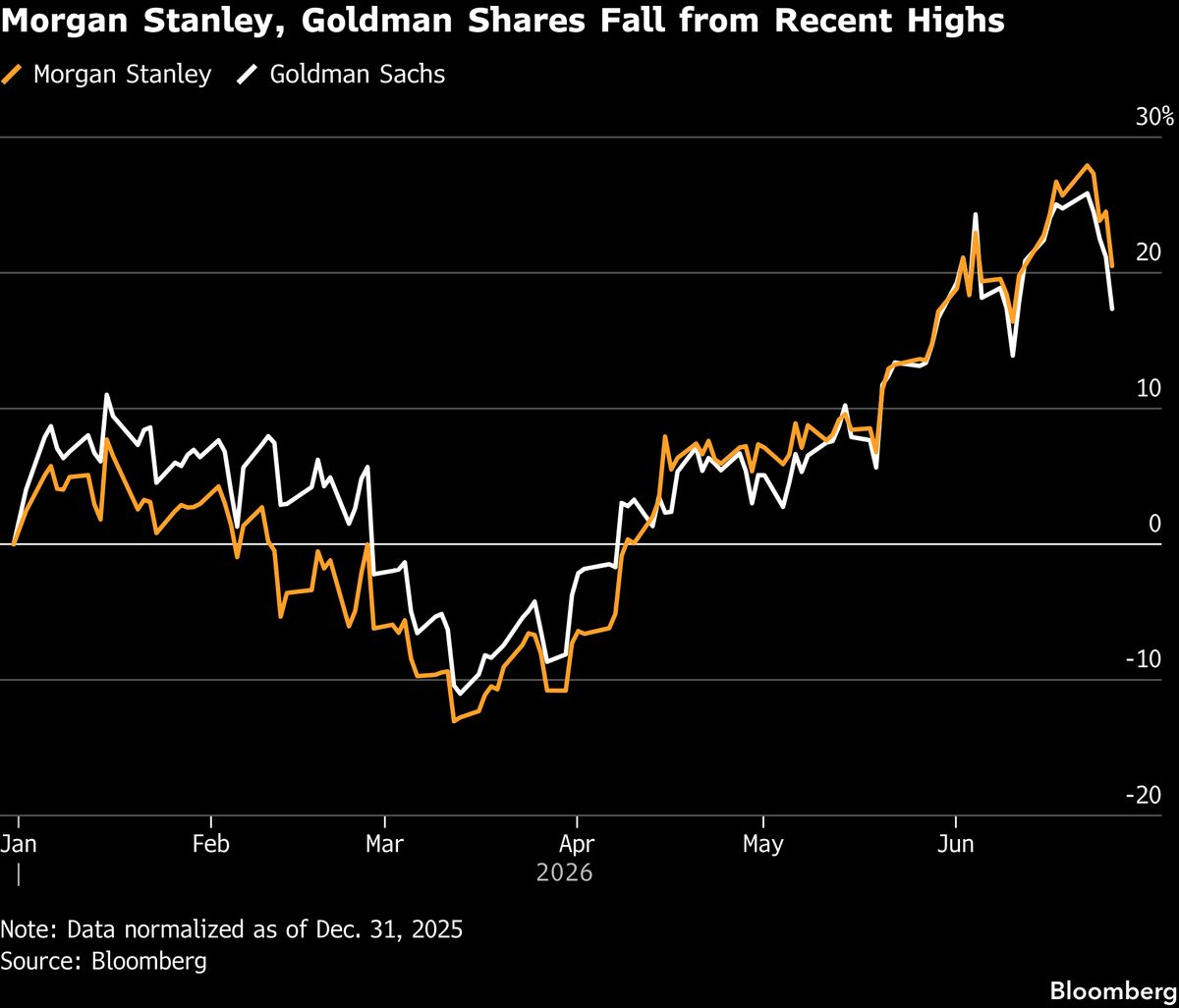
Morgan Stanley and Goldman Sachs shares fell after reports that OpenAI may delay its IPO until next year amid technology stock volatility.
Shares of Morgan Stanley and Goldman Sachs Group Inc. fell on Friday after reports emerged that OpenAI is considering delaying its initial public offering until next year amid ongoing volatility in technology stocks, according to Bloomberg Markets. The OpenAI IPO delay report put pressure on two major investment banks that investors often associate with high-profile technology listings and underwriting activity.
Key takeaways
Morgan Stanley and Goldman Sachs shares declined following reports that OpenAI may postpone its IPO until next year
The reported delay is attributed to volatility in technology stocks, according to the source context
Investment bank stocks can be sensitive to IPO market conditions, as underwriting and advisory fees represent a meaningful revenue stream
The source context does not specify the magnitude of the share price declines or identify which investor groups drove the selling
Table of Contents
Market move
Why IPO timing matters for investment banks
Technology stock volatility context
What to watch next
Market move
Morgan Stanley and Goldman Sachs Group Inc. shares fell on Friday after Bloomberg Markets reported that OpenAI is weighing a decision to hold off on an initial public offering until next year. The source context confirms the share price declines occurred following the IPO delay report, but does not specify the percentage decline, intraday trading ranges, or closing prices for either stock. The timing of the report and the market reaction suggest that investors view the potential delay as relevant to near-term revenue expectations for investment banks involved in technology sector underwriting.
The source context does not identify whether Morgan Stanley or Goldman Sachs have been formally selected as underwriters for a potential OpenAI IPO, nor does it specify the size, valuation, or structure of any planned offering. The market reaction reflects investor sensitivity to IPO pipeline news, particularly for high-profile technology companies that could generate significant advisory and underwriting fees. Without additional details, the share price declines should be understood as a market response to headline news rather than a confirmed change in either bank's financial outlook.
Why IPO timing matters for investment banks
For investment banks, IPO activity represents a meaningful revenue stream through underwriting fees, advisory services, and related capital markets activity. When a high-profile company delays or postpones a public offering, banks that were expected to participate in the transaction may face near-term revenue uncertainty. The source context does not specify which banks were in line to underwrite a potential OpenAI IPO, but the market reaction to Morgan Stanley and Goldman Sachs shares suggests that investors view both firms as likely participants in large technology listings.
IPO market conditions can shift quickly based on equity market volatility, investor demand for new issues, and macroeconomic factors. Investment banks typically earn fees as a percentage of the offering size, and large technology IPOs can generate tens or hundreds of millions of dollars in underwriting and advisory revenue. For readers following broader market updates , this development can help frame how IPO pipeline news influences investment bank stock performance and investor expectations for capital markets revenue.
Technology stock volatility context
The source context attributes the reported OpenAI IPO delay to volatility in technology stocks. Technology sector volatility can influence IPO timing decisions because companies and their advisors typically prefer to launch public offerings during periods of stable or rising equity prices, when investor demand for new issues is stronger and valuation expectations are more favorable. The source context does not specify which technology stock indices, individual stocks, or volatility measures OpenAI or its advisors are monitoring, nor does it identify the threshold or duration of volatility that would trigger a delay decision.
IPO candidates often adjust their timing based on market conditions, regulatory readiness, financial performance, and strategic priorities. A delay from this year to next year could reflect a preference to wait for more stable market conditions, but the source context does not provide details on OpenAI's internal decision-making process, board discussions, or alternative financing plans. Investors and market readers should treat the reported delay as a potential development rather than a confirmed decision, as the source context uses language indicating that OpenAI is weighing the option rather than announcing a final choice.
What to watch next
Market readers may watch for additional disclosures from OpenAI, Morgan Stanley, or Goldman Sachs regarding IPO plans, underwriting roles, or capital markets activity. The source context does not specify whether OpenAI has publicly commented on IPO timing, nor does it identify the source of the delay report. Future updates could clarify whether the delay is confirmed, whether alternative financing or strategic options are under consideration, or whether market conditions have shifted in a way that influences the timing decision.
Investors tracking investment bank stocks may also monitor broader IPO market trends, technology sector volatility measures, and quarterly earnings disclosures from Morgan Stanley and Goldman Sachs that provide detail on capital markets revenue, underwriting pipelines, and advisory activity. The source context does not provide guidance on how long the reported delay might last or what market conditions would need to improve for an IPO to proceed. Without additional details, the development should be understood as a headline that influenced Friday trading rather than a confirmed change in either bank's financial outlook or strategic positioning.
Read original source