education
Portfolio Tracker vs Broker Dashboard: Which Fits?
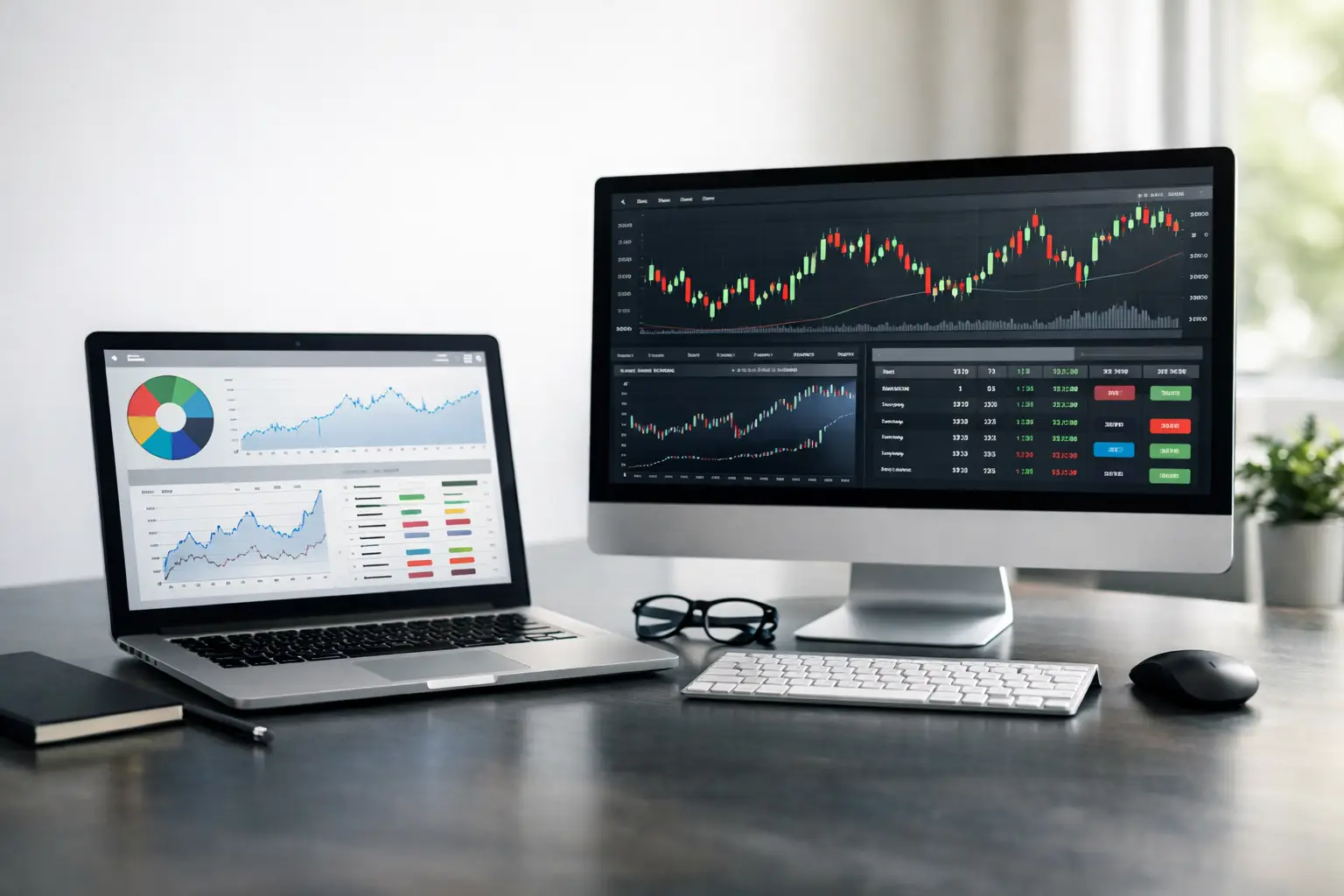
Portfolio tracker vs broker dashboard: learn which view gives active investors clearer performance data, cross-account insight, and faster daily decisions.
A portfolio tracker vs broker dashboard comparison is not about choosing a prettier interface. It is about deciding where your market decisions begin. A broker dashboard is built to execute, fund, and manage positions at one institution. A portfolio tracker is built to show the complete financial picture across accounts, assets, strategies, and time periods.
For active traders and self-directed investors, that distinction becomes meaningful fast. A crypto position may sit on one exchange, long-term equities at a brokerage, options in a separate account, and cash in a money market fund. If each account reports performance differently, the investor can feel informed while still operating with incomplete data.
What a Broker Dashboard Does Best
A broker dashboard is the operational center of a brokerage relationship. It usually gives you real-time or near-real-time buying power, open orders, account balances, position details, trade confirmations, tax documents, and platform-specific research. When you need to place an order, adjust a stop, review margin availability, or transfer funds, the broker dashboard is the right environment.
Its greatest strength is execution context. The broker knows the exact status of every order on its platform, the settlement rules that apply, the fees charged, and the account-level restrictions that may affect a trade. That level of operational accuracy matters, particularly for day traders, options traders, and investors managing leveraged positions.
Broker dashboards can also be very effective for focused investors. If all of your holdings, cash, and activity live with one broker, its native reporting may cover most of what you need. Adding another platform can create unnecessary complexity if your objective is simply to monitor a single taxable account or retirement account.
The limitation is scope. A broker dashboard sees its own ecosystem clearly, but it generally cannot provide a complete view of assets held elsewhere. It may show your position in a stock, but not your exposure to that same company through an ETF in another account. It may calculate account-level return, but not the performance of your total investment strategy.
What a Portfolio Tracker Is Designed to Solve
A portfolio tracker is an intelligence layer over your financial activity. Rather than centering the experience on one broker or exchange, it organizes holdings and performance across multiple sources. The goal is not just to answer, “What do I own here?” It is to answer, “What do I own, how is it performing, and what risk am I actually carrying?”
That broader perspective changes how investors evaluate decisions. A portfolio tracker can bring equities, ETFs, crypto, forex exposure, funds, and cash positions into one analytical view. It can make allocations easier to compare, reveal concentration that was hidden across accounts, and show whether several seemingly different trades are actually driven by the same market factor.
For example, an investor might hold individual semiconductor stocks at one broker, a technology-heavy ETF in a retirement account, and crypto assets that tend to react strongly to growth expectations. Looking at each account separately can create the impression of diversification. A connected portfolio view may reveal a portfolio that is far more exposed to technology and risk-on market conditions than intended.
A strong tracker also makes performance measurement more useful. Raw gains and losses do not tell the full story when deposits, withdrawals, partial exits, dividends, and transfers are involved. Investors need to distinguish between money added to an account and returns generated by investment decisions. That is where portfolio analytics, time-weighted performance views, realized and unrealized P&L, and historical allocation data become more valuable than a simple balance screen.
Portfolio Tracker vs Broker Dashboard: The Core Differences
The practical difference comes down to function. Broker dashboards are transaction-first. Portfolio trackers are insight-first.
A broker dashboard tells you what can be traded now within that broker account. A portfolio tracker tells you how that account fits into a larger strategy. One is optimized for order flow and account management; the other is optimized for measurement, context, and portfolio-level decision-making.
Data timing is another trade-off. Broker dashboards typically provide the most authoritative view of account-specific activity, especially for open orders, unsettled transactions, margin, and available funds. A tracker may depend on synced data, imported transactions, or connected account feeds. That can mean slight delays or occasional categorization issues. For execution, always confirm critical details in the broker environment.
The analytics depth can also differ. Brokers often provide useful research and basic account reporting, but their incentives naturally center on the activity happening within their platform. A portfolio tracker is more likely to focus on cross-account performance, asset allocation, exposure, benchmark comparisons, and strategy-level analysis. Neither approach is universally better. They serve different moments in an investor's workflow.
When a Broker Dashboard Is Enough
A broker dashboard may be enough if you maintain one primary account, hold a straightforward set of investments, and do not need to compare activity across multiple platforms. It can also be the better choice for investors who value direct control over account operations more than advanced aggregation.
It remains essential for time-sensitive trading. Before placing a trade, reviewing order status, or making a decision involving margin or options, use the broker's records as the source of truth. An external tracker can inform the decision, but it should not replace the execution platform's live account controls.
Investors should also consider privacy and connectivity preferences. Connecting accounts to third-party tools involves evaluating permissions, data handling standards, and security practices. A platform's convenience should never outweigh the need for transparent data policies and strong account protection.
When a Portfolio Tracker Delivers More Value
A portfolio tracker becomes more valuable as your financial life becomes more distributed. Multiple brokers, crypto exchanges, retirement accounts, managed accounts, and different trading strategies can make it difficult to maintain a reliable mental model of total exposure. Spreadsheets can help, but they often become stale after a volatile week or a series of rapid trades.
The value is especially clear for traders who want to learn from their own behavior. A unified tracker can help identify whether profits come from a repeatable setup or a few outsized positions. It can expose overtrading, recurring drawdown periods, excessive concentration, or a gap between intended risk limits and actual position sizing.
For long-term investors, the same data supports better discipline. Seeing a complete allocation can make it easier to rebalance intentionally instead of reacting to the loudest market move. It can also separate portfolio-level progress from the emotional noise of a single stock or coin.
The Strongest Workflow Uses Both
The most capable workflow does not force a choice between platforms. Use the broker dashboard for execution, funding, order management, and official account records. Use a portfolio tracker for cross-platform visibility, performance review, allocation analysis, and strategic oversight.
This division is particularly effective for active participants. Before the market opens, review total exposure and open risk in the portfolio view. During the session, execute and monitor orders through the broker dashboard. After the close, analyze results at the portfolio level rather than judging a day solely by the P&L of one account.
The same model applies to social trading and market research. Trading ideas are more useful when they can be evaluated against verified performance, clear risk context, and transparent portfolio behavior. That is the trust layer serious market participants need when separating credible market intelligence from unverified online commentary.
What to Look for in a Portfolio Intelligence Platform
The right solution should make your financial picture clearer, not merely collect more data. Prioritize accurate account aggregation, understandable performance calculations, asset and sector exposure, historical views, and controls that make it easy to verify what the platform is showing. For active traders, trade journaling, risk analytics, and real-time market context can add significant value.
Community features should meet the same standard. Useful trading communities do not reward noise alone. They make room for transparent discussion, credible education, and evidence-based ideas. Tyrian Trade is built around this connected model, bringing portfolio intelligence, market discovery, AI-assisted analysis , and verified community participation into a single financial ecosystem.
The better question is not whether a portfolio tracker replaces a broker dashboard. It is whether your current view of the market is complete enough to support the decisions you are making. When capital is spread across accounts and strategies, clarity becomes a competitive advantage.