education
A Retail Trader Workflow Example That Builds Discipline
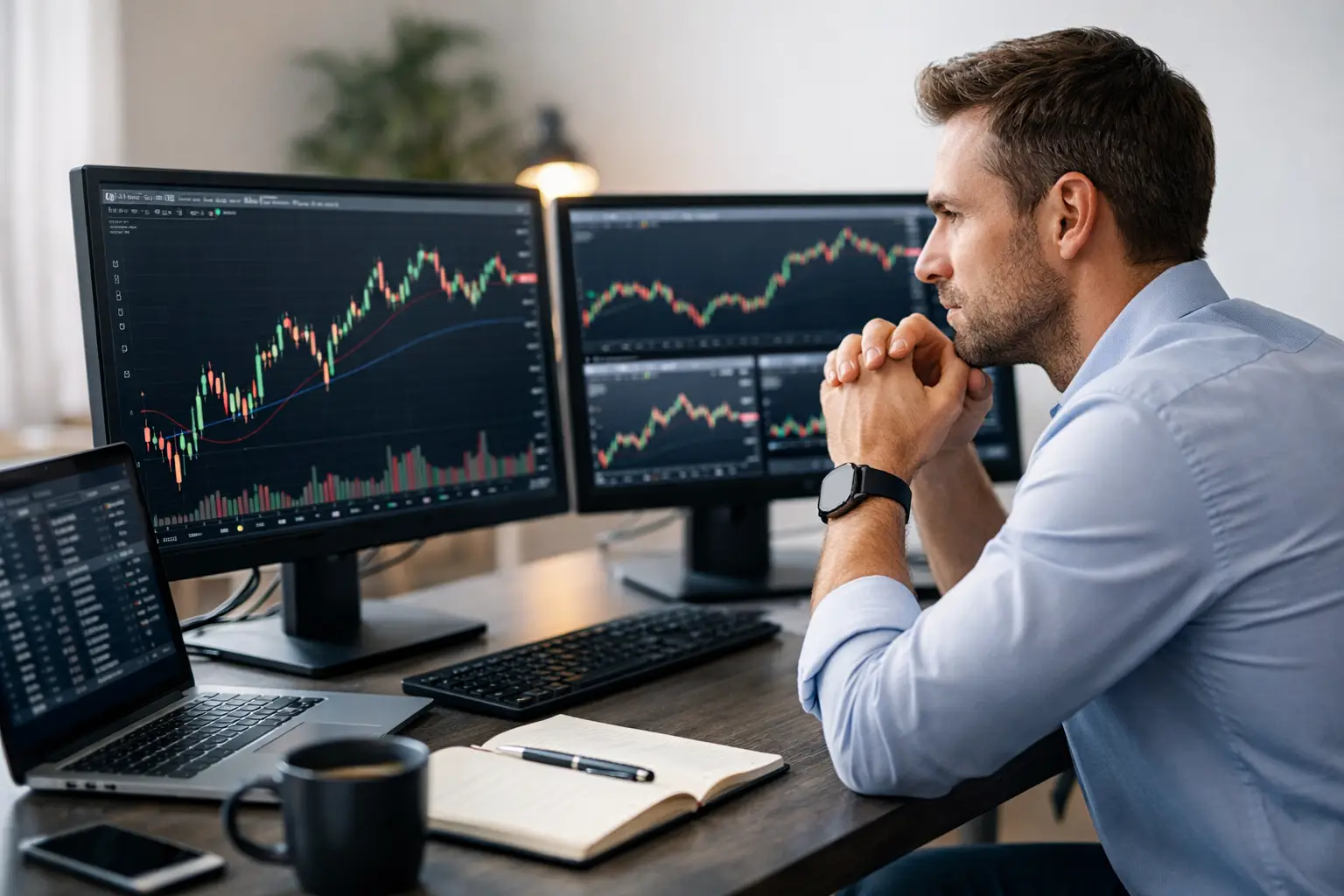
Use this retail trader workflow example to connect research, risk controls, execution, and review into a disciplined process for active market participants
A strong retail trader workflow example is not a longer watchlist, more indicators, or a louder stream of market opinions. It is a repeatable operating system that turns scattered information into a defined decision, limits risk before entry, and produces evidence after the trade is closed. For active traders navigating stocks, crypto, forex, or multiple markets, that structure is often the difference between reacting to price and participating with intent.
This is an educational framework, not investment advice. The instruments, timeframes, and position sizes should reflect your experience, capital, risk tolerance, and trading venue.
Why a Workflow Matters More Than Another Trade Idea
Retail traders have access to more data than ever: economic calendars, company filings, price alerts, social feeds, charting tools, order-flow data, and AI-generated research. The problem is not access. It is deciding what deserves attention, what can be verified, and what action - if any - follows.
Without a workflow, the market session becomes a chain of interruptions. A headline changes the plan. A fast-moving chart creates urgency. A popular post turns into an untested thesis. The trader may be busy all day while making decisions with no consistent standard.
A workflow creates separation between four jobs that should not happen all at once: market preparation, trade selection, execution, and review. That separation protects judgment. It also makes performance measurable, because a trader can identify whether a loss came from a valid setup, poor execution, oversized risk, or a plan that never had an edge.
A Retail Trader Workflow Example for an Active Session
Consider a trader focused on liquid U.S. equities and major crypto assets. They trade short-term momentum and pullback setups, hold positions from minutes to several hours, and cap risk per trade at 0.5% of account equity. Their goal is not to trade every session. Their goal is to act only when a predefined opportunity appears.
1. Prepare Before the Market Demands a Decision
The workflow begins before the opening bell or the trader's primary trading window. First, the trader checks the calendar for scheduled volatility: inflation data, central-bank announcements, employment reports, major earnings releases, and sector-specific catalysts. These events do not automatically create trades, but they change the risk environment.
Next comes a broad market read. Is the major index trending, range-bound, or responding to overnight news? Are risk assets moving together, or is leadership concentrated in one sector? Is volume supporting the move? For crypto, the same question applies across Bitcoin, Ethereum, and the relevant liquidity pairs.
The trader then builds a focused watchlist, usually five to 10 instruments rather than 50. Every name needs a reason to be there: unusual relative volume, earnings, a confirmed news catalyst, a technical level, unusual options activity, or a clear relationship to the broader market. A watchlist is not a prediction sheet. It is a queue for investigation.
At this stage, the trader records key price levels: prior-day high and low, premarket range, major support and resistance, volume-weighted average price, and invalidation points for potential setups. The plan should name the condition that would make the trade idea wrong before price reaches it.
2. Turn a Market Narrative Into a Testable Setup
A market narrative can be useful, but it is not enough to justify a position. "AI stocks are strong" or "Bitcoin looks bullish" may explain attention, yet neither statement defines an entry, stop, or expected payoff.
The trader converts the idea into a setup card. For example: a stock with earnings-driven momentum holds above the opening range after a controlled pullback, reclaims intraday volume-weighted average price, and shows relative strength against its sector. Entry occurs only on confirmation above a specific level. The stop sits below the pullback low. The initial target is the next mapped resistance level, provided the expected reward is at least twice the planned risk.
This is where discipline becomes visible. If the conditions are not present, there is no trade. A valid workflow must make inactivity feel like a successful decision when the market does not offer an acceptable opportunity.
The trader also checks whether the idea is independent or duplicated. Taking three semiconductor positions may look diversified on a screen, but it can be one concentrated bet on the same sector move. The same applies to highly correlated crypto assets. Portfolio exposure matters as much as the risk attached to an individual ticket.
3. Calculate Risk Before Placing the Order
Position size is a risk decision, not a confidence signal. Suppose the account is $40,000 and the maximum loss per trade is 0.5%, or $200. If the entry is $50 and the stop is $49, the maximum size is 200 shares, excluding commissions, slippage, and any additional execution costs. If the stop must be wider to make technical sense, the share count gets smaller.
The trader also defines a daily loss limit, such as 1% of account equity. Reaching that limit ends discretionary trading for the session. This guardrail matters because the most damaging decisions often arrive after a loss, when a trader tries to recover rather than evaluate.
Risk controls should account for market structure. Stops are not guaranteed fills in fast markets, thin liquidity, overnight trading, or major news events. A plan that assumes perfect execution is not a risk plan. Traders should consider liquidity, spread, volatility, and platform-specific order behavior before committing capital.
4. Execute With Rules, Not Running Commentary
When the setup triggers, the trader places the order according to the plan. They do not widen the stop because the position immediately moves against them. They do not add to a losing trade unless that specific scaling method was defined in advance and tested over a meaningful sample.
During the trade, attention shifts from prediction to management. If price reaches the first target, the trader may take partial profits and reduce exposure, or they may hold the entire position if their tested strategy supports it. There is no universally correct answer. A high win-rate approach may favor faster profit-taking, while a trend-following approach may require holding through smaller reversals for larger winners.
What matters is consistency. The same setup should be managed with the same rules unless a documented market condition calls for an adjustment. A live social feed can add context, but it should not override a risk plan because another trader has a stronger opinion or a larger following.
5. Capture Evidence Immediately After the Trade
The review starts when the position closes, not at the end of the month. The trader logs the instrument, setup type, entry, exit, size, stop, realized profit or loss, market context, and a screenshot of the chart. They also record whether the trade followed the plan.
That final field is critical. A losing trade can be well executed. A profitable trade can be a process failure if it ignored entry criteria or exceeded risk limits. Mixing outcome quality with decision quality creates false confidence and makes improvement difficult.
A useful journal note may be short: "Entered on confirmed reclaim as planned. Took partial profit early due to hesitation. Remaining position stopped at breakeven. Rule followed, exit management needs review." This is more actionable than writing that the trade "felt bad" or that the market was irrational.
Weekly Review Turns Activity Into Intelligence
At the end of each week, the trader reviews the data at the setup level. Which patterns produced the best expectancy? Which time of day created the most execution errors? Did trades taken after two consecutive losses perform worse? Were losses caused by poor selection, poor timing, or excessive size?
The review should examine both numbers and context. A setup may have a positive result over 20 trades but fail during low-volume summer sessions. Another may work well in a broad market trend and poorly in choppy conditions. The objective is not to find a strategy that wins every time. It is to understand where an approach has a credible edge and where it does not.
This is also the point to clean the information environment. Remove watchlist names that no longer meet liquidity or catalyst standards. Unfollow sources that repeatedly publish unverified claims. Keep research inputs that improve decision quality, not inputs that simply increase urgency.
Build the Workflow Around Trusted Inputs
Connected trading infrastructure becomes valuable when it reduces fragmentation without reducing independent judgment. A trader should be able to move from market discovery to verified discussion, portfolio visibility , analysis, and post-trade review with a clear record of what informed the decision.
Tyrian Trade is built around that connected model: market intelligence , transparent community participation, analytics, and real-time trader context in one ecosystem. The value is not copying another person's trade. It is assessing ideas within a higher-trust environment, then applying a personal, documented process.
A workflow will not remove uncertainty from markets. It gives uncertainty a place to go: into defined risk, recorded evidence, and better decisions on the next session.