education
Stock Scanner vs Trading Terminal Explained
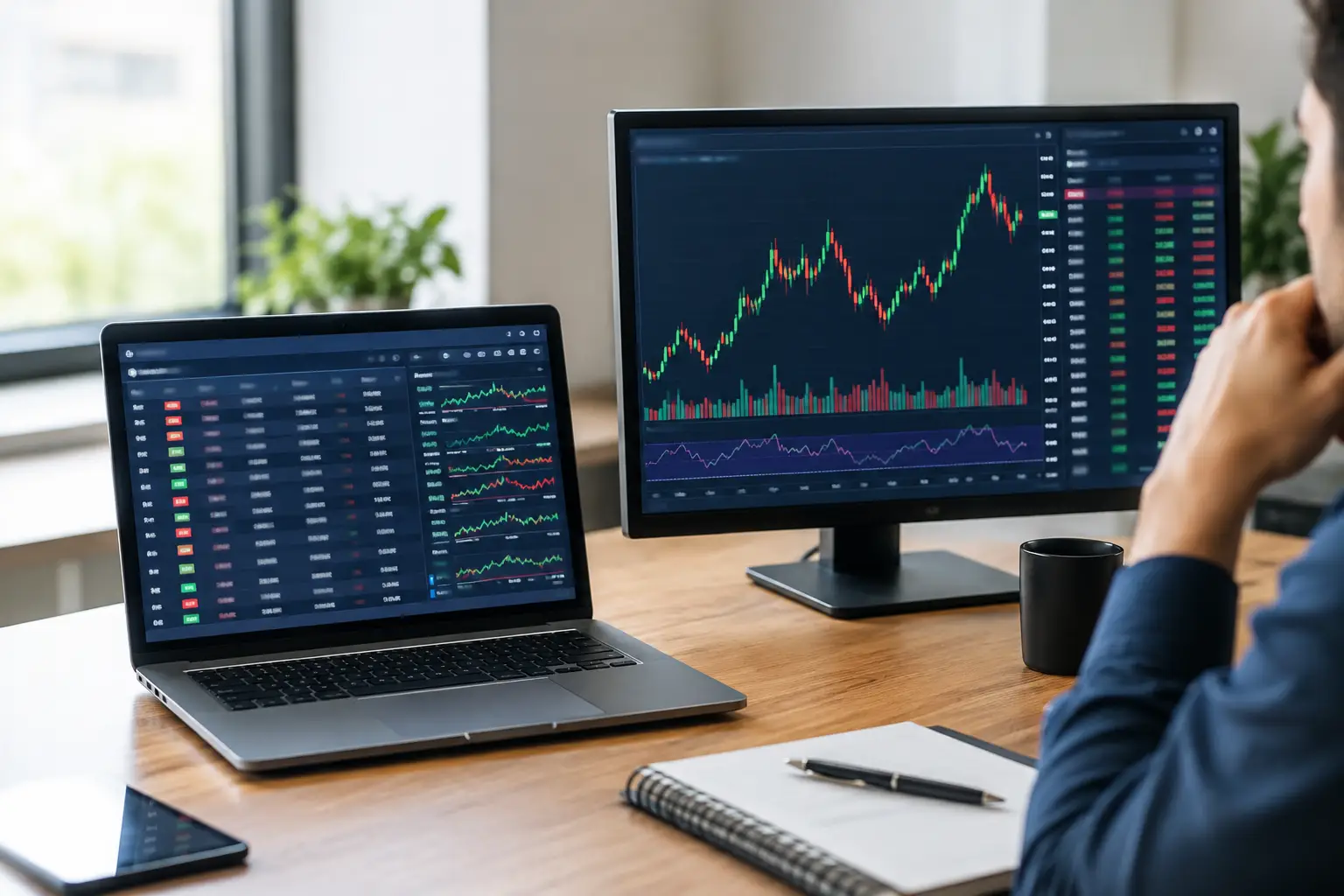
Stock scanner vs trading terminal: compare speed, context, workflows, and cost to choose the market intelligence setup that fits how you trade every day.
A stock scanner vs trading terminal decision is not really about choosing a better screen. It is about deciding where your trading edge needs to come from. One tool helps you surface changing market conditions quickly. The other helps you interpret those conditions through deeper data, research, execution workflows, and market context.
For active traders working across stocks, crypto, forex, and global markets, the distinction matters. A strong scanner can reveal an unusual volume surge before the opening bell. A terminal can help determine whether that surge is tied to earnings, a regulatory filing, sector rotation, options activity, or broader risk sentiment. Speed without context creates noise. Context without speed can mean arriving late.
What a Stock Scanner Is Built to Do
A stock scanner filters a large market universe against rules you set. Those rules may be technical, fundamental, event-driven, or a combination of all three. The output is a narrowed list of symbols that meet a specific condition right now.
For example, a trader might scan for US-listed stocks priced above $10, trading at more than three times average volume, up at least 5% on the day, and approaching a 52-week high. Another may look for small-cap names with fresh news, unusual relative volume, and a tight premarket range. The scanner does not make the trade decision. It reduces the search space.
This is why scanners are particularly valuable for momentum traders, day traders, swing traders, and investors who need to monitor hundreds or thousands of instruments without manually reviewing each chart. Their advantage is compression: turning a massive, moving market into a short watchlist with a stated reason for inclusion.
The Scanner Advantage: Fast Idea Discovery
The best scanner workflows are specific enough to remove irrelevant names but flexible enough to adapt when market behavior changes. During an earnings-heavy week, an earnings gap scan may be useful. In a low-volatility environment, a range-contraction or relative-strength scan may be more productive. In crypto markets, traders may prioritize rapid price change, liquidity, open interest, or social attention.
A scanner is strongest when the conditions are measurable. Price, volume, volatility, market capitalization, float, moving averages, relative strength, and percent change all lend themselves to systematic filtering. It can identify candidates that deserve attention before a human analyst has time to search for them.
Its limitation is equally clear: a scanner can tell you what happened or what is happening, but often not whether the move is credible, sustainable, or relevant to your broader portfolio. A list of 30 breakouts is not a trading plan.
What a Trading Terminal Is Built to Do
A trading terminal is a broader operating environment for market participation. It typically brings together real-time quotes, charts, company and macroeconomic data , news, filings, watchlists, order management, portfolio analytics, alerts, research tools, and sometimes communication or community features.
Where a scanner asks, “Which securities match this setup?” a terminal supports questions such as, “Why is this asset moving?”, “What other assets are exposed to the same catalyst?”, “What is my current risk?”, and “How does this opportunity fit my execution plan?”
For a position trader, that may mean reviewing earnings history, valuation metrics, institutional ownership, options data, sector performance, and exposure across existing holdings . For a short-term trader, it may mean tracking Level II activity, time and sales, news flow, related symbols, key technical levels, and active orders in one workspace.
The Terminal Advantage: Decision Context
A terminal becomes more valuable as decisions become more interconnected. A trader may discover a stock through a volume scan, then use the terminal to assess the catalyst, compare peers, monitor the sector ETF, inspect the chart across multiple time frames, and calculate the position’s impact on portfolio concentration.
This integrated view reduces the friction of moving between disconnected tabs, spreadsheets, broker screens, news feeds, and social channels. It also supports more disciplined decision-making. When research, execution, and portfolio data live in separate places, it is easier to act on an isolated signal while missing the larger risk picture.
Still, terminals are not automatically superior for every participant. They can be expensive, data-dense, and unnecessarily complex for someone whose only immediate need is a clean daily watchlist. More information is useful only when it improves judgment.
Stock Scanner vs Trading Terminal: The Core Differences
The practical difference comes down to scope. A scanner is usually a specialized discovery engine. A terminal is usually a market intelligence and workflow environment.
A scanner emphasizes filtering. You define conditions, run a query, receive candidates, and investigate further. A terminal emphasizes continuity. It lets you move from discovery to analysis, monitoring, execution, and review without losing the context behind the trade.
The data requirements differ as well. A basic scanner can be useful with delayed data for longer-horizon investing, although active intraday traders should prioritize reliable real-time feeds. A serious terminal may require broader datasets, including live market data, corporate actions, news, economic releases, derivatives information, and portfolio-level analytics. That additional coverage generally increases cost and learning time.
There is also a difference in how each tool handles human judgment. Scanners formalize what you already know how to look for. If you cannot define a setup, the scanner cannot reliably find it. Terminals provide richer inputs for judgment, but they cannot prevent poor judgment, confirmation bias, or impulsive execution.
Which Tool Fits Your Trading Style?
A scanner-first setup often makes sense for traders whose process begins with finding movement. Day traders and momentum traders commonly need rapid identification of gaps, relative volume, breakouts, breakdowns, and unusual activity. Their edge may depend on seeing developing opportunities before a crowded market reacts.
A terminal-first setup often makes more sense for investors, multi-asset participants, and traders managing multiple positions over time. These users need portfolio visibility, research depth, risk awareness, and a consistent workspace. The core problem is not finding another ticker. It is making better decisions across the positions and information streams already competing for attention.
Many serious market participants need both. The scanner is the front door to opportunity; the terminal is where opportunity is tested. That combination is especially useful when markets move quickly and narratives spread faster than verification.
For example, a scan may flag a biotech stock on exceptional premarket volume. Before acting, a trader needs to know whether the move is tied to a credible clinical result, a preliminary headline, a financing announcement, or low-float speculation. They may also need to assess liquidity, dilution risk, comparable companies, prior reactions to similar news, and whether the position fits defined risk limits. The scanner finds the signal. The wider intelligence environment validates or rejects it.
The Missing Layer: Trust in the Workflow
Tool selection is often framed as a feature checklist, but trust is part of the infrastructure. Market data can be delayed, social posts can be promotional, performance claims can be selective, and trading ideas can lack clear evidence. A fast workflow becomes dangerous when users cannot distinguish credible market intelligence from attention-driven noise.
That is why modern platforms increasingly need to connect analytics with accountable participation. Verified identities, transparent performance context , clear sources for market claims, and community discussion tied to actual research can make shared intelligence more useful. The goal is not to outsource conviction to a crowd. It is to expose ideas to better information before capital is committed.
Tyrian Trade reflects this connected model by bringing market intelligence, portfolio analytics, trading tools, educational content, and verified community participation into a unified environment. For digital-native traders, the value is not simply having more screens. It is reducing fragmentation while preserving transparency around the people, data, and ideas influencing a decision.
Build a Workflow, Not a Tool Collection
Start with the decision you are trying to improve. If you regularly miss early momentum, define a small number of scans around your proven setups and review the results at consistent times. If your challenge is holding too many correlated positions or reacting to news without context, prioritize a terminal environment with portfolio and research capabilities.
Avoid creating dozens of filters, alerts, and feeds just because they are available. Every notification competes for attention. A better workflow has a clear sequence: identify a candidate, verify the catalyst and liquidity, assess technical and fundamental context, define risk, execute only when the setup meets your rules, then review the result.
The most useful market technology does not promise certainty. It gives you faster discovery, clearer context, and a more transparent record of why you acted. Build around that standard, and your tools will serve your process rather than dictate it.