education
Trading Terminals Comparison for Serious Traders
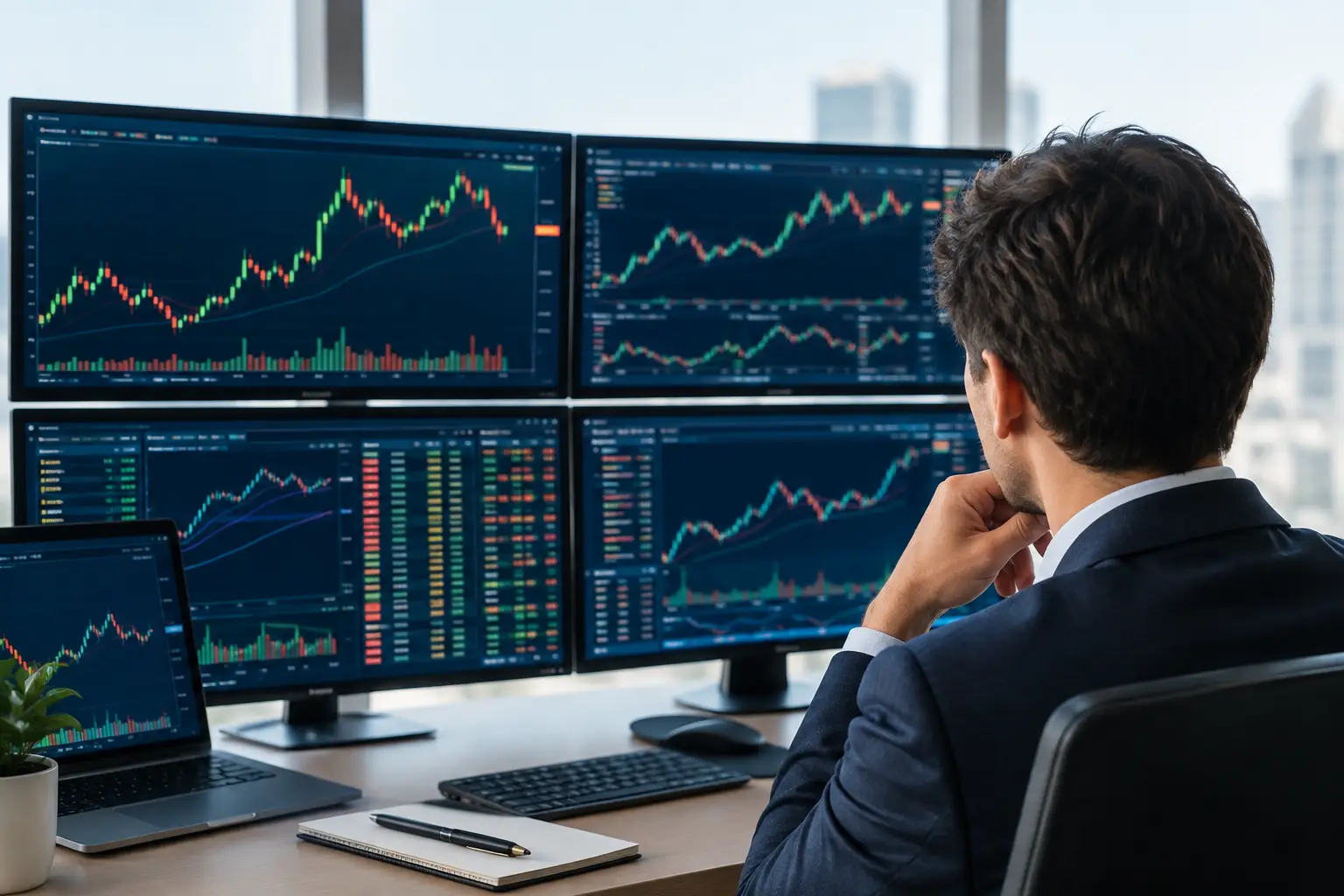
A trading terminals comparison for active traders: evaluate execution, data, analytics, community, and workflow before choosing your market setup today.
A delayed quote, an unclear fill, or a chart that loses context during a volatile move can turn a good trading decision into a poor outcome. A useful trading terminals comparison is not about finding the screen with the most indicators. It is about identifying the infrastructure that lets you research, decide, execute, review, and improve without introducing unnecessary friction or uncertainty.
For active traders, the terminal is no longer just an order-entry window. It is the operational center of a market workflow. The strongest choice depends on your instruments, trading frequency, broker relationships, data needs, and the degree to which you rely on analytics and market collaboration.
What a Trading Terminal Should Actually Do
A trading terminal sits between market information and action. At a minimum, it should provide pricing, charts, watchlists, order management, positions, and account visibility. But the minimum is rarely enough for a trader managing exposure across stocks, crypto, forex, or derivatives.
A modern terminal should help reduce the gaps between separate tools. If market data lives in one place, charting in another, portfolio performance in a spreadsheet, and trade ideas in an unverified social feed, the workflow becomes harder to audit. Context is lost precisely when speed matters most.
The right platform should make it easier to answer practical questions: What is moving? Why does it matter? What is my current exposure? What happened after my last decision? Which sources or traders have earned credibility over time? These questions define the real value of a terminal more clearly than a long feature checklist.
Trading Terminals Comparison: The Core Criteria
Execution quality and order control
Execution is foundational. Traders should assess which order types are supported, how quickly orders are acknowledged, how fills are reported, and whether the platform gives clear control over modifications and cancellations. A simple market order may be sufficient for a long-term investor, while an active trader may require conditional orders, bracket orders, alerts, and precise position management.
The terminal itself does not always determine execution quality. Brokerage routing, liquidity venue, account type, and instrument structure also matter. Still, the interface must communicate what is happening without ambiguity. A polished chart is not a substitute for reliable order-state visibility.
For crypto participants, this includes exchange connectivity, asset availability, custody considerations, and the way balances are displayed across venues. For forex traders, spreads, rollover, leverage rules, and session liquidity can be equally decisive. Compare the terminal in the context of the market you actually trade.
Market data depth and speed
Data determines whether a trader is acting on a current market picture or a delayed approximation. Review whether quotes are real-time, delayed, consolidated, exchange-specific, or dependent on a subscription tier. Also look beyond the last price. Depth of market, volume, historical data, news, economic calendars, corporate actions, and market-wide scanners may be relevant depending on strategy.
More data is not automatically better. Excessive feeds and alerts can create noise, especially for newer traders. The advantage comes from data that is organized around a decision. A swing trader may prioritize clean multi-timeframe charts and earnings context. A short-term trader may care more about order-book information, volume behavior, and fast alerts.
Charting, research, and analytical range
Charting should support analysis without forcing every decision into a technical framework. Compare drawing tools, indicator libraries, saved layouts, multi-chart views, and the ability to connect price action with relevant fundamentals or market events.
Then consider portfolio analytics . Many terminals are strong before the trade but weak afterward. They show open positions but offer limited insight into concentration, realized versus unrealized performance, recurring errors, risk-adjusted returns, or strategy-level outcomes. For serious traders, review is part of the trading system. A terminal that makes performance analysis visible can expose patterns that intuition misses.
AI-assisted analysis can add value when it helps organize information, surface anomalies, summarize relevant market context, or identify portfolio risks. It should not be treated as an autonomous signal machine. The standard is transparency: traders need to understand the data, assumptions, and limitations behind any AI-generated insight.
Workflow design across devices and markets
A terminal must match how you operate. Some traders need a dense multi-monitor workspace with advanced shortcuts. Others need a mobile-first interface that supports monitoring, alerts, and clear portfolio oversight away from a desk. Neither approach is universally superior.
Look for consistent watchlists, layouts, alerts, and position data across devices. A fragmented experience can create avoidable errors, such as acting on an outdated watchlist or missing an exposure change that appears only in another application. The practical question is simple: can you move from research to action to review without rebuilding the same context every time?
Cross-market coverage also matters. Using distinct terminals for equities, crypto, and foreign exchange may offer specialized capability, but it can obscure total exposure. A unified view is especially valuable when risk is correlated across assets, even if the trading venues remain separate.
Community, credibility, and market intelligence
Social features are often treated as a side category in a trading terminals comparison. That misses how many traders now discover ideas. Market conversations can accelerate research, reveal alternative views, and provide real-time context around fast-moving events. They can also spread low-quality claims at scale.
The difference is trust architecture. A useful trading community should make reputation visible, distinguish verified participation from anonymous promotion, and give users tools to evaluate ideas rather than merely amplify them. Followers, engagement, and confident language are not evidence of trading competence.
This is where connected financial intelligence platforms can offer a different model. Tyrian Trade brings together market discussion, portfolio analytics, educational content, trading tools, and verified community participation so users can assess ideas with more context. The goal is not to replace independent judgment. It is to create a more transparent environment for forming it.
The Trade-Off Between Specialized and Unified Platforms
Specialized terminals can be excellent at one job. A dedicated charting platform may provide deeper customization. A broker-native platform may offer tighter execution control. A professional data service may deliver broad institutional research. For traders with narrow, highly defined needs, assembling the best specialized stack can be worthwhile.
The cost is fragmentation. Multiple subscriptions, disconnected account views, duplicated watchlists, and manual performance tracking can quietly consume time and increase operational risk. The more active the trader, the more those small disconnects matter.
Unified platforms reduce switching costs by connecting research, analytics, community intelligence, and workflow in one environment. The trade-off is that a unified product may not replicate every niche function of a specialist tool. The right decision depends on whether your primary constraint is feature depth in one area or clarity across the entire process.
Questions to Ask Before You Commit
Before selecting a terminal, test it against your actual trading routine rather than a product demo. Can you recreate your daily watchlist quickly? Can you understand your position and risk in seconds? Can you find the information behind an alert? Can you review a completed trade with enough detail to learn from it?
Also examine transparency around pricing, market-data entitlements, execution arrangements, and account connectivity. A low headline price can become less attractive once data fees, add-ons, or limitations are included. Conversely, a higher-priced platform may be justified if it removes tools you currently pay for separately or saves meaningful time each week.
For beginners, simplicity and education may deserve more weight than advanced customization. For experienced traders, order control, data quality, analytical depth, and reliability during volatile periods may be non-negotiable. There is no universally best terminal, only the platform that supports disciplined decisions in your market, at your level, and under your risk constraints.
The terminal you choose shapes more than your screen layout. It shapes the quality of the information you see, the confidence you can place in it, and the feedback loop that turns market participation into a repeatable process.