Crude Oil Slumps to Lowest Level Since August as Surging Gulf Supply Outweighs Middle East Risks
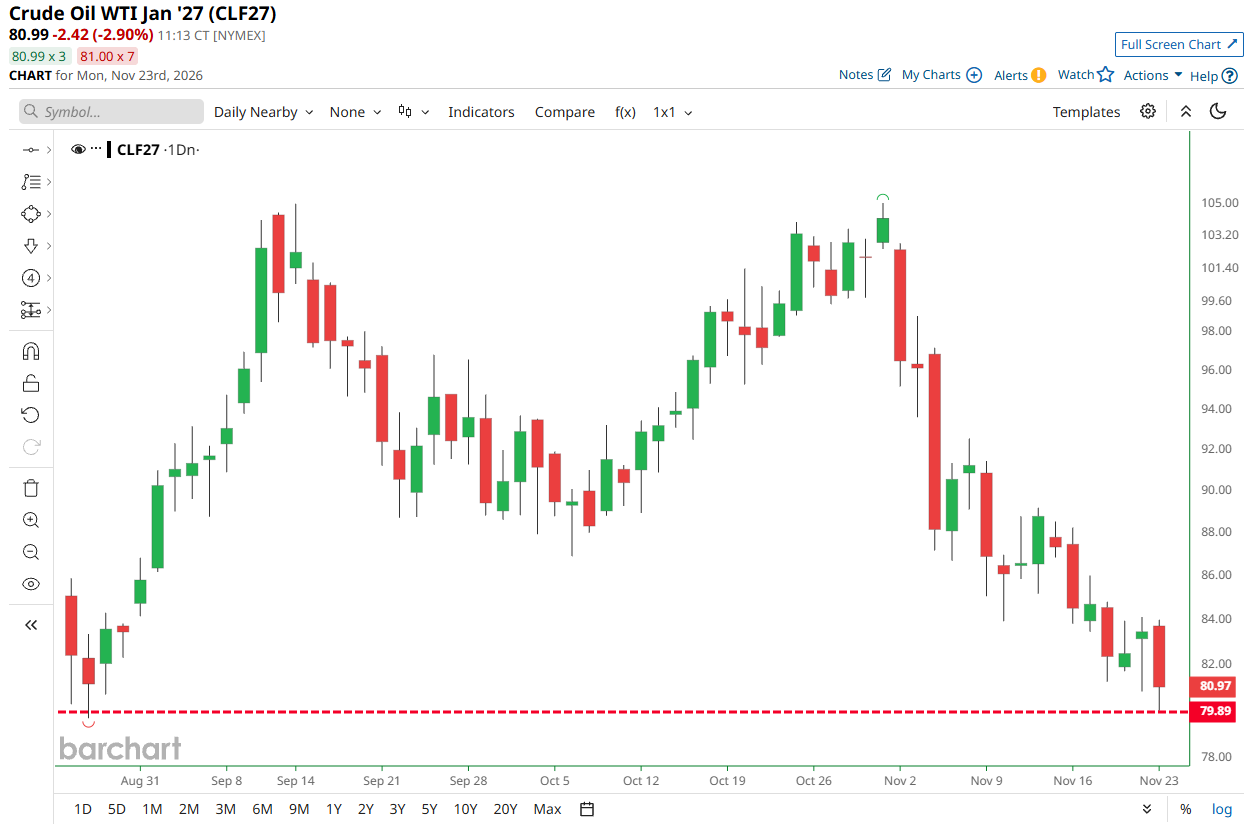
Global crude oil benchmarks fell sharply on Monday, November 23, hitting their lowest levels since August 2026 and extending a multi-week losing streak as recovering Middle Eastern exports and rising U.S. inventories overshadowed ongoing geopolitical tensions.
In Monday's session, U.S. West Texas Intermediate (WTI) futures fell roughly 3% to 4% to settle near $80.10 to $80.38 per barrel—dipping intraday below $80—while international benchmark Brent crude dropped around 3.4% to settle near $89.42 per barrel, marking an approximate 23% pullback from its October peak.
Key drivers behind the sell-off include:
- Rebounding Global Supply: The International Energy Agency (IEA) projected a 1.7 million barrel-per-day global supply surplus in Q4 2026, noting that sustained crude exports from Persian Gulf producers and a surge in oil-on-water volumes have eased prior supply tightness despite continued maritime attacks near the Strait of Hormuz.
- U.S. Inventory Builds & Weak Demand: Energy Information Administration (EIA) data showed U.S. crude stockpiles rising by 3.4 million barrels alongside builds in gasoline and distillate inventories, while 2026 global oil demand is forecast to contract amid softer industrial activity.
- Upcoming OPEC+ Catalyst: Traders are now focused on the November 29 OPEC+ ministerial meeting, where producers are scheduled to decide their 2027 output policy.