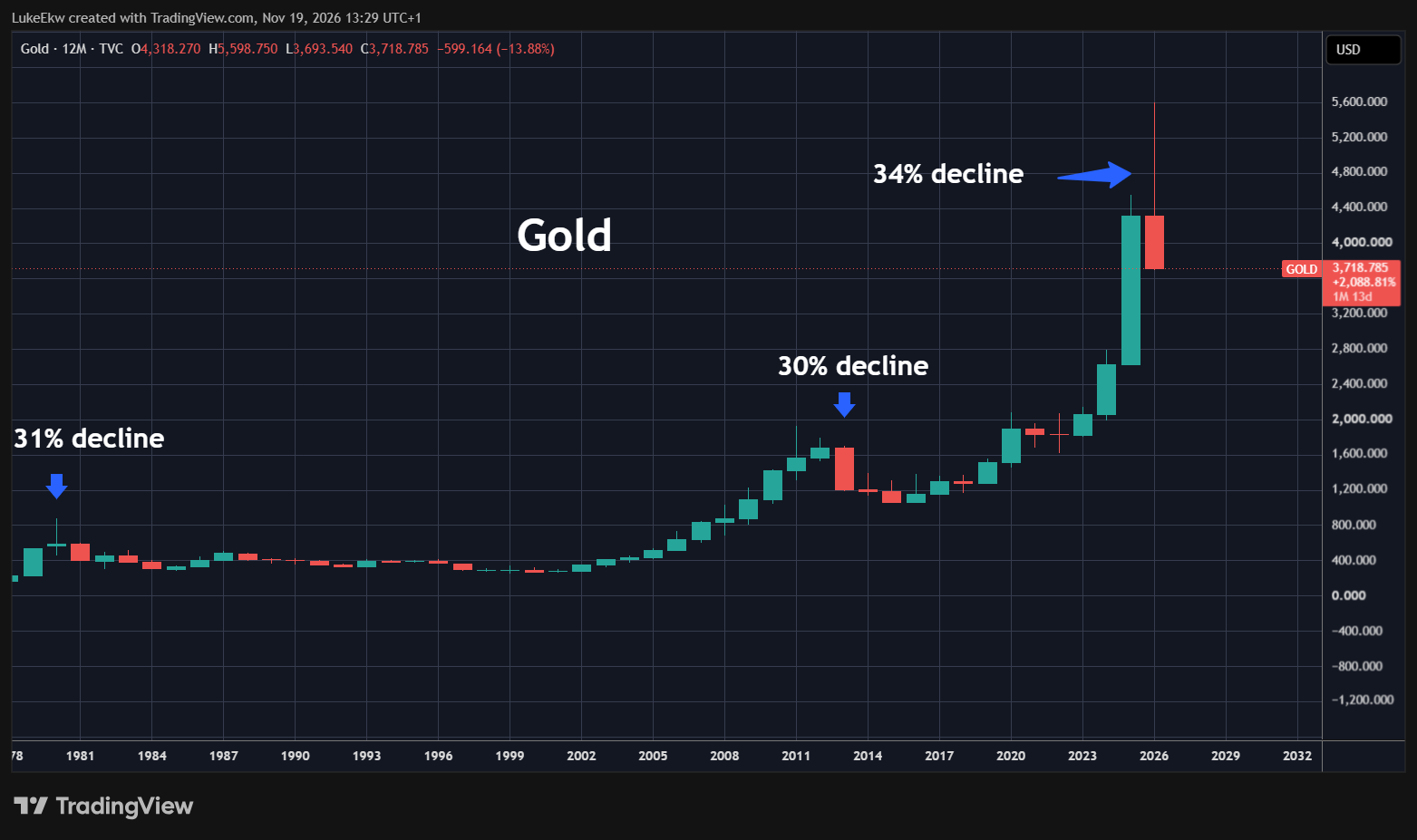
Gold Suffers 34% Selloff—Worst in Decades—Even as U.S. Debt Dynamics Strengthen Long-Term Thesis
Gold has dropped 34% in 2026, marking one of its sharpest selloffs in decades—surpassing the 31% decline in 1980 and the 30% drop in 2013—even as underlying fiscal fundamentals strengthen.
Fears of higher interest rates are pressuring gold prices while simultaneously increasing government debt-servicing costs. Historical comparisons underscore the structural constraint facing policymakers today:
- During the inflationary 1970s and early 1980s, aggressive Federal Reserve rate hikes contributed to multiple recessions, with U.S. debt-to-GDP near 30% and fiscal deficits around 3% of GDP.
- Today, U.S. debt-to-GDP exceeds 100% and deficits are running near 6% of GDP, leaving policymakers with far less room to sustain aggressive tightening to combat inflation.
As fiscal pressures limit the Federal Reserve's ability to maintain restrictive rates over the long term, the macro backdrop continues to support the structural case for holding gold.