Trump Urges Jensen Huang's Return to Nvidia and Threatens Taxes on Overseas Data Centers
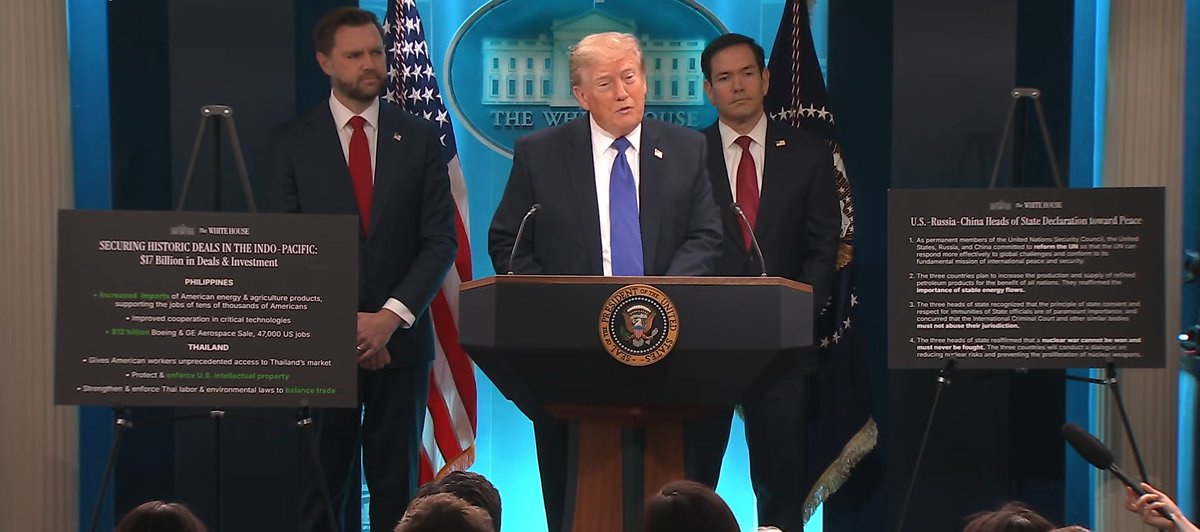
President Donald Trump used a November 20 White House press conference following his Asia trip to outline trade agreements, restrictions on overseas data center investment and his preference for Jensen Huang to return as Nvidia $NVDA chief executive.
Trump said Huang should apologize and return to the semiconductor company he founded, despite Nvidia's board previously indicating it did not intend to reinstate him. The president's comments represent a public expression of support rather than a formal government intervention in Nvidia's leadership transition.
The president also threatened substantial taxes on American companies that build data centers outside the United States. He argued that advanced computing infrastructure should remain domestically located because of its economic and strategic importance. The proposal has not yet been implemented through a specific tax measure or regulatory framework.
Trump described his Asia trip as a major commercial success, pointing to more than $17 billion in announced deals. One of the largest involved Philippine Airlines' planned purchase of 20 Boeing 787 Dreamliners equipped with General Electric engines. The administration said the agreement would support American manufacturing and employment.
The president also discussed cooperation with Asian allies on advanced technology and national security. The United States has promoted closer coordination with India, Japan and Australia on AI infrastructure and emerging technologies, although the scope of individual initiatives and funding commitments requires examination of the relevant agreements.
On China, Trump indicated that the United States would continue negotiating over semiconductor exports while seeking to preserve American advantages in the most advanced AI processors. Statements about possible cooperation on AI oversight should be distinguished from completed and legally binding regulatory arrangements.
Trump also repeated his criticism of Federal Reserve policy, arguing that US interest rates remain too high. His remarks signal continued political pressure for lower borrowing costs but do not change the central bank's independent authority over monetary policy.
The press conference brought together several issues affecting financial markets: international trade, AI computing infrastructure, semiconductor exports and interest rates. The economic consequences will depend on which proposals become formal policies and how businesses respond, rather than on the announcements alone.