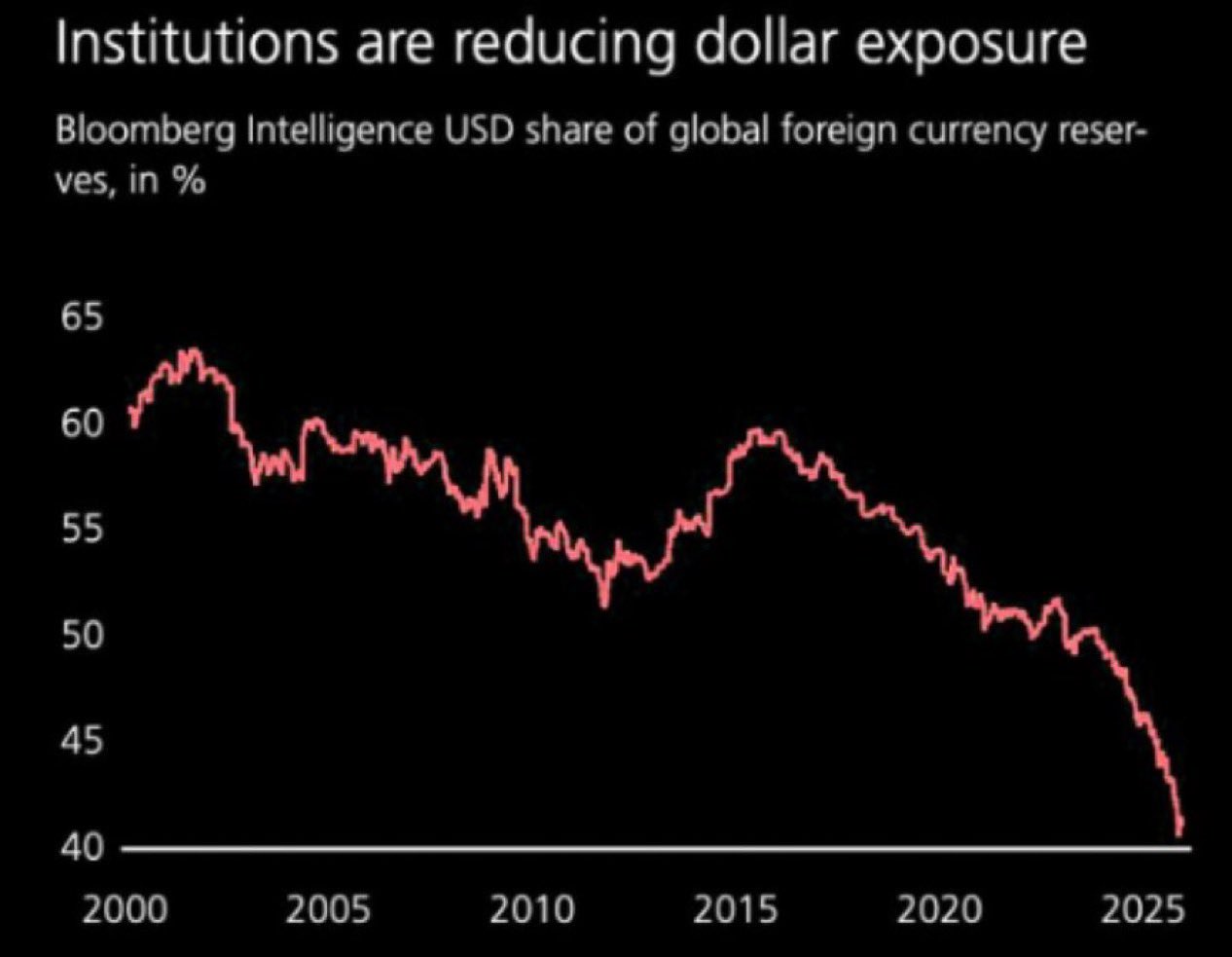
US Dollar Share of Global Foreign Exchange Reserves Falls to Lowest Level This Century
The US dollar's share of global foreign exchange reserves has declined to its lowest level this century, continuing a gradual shift in the composition of central bank reserve holdings.
According to the International Monetary Fund's Currency Composition of Official Foreign Exchange Reserves data, the dollar accounted for approximately 56.70% of global foreign exchange reserves during the second quarter of 2026, down from 57.18% in the previous quarter.
The share has declined substantially from levels near 71% around the beginning of the century. Central banks have gradually diversified a portion of their foreign currency reserves into other currencies, including the euro and a range of smaller reserve assets.
The latest decline does not mean the dollar is no longer the world's dominant reserve currency. It continues to represent more than half of allocated foreign exchange reserves and remains central to global trade, financing and international financial markets.
Changes in currency valuations can also affect reserve shares even when central banks make relatively limited transactions. Exchange-rate movements therefore need to be distinguished from deliberate diversification decisions.
The decline in the dollar's reserve share is occurring alongside a recent strengthening in the US Dollar Index, which reached its highest level since March 2025. These developments are not contradictory: one measures the composition of central bank reserves, while the other measures the dollar's exchange rate against a basket of currencies.
The long-term trend reflects gradual diversification rather than evidence of an immediate collapse in dollar demand. Future reserve allocations will depend on global financial conditions, confidence in major currencies and the availability of sufficiently liquid alternative assets.