Nvidia Loses Trillions in Market Value as Its AI-Led Selloff Outpaces the Entire Crypto Market
Nvidia $NVDA has suffered one of the largest market capitalization declines ever recorded by a publicly traded company, losing trillions of dollars in equity value since its early October peak as investors reassess the outlook for AI infrastructure spending.
The chipmaker closed November 20 near $125.53 per share, down approximately 14% for the session and almost 48% from its October highs. Its market capitalization stood near $3.03 trillion, compared with levels above $5.5 trillion during the earlier rally.
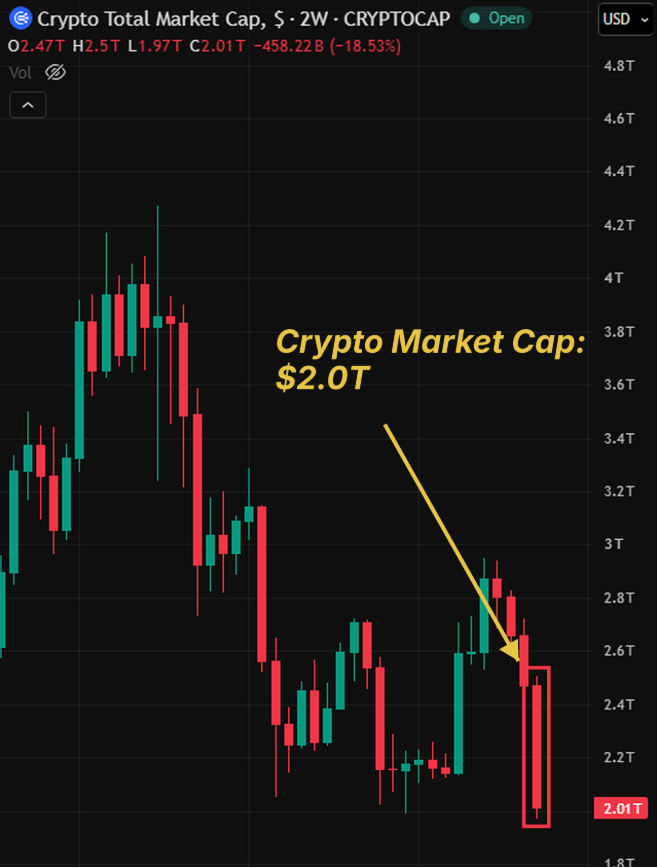
Depending on the exact peak date and share-count methodology, the decline in Nvidia's market capitalization has approached or exceeded $2.5 trillion. That is greater than the approximately $2 trillion value of the entire cryptocurrency market reported during the latest crypto selloff.
Nvidia also recorded its seventh consecutive weekly decline, losing roughly 23% during the latest trading week. The performance marked one of its steepest weekly setbacks since the global financial crisis, despite the company recently reporting quarterly revenue of $115.8 billion, more than double the previous year's figure.
The contrast between revenue growth and share-price weakness illustrates the importance of expectations in equity valuation. Nvidia's shares previously reflected assumptions of continued rapid expansion, high profit margins and substantial spending by AI companies and cloud providers. Investors are now questioning how long those conditions can persist.
The stock's decline has had an unusually large influence on the S&P 500 because of Nvidia's weight in the index. However, comparisons attributing a particular fraction of total index market capitalization losses to one company depend on using the same dates and valuation methodology across all constituents.
Market capitalization losses should not be interpreted as cash withdrawn from Nvidia's accounts or as realized losses for every shareholder. They represent the reduced market value of the company's outstanding equity at prevailing prices.
The scale of the correction demonstrates how concentrated AI-related valuations have become within US equity markets. A sustainable recovery will depend on confidence in future earnings, customer capital spending, leadership stability and the broader market's willingness to support high-growth technology valuations.