Markets Face Three Key Questions After Democratic Blue Wave: Iran War, Treasury Yields and the Debasement...
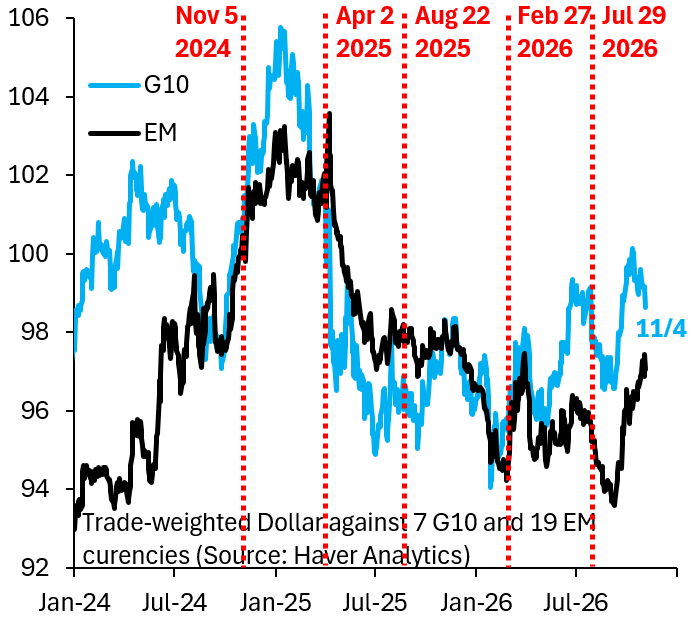
The Democratic blue wave in the latest U.S. midterm elections represents a major rebuke to President Trump. The key question is whether the outcome pushes him toward de-escalation with Iran or leads to a renewed military campaign. That decision could determine whether oil prices continue falling or experience another sharp spike.
**1. Will the Iran War Come to an End?**
The outlook remains uncertain. A resumption of U.S. bombing operations against Iran, which have been paused since April, remains a possibility. Brent crude has fallen to $102, reflecting significant expectations of de-escalation. The recent decline also reinforces the view that elevated oil prices last week were largely driven by geopolitical risk premiums rather than stronger supply-demand fundamentals.
**2. Will Long-Term Treasury Yields Decline?**
Some market participants have linked rising long-term yields to hyperscaler debt issuance and AI infrastructure spending. However, the author remains skeptical, arguing that the primary driver is the U.S. budget deficit, which stands at approximately 6.5% of GDP. He also sees little reason to expect meaningful fiscal discipline following the midterms. Meanwhile, the 10-year, 10-year forward yield remained unchanged from the previous day.
**3. Will the Debasement Trade Make a Comeback?**
Precious metals posted strong gains:
- Gold: +3.0%
- Silver: +4.6%
- Platinum: +3.3%
- Bitcoin: +0.5%
Although falling oil prices may also be supporting precious metals, Bitcoin's relatively modest gain suggests a less favorable environment for crypto following the midterms.
The author is cautiously optimistic that the election results could mark a positive turning point for the debasement trade, provided the Iran conflict does not escalate into a renewed hot war.