Chainflip Loses $4.86 Million in Ethereum Vault Exploit as FLIP Plunges Over 30%
Cross-chain exchange protocol Chainflip suffered an approximately $4.86 million security incident on November 21 after an attacker used a valid cryptographic signature to withdraw the entire liquid balance of its Ethereum vault.
Blockchain analytics firm Bitquery identified a single transaction at 07:10:59 UTC that removed approximately 520.2 ETH, 3.25 million USDC and 758,000 USDT. The transaction was authorized by a signature accepted by the vault's smart contract, although its sequence number differed from the normal signing pattern.
The attacker rapidly converted the stolen stablecoins into Ether through Uniswap before transferring the proceeds to Tornado Cash. Approximately 2,909 ETH reached the privacy protocol through 38 deposits within eight minutes of the vault withdrawal, complicating subsequent efforts to trace the funds.
Bitquery examined nearly 300,000 signatures previously accepted by the vault and found that the exploit transaction was the only one with the unusual sequence-number behavior. The findings suggest that the attacker obtained or misused valid signing authority, but they do not establish exactly how that occurred.
Chainflip's validator network subsequently rotated its signing key and suspended normal operations. The protocol entered a protective mode while investigators assessed the incident and the security of its remaining infrastructure.
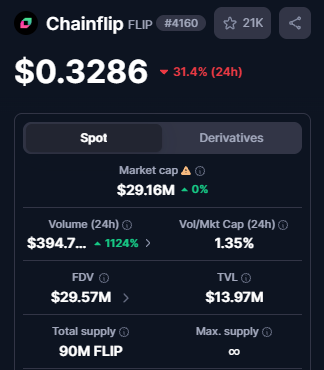
The breach triggered heavy selling in Chainflip's native token $FLIP, which declined more than 30% as the market reacted to the loss of funds and uncertainty surrounding the protocol's security arrangements. The precise percentage varied across exchanges and observation times.
The incident is particularly significant because Chainflip relies on a distributed validator system to authorize cross-chain transfers. A transaction carrying a cryptographically valid signature can still be malicious if the underlying authorization mechanism has been compromised.
The investigation remains ongoing. The confirmed on-chain transfers establish the movement of funds, but the identity of the attacker, the method used to obtain signing authority and the prospects for recovering the stolen assets remain unresolved.