Democratic sweep of Congress sparks market volatility as Wall Street weighs historical risks
Democrats have won control of both the House and Senate in the US midterm elections, ending Republican control of Congress and setting up a divided government under President Donald Trump.
US stock futures initially fell sharply following the results, with Nasdaq-100 futures dropping as much as 2.4% and S&P 500 futures losing 1.4%. Both later reversed their losses as investors reassessed the implications of divided government.
The political shift has revived debate over how congressional control affects stock market performance.
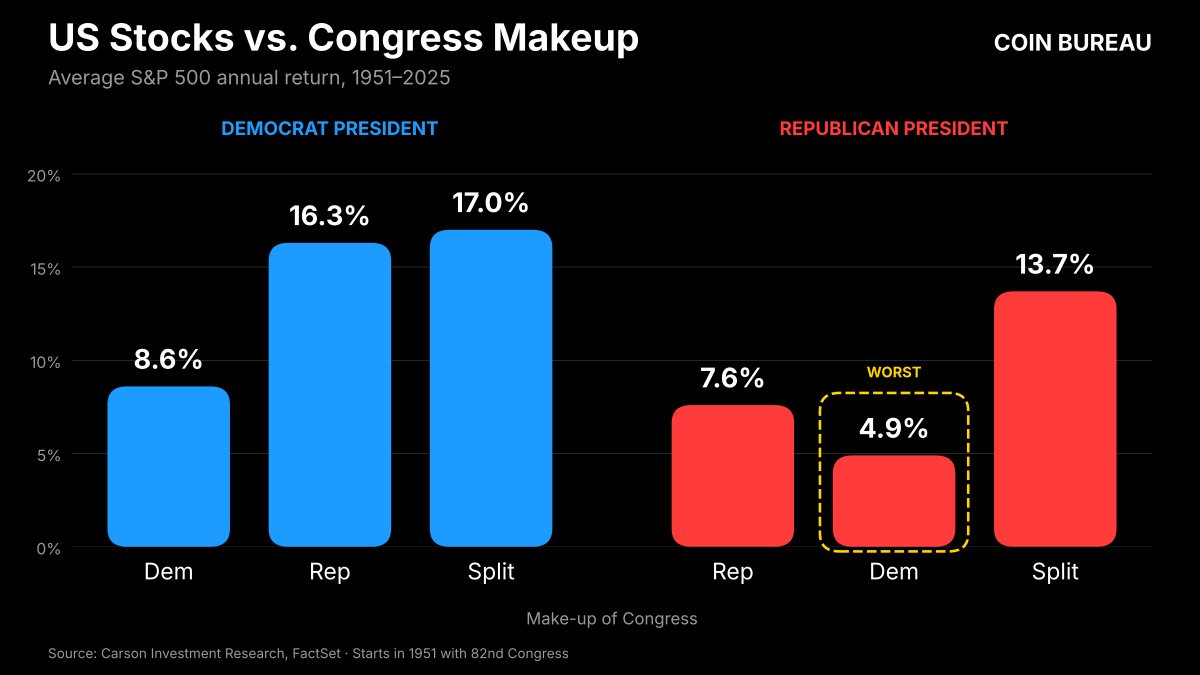
Historical comparisons suggest that the combination of a Republican president and Democratic-controlled Congress has delivered relatively modest average S&P 500 returns. However, those figures are heavily influenced by individual economic crises, including the 2008 financial collapse.
Democratic takeovers of Congress have also been followed by positive stock market returns in several previous election cycles, underscoring the limits of using political outcomes alone to forecast equities.
Investors now face competing considerations: greater legislative gridlock could constrain major policy changes, while tighter oversight of AI, technology companies and financial markets could create new uncertainty.
Corporate earnings, inflation and Federal Reserve policy are likely to remain more important drivers of longer-term market performance than historical election patterns alone.
Source: Reuters, Associated Press (November 4, 2026)