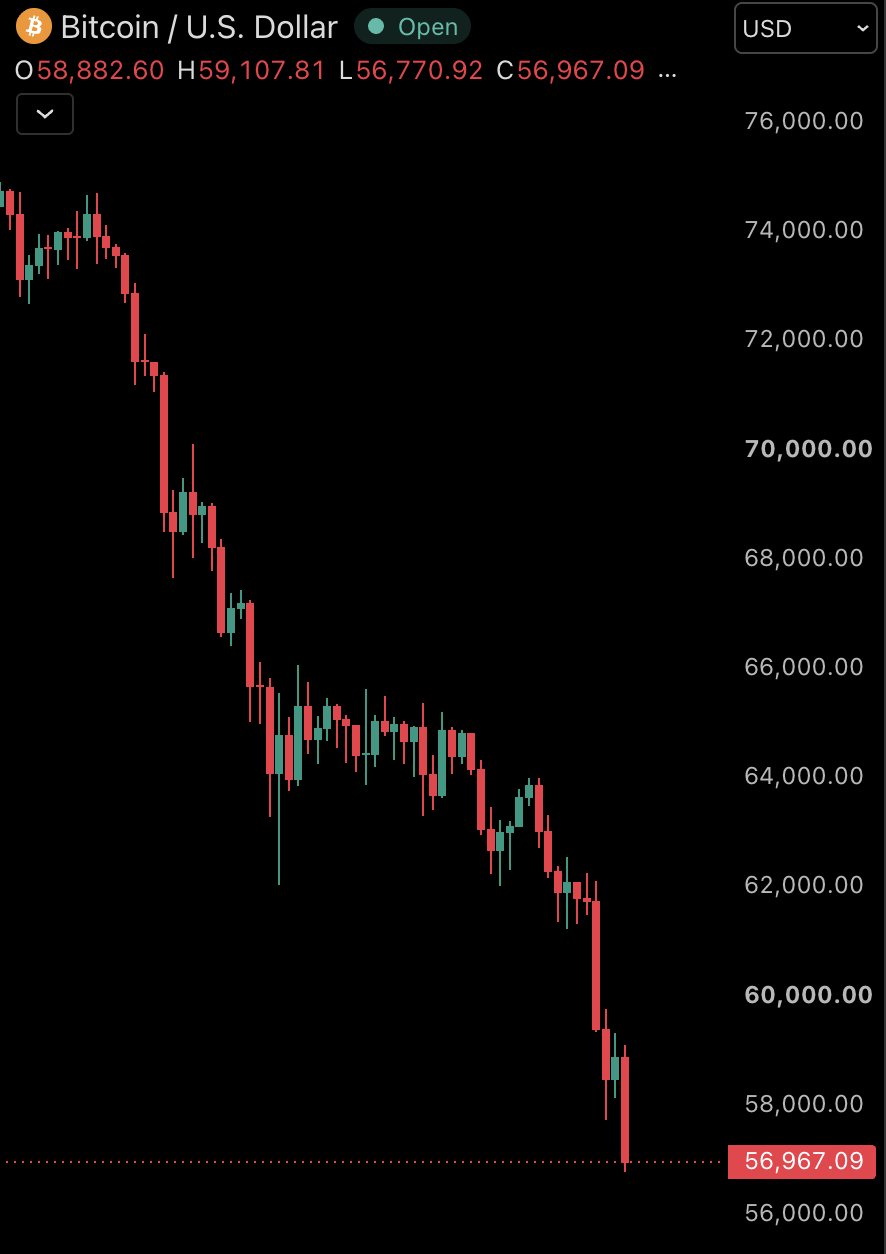
Bitcoin Erases Post-2024 Election Gains as Crypto Market Suffers Deep Correction
Bitcoin $BTC fell below $57,000 on November 21, reaching its lowest level since September 2024 and wiping out the price gains accumulated since Donald Trump's victory in the November 2024 US presidential election.
Reuters reported that Bitcoin declined to approximately $55,830 during Saturday's trading, extending its losses after breaking below $60,000 the previous day. The decline has pushed the cryptocurrency beneath its pre-election level of roughly $68,000, reversing a substantial rally that followed expectations of a more supportive US regulatory environment.
The correction comes after Bitcoin reached a record above $126,000 in October 2025. Its retreat illustrates how quickly sentiment can reverse when liquidity conditions deteriorate and investors reduce exposure to speculative assets.
The broader cryptocurrency market has experienced similar pressure, with major tokens declining and leveraged positions being liquidated across exchanges. Market commentary estimates that the sector has lost approximately $2.3 trillion in capitalization from its historical peak, although the exact comparison depends on the dates and assets included in the calculation.
The selloff has coincided with weakness in US technology stocks, uncertainty surrounding AI infrastructure valuations and expectations of restrictive Federal Reserve policy. Higher borrowing costs and declining risk appetite have placed pressure on assets that benefited from abundant liquidity during earlier market rallies.
Bitcoin's return below its November 2024 price level is significant because it removes the market's cumulative price appreciation over that political period. However, the comparison does not demonstrate that the election was the sole cause of the original rally or the subsequent decline.
The latest move reflects a deterioration in both market momentum and investor confidence. Future price direction will depend on renewed spot demand, institutional fund flows and the broader financial environment rather than the historical election-price benchmark alone.