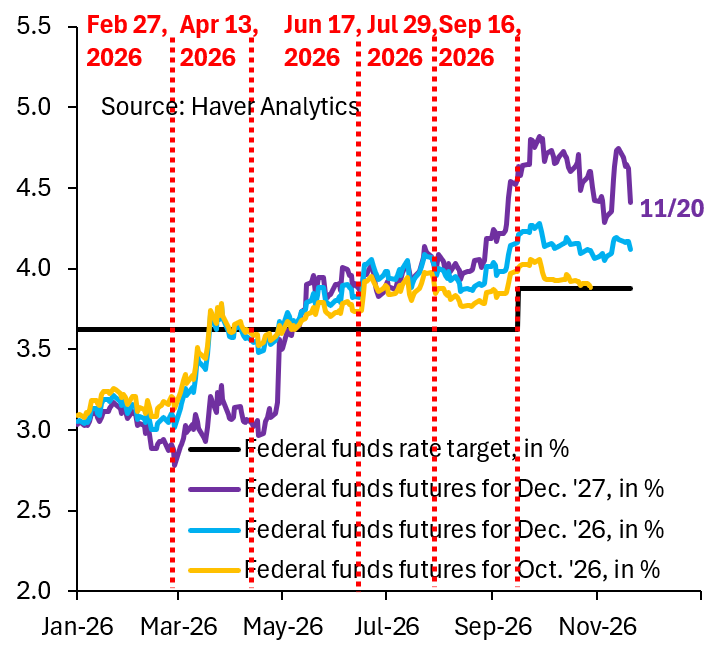
Robin Brooks Warns Fed Must Pivot Dovish Before November 28 Blackout to Prevent Deeper Market Sell-Off
Economist Robin J. Brooks warned that global markets face severe downside risks next week unless the Federal Reserve shifts toward a more dovish stance before its pre-meeting communications blackout begins on Saturday, November 28. Following a sharp Friday sell-off into the close, Brooks outlined three primary catalysts threatening market stability:
- Federal Reserve Policy and Real Rates: Brooks attributed recent equity weakness to Fed officials doubling down on hawkish rhetoric without accounting for falling oil prices, which have pulled down breakeven inflation expectations and pushed real interest rates higher. While interest rate futures have repriced cumulative rate hikes through the end of 2027 from nearly 100 basis points down toward 50 basis points, Brooks argued that Fed Chair Kevin Warsh and policymakers must validate that dovish shift before the blackout ahead of the December 8–9 FOMC meeting.
- Carry Trade Unwinds and Credit Event Risks: Erratic cross-asset volatility has triggered sharp U.S. dollar appreciation against emerging market currencies, signaling forced liquidations in popular short-dollar, long-EM carry trades. Brooks noted that mounting stress across low-volatility leveraged strategies increases the risk of a broader credit event.
- Middle East Escalation and Oil Shock Risks: With the blockade on Iranian oil exports remaining intact—evidenced by Chinese crude imports holding roughly 2 million barrels per day below pre-war levels—continued attacks on Western shipping raise the threat of renewed "hot" conflict. Brooks warned that a sudden 10% spike in crude prices could trigger an additional 4% drop in gold amid already disorderly trading conditions.