Foreign Equity Inflows Into US Reach Record 3% of GDP as Demand Shifts Away From Bonds
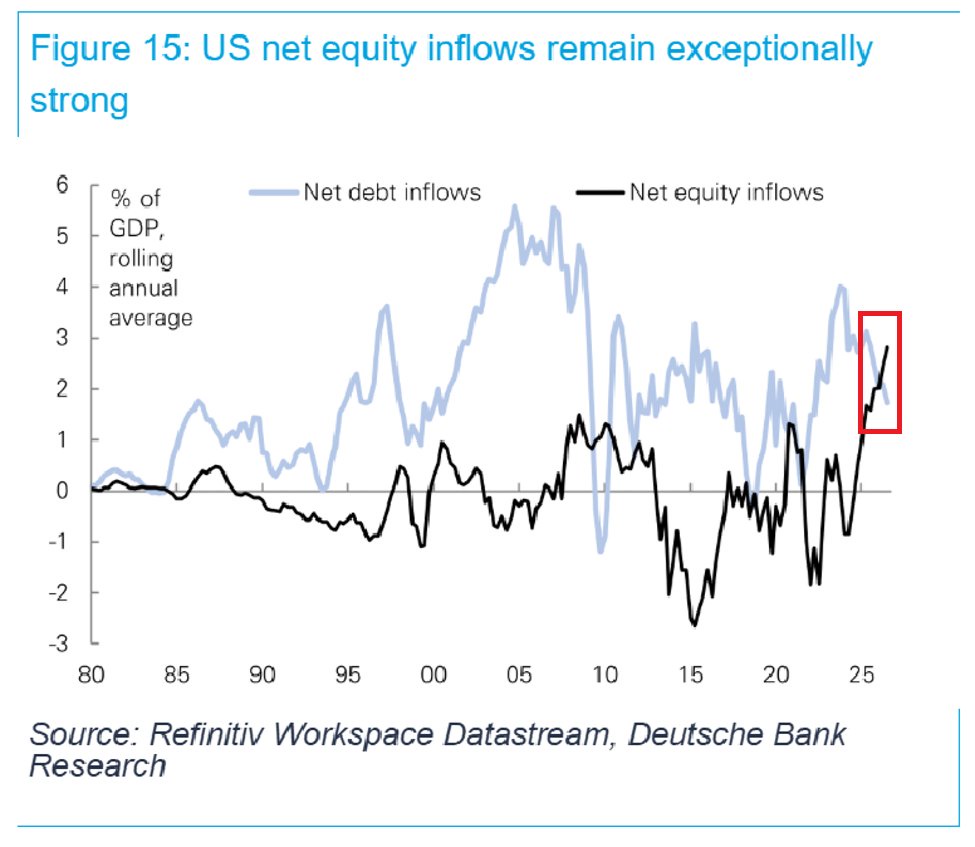
Net foreign investment flows into US equities have reportedly reached approximately 3% of GDP, the highest level in a historical series extending back to the 1980s.
The measure compares foreign purchases of American stocks with US investors' purchases of overseas equities. Its increase indicates that net cross-border investment is increasingly favoring the US equity market.
According to the reported data, net equity inflows have risen by nearly five percentage points of GDP since the 2022 bear-market low. The change reflects a substantial reversal in international investment patterns during a period dominated by strong demand for American technology companies.
Meanwhile, net debt inflows have declined to approximately 1.8% of GDP, their lowest level since 2022. The gap between net equity and debt inflows is reportedly the widest since the 2008 financial crisis.
The divergence suggests that overseas investors have increasingly favored American equities over US debt securities on a net basis. Strong earnings expectations, the concentration of major AI companies in US markets and the relative performance of American stocks may have contributed to that preference.
However, net flows should not be confused with total foreign purchases. They measure investment entering the United States after subtracting US investment abroad, meaning changes on either side can affect the result.
The figures also describe aggregate cross-border capital movements rather than the behavior of every foreign investor. Continued equity inflows may support US asset valuations, but they can also increase sensitivity to changes in international risk appetite.
The reported record highlights the global importance of American equities, particularly as investors reassess technology valuations and the sustainability of AI-related investment.