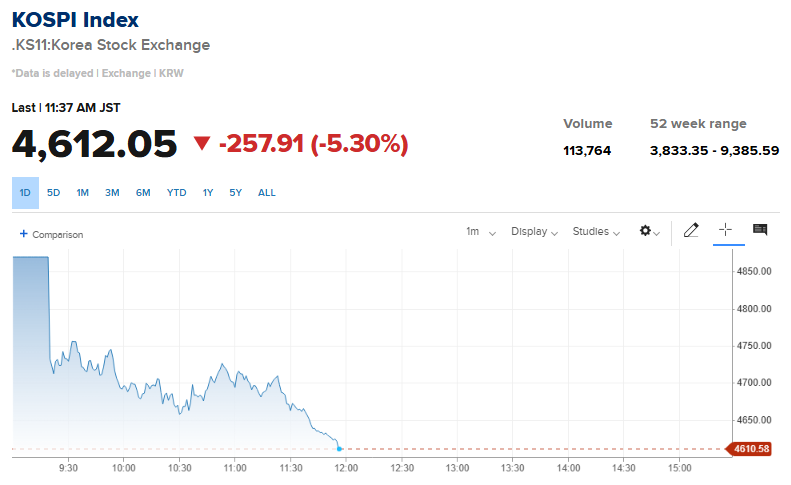
South Korea's KOSPI Plunges More Than 5% as Exchange Activates Emergency Trading Curb
South Korean equities extended their sharp decline on November 23, with the benchmark KOSPI falling more than 5% during morning trading as concerns about the global artificial intelligence sector continued to pressure semiconductor stocks.
The Korea Exchange activated a sell-side sidecar at 11:33 a.m. local time, temporarily suspending program sell orders for five minutes after the KOSPI 200 futures index fell sufficiently to trigger the market safeguard.
The measure was activated for a second consecutive trading session, reflecting the severity of selling pressure across South Korea's equity market.
Samsung Electronics and SK Hynix were among the companies under pressure as investors reacted to the sharp decline in US semiconductor shares. South Korea's substantial exposure to memory chips and AI computing supply chains has made its equity market particularly sensitive to changing expectations for technology investment.
The latest decline followed Friday's losses, when regional semiconductor stocks suffered heavy selling after Nvidia $NVDA and other US technology companies fell sharply.
A sell-side sidecar is designed to slow automated selling activity during unusually rapid market movements. It does not mean the entire stock exchange has permanently stopped trading or that all transactions have been canceled.
South Korean authorities are also preparing potential stabilization measures to address market volatility. Whether those actions restore confidence will depend on broader financial conditions, institutional capital flows and the outlook for global semiconductor demand.