Asian AI Chip Stocks Lose Ground as TSMC, Samsung, SK Hynix and SoftBank Lead Selloff
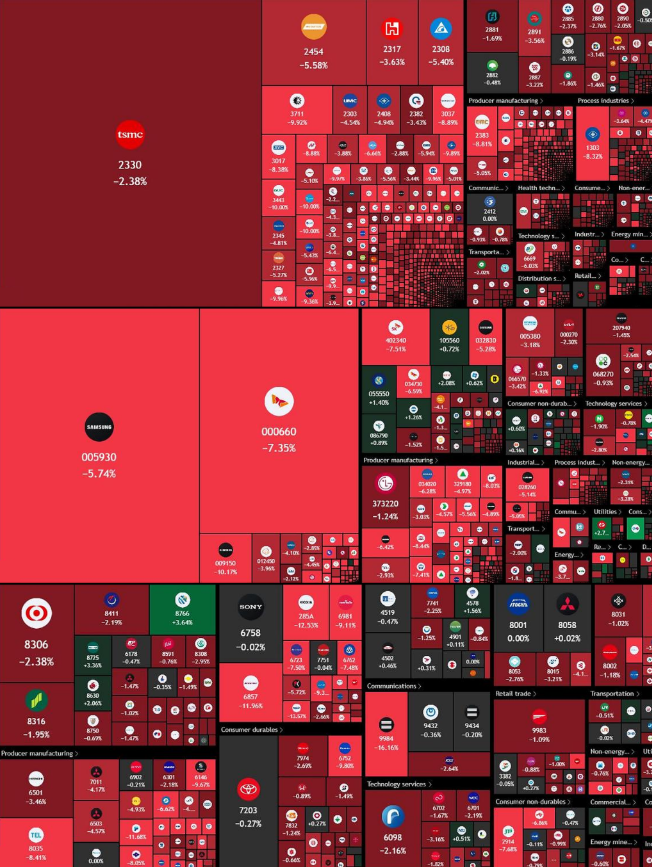
Asia's leading semiconductor and artificial intelligence stocks suffered another sharp selloff on November 20 as investors reassessed the valuations of companies exposed to the global AI infrastructure boom.
Taiwan's TAIEX fell 6.23%, South Korea's KOSPI declined 5.21% and Japan's Nikkei 225 lost approximately 5.06%. The declines followed another weak session on Wall Street, where concerns about the sustainability of AI investment continued to pressure technology shares despite Anthropic's highly anticipated market debut.
Taiwan Semiconductor Manufacturing Company $TSM fell approximately 4.8% in Taipei, while Samsung Electronics declined around 7% and SK Hynix lost nearly 6%. Japan's SoftBank Group, whose investments are closely tied to AI development, dropped approximately 14.5% at the close after falling even further during the session. Its decline was among the steepest since August 2024.
Market commentary estimated that TSMC, Samsung, SK Hynix and SoftBank collectively lost more than $190 billion in equity value. However, the exact combined figure depends on the valuation timestamps, local share prices and exchange rates used. The individual reported losses of $63 billion, $44 billion, $38 billion and $17 billion should therefore be treated as estimates rather than independently reconciled closing figures.
The downturn reflects concerns about the enormous capital commitments supporting AI expansion. Investors are questioning whether spending on processors, data centers and related infrastructure can continue increasing fast enough to justify elevated valuations across the semiconductor supply chain.
Additional uncertainty has come from US semiconductor export restrictions and scrutiny of the industry's relationships with Chinese customers. These developments affect revenue expectations and business risk differently across chip designers, manufacturers and equipment suppliers.
The selloff has pushed several Asian technology benchmarks substantially below their previous peaks. While valuations have corrected sharply, the depth of the decline does not establish that AI demand has collapsed. Future performance will depend on customer spending, earnings expectations, export policy and whether buyers return to semiconductor shares after the repricing.