America's debt problem is getting harder to ignore, but Washington barely talks about it
The US is spending far more than it collects, and the long-term fiscal outlook is becoming increasingly difficult to ignore.
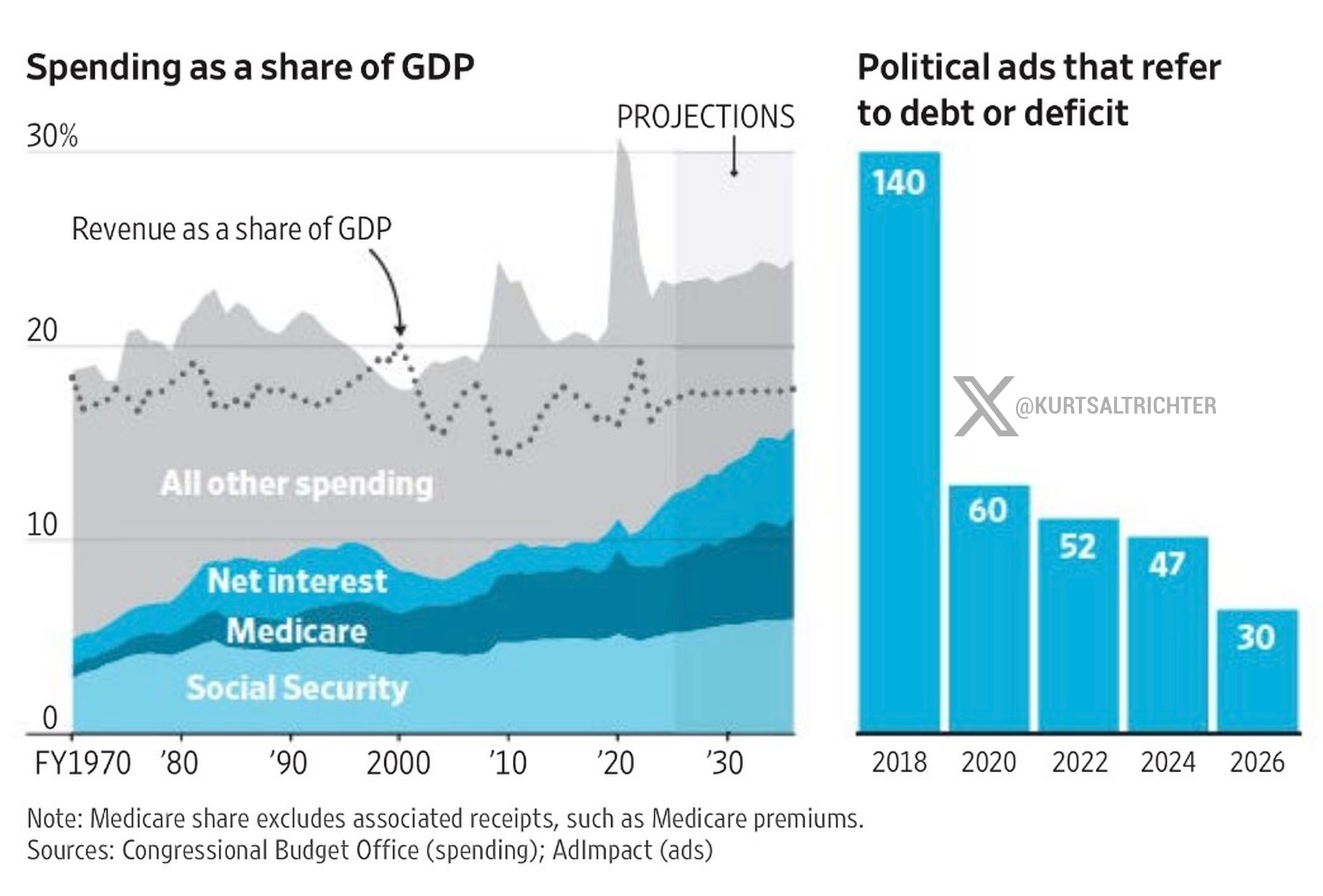
According to the Congressional Budget Office's 2026 projections:
- Federal spending: 23.3% of GDP
- Federal revenue: 17.5% of GDP
- Budget deficit: 5.8% of GDP
- Debt held by the public: approximately 101% of GDP
- Net interest costs: more than $1 trillion annually
And here's where the problem gets complicated.
Social Security, Medicare, and interest payments are becoming increasingly important drivers of federal spending, leaving policymakers with difficult choices over taxes, benefits, and other government programs.
Interest costs alone are projected to exceed $1 trillion in 2026, consuming resources that could otherwise support public services or reduce borrowing.
Meanwhile, federal debt held by the public is projected to climb to 120% of GDP by 2036, surpassing its previous post-World War II record.
Yet fiscal discipline remains a difficult political issue.
Reducing deficits requires choices that are rarely popular: raising revenue, slowing spending growth, reforming major programs, or some combination of these measures.
The consequences extend beyond Washington.
Persistent deficits and growing debt-service costs can put pressure on Treasury yields, increase refinancing risks, and reduce the government's flexibility during future economic downturns.
For investors, the US fiscal outlook isn't just a political debate. It has implications for bonds, interest rates, the dollar, and long-term financial stability.
The biggest question isn't whether America can keep borrowing.
It's how long borrowing costs can continue rising before policymakers are forced to make more difficult decisions.
Source: Congressional Budget Office, 2026 Budget Outlook; Committee for a Responsible Federal Budget