markets
UConn's 'Queer Science' Event Sparks Discussion on STEM Diversity
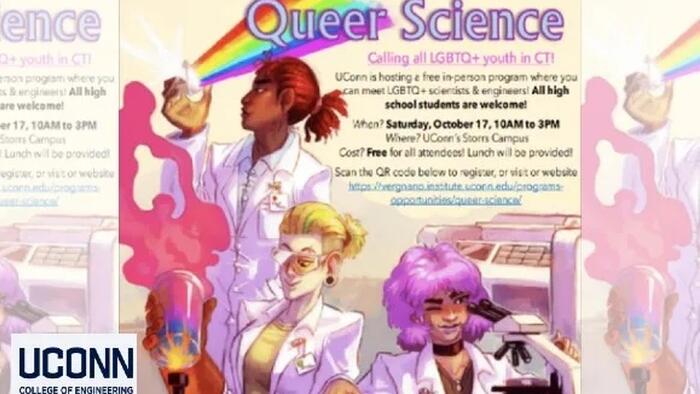
The University of Connecticut's 'Queer Science' event, recruiting LGBTQ+ scholars for high school students, highlights ongoing STEM diversity efforts.
The University of Connecticut's College of Engineering recently hosted a "Queer Science" event for high school students, actively recruiting LGBTQ+ scientists and engineers as volunteers. This initiative, reported by ZeroHedge, aims to support high school students who identify as or are allies of LGBTQIA+ individuals interested in science, technology, engineering, and mathematics (STEM) fields. The event highlights ongoing discussions around diversity and representation within scientific communities and educational programs.
Key takeaways
The University of Connecticut's College of Engineering organized a "Queer Science" event for high school students, focusing on STEM engagement.
The event specifically sought LGBTQ+ scientists and engineers to volunteer, aiming to provide role models for LGBTQIA+ students and allies.
Activities included lab tours and hands-on STEM demonstrations, such as DNA extraction and making ice cream with liquid nitrogen.
Similar "Queer Science" programs are also active at the University of Minnesota and the Georgia Institute of Technology.
Table of Contents
What Happened at the UConn "Queer Science" Event
Why STEM Diversity Initiatives Matter
Broader Context: Similar Programs and Funding Questions
What to Watch Next in STEM Diversity Discussions
What Happened at the UConn "Queer Science" Event
The University of Connecticut's College of Engineering hosted its "Queer Science" conference, a complimentary event designed for high school students with an interest in STEM fields. According to ZeroHedge, the university actively recruited "LGBTQ+" scientists and engineers to volunteer. The event's stated purpose is to "support the success" of high school students who are either LGBTQIA+ or allies, as detailed on the event's webpage. Participants spent a day engaging in various STEM activities, including laboratory tours and hands-on experiments, alongside "proud LGBTQIA+ students and researchers at UConn."
This year's event, held on October 17, saw 18 high school students participate in activities such as extracting DNA from a pumpkin and creating ice cream using liquid nitrogen, showcasing chemistry principles. A university article cited by the source clarified that "queer science" can be defined as "any science conducted by a queer researcher." The event aims to challenge the "stereotypical image of a 'scientist' as a straight, white, cisgender man" and encourage students of diverse identities to envision themselves in STEM careers. The "Queer Science" event has been a recurring initiative since 2022, with the goal of supporting Connecticut youth through state-of-the-art laboratory experiences and practical science demonstrations.
Why STEM Diversity Initiatives Matter
Initiatives like the University of Connecticut's "Queer Science" event underscore a broader movement within educational and scientific institutions to enhance diversity, equity, and inclusion (DEI) in STEM fields. For educators and policymakers, fostering an inclusive environment is seen as crucial for attracting a wider talent pool and promoting innovation. The event's focus on providing visible LGBTQ+ role models aims to address potential barriers to entry and feelings of exclusion that students from underrepresented groups might experience. This approach aligns with the idea that diverse perspectives can enrich scientific inquiry and problem-solving.
While the university emphasizes that all students and scientists are welcome, the event specifically frames itself as an opportunity for LGBTQ+ high school students to connect with LGBTQ+ scientists and engineers. A volunteer registration form for this year's conference reportedly stated, "We appreciate the support from our straight cis allies but would like all of the scientists and engineers helping on the day of Queer Science to also identify as queer/LGBTQ+." This specific recruitment criterion highlights an intentional effort to create a space where students can see themselves represented and supported by mentors who share similar identities, potentially fostering a stronger sense of belonging and encouragement in STEM pursuits. For readers following broader general market briefs , this type of initiative reflects evolving social and educational priorities.
Broader Context: Similar Programs and Funding Questions
The University of Connecticut's "Queer Science" event is not an isolated initiative. Similar programs are reportedly in operation at other public institutions, including the University of Minnesota and the Georgia Institute of Technology. All three institutions are noted by ZeroHedge to use nearly identical imagery for their respective "Queer Science" programs. The University of Minnesota's program, for instance, also relies primarily on volunteers, referred to as "volunqueers," who identify as LGBTQ+. Their Queer Science Day aims to bring local high schoolers to the university for hands-on experiments, demonstrations, and community building. Similarly, Georgia Tech's program seeks to provide high schoolers with opportunities to meet LGBTQIA+ scientists, engage in interactive demonstrations, and discover their passion for STEM.
The source context also raises questions regarding the funding of the University of Connecticut's "Queer Science" project, noting that it is unclear how the project is funded or if tax dollars are utilized. The College Fix reportedly contacted the university's media relations office for comment on the event's volunteer criteria and funding but did not receive a response to multiple inquiries. The event is sponsored by the university's Vergnano Institute for Impact, which, according to its website, works to "help students discover opportunities in STEM" through various K-12 educational events. The University of Connecticut has previously funded other LGBTQ-linked science programs, including DEI grants for projects aimed at increasing diversity in marine science and mathematics, as reported by The Fix last year.
What to Watch Next in STEM Diversity Discussions
The ongoing discussions surrounding initiatives like the University of Connecticut's "Queer Science" event highlight the evolving landscape of diversity and inclusion efforts within academic and scientific communities. As institutions continue to explore ways to make STEM fields more accessible and representative, observers may watch for further details on the effectiveness and impact of such targeted programs. The debate often centers on balancing broad inclusivity with specific identity-focused outreach, and how these strategies contribute to the overall goal of a more diverse scientific workforce.
Future developments could include additional disclosures from universities regarding the funding mechanisms for these types of programs, particularly in response to inquiries about the use of public funds. Furthermore, the expansion or adaptation of similar initiatives at other educational institutions may provide more insight into best practices and challenges in promoting STEM diversity. The conversation around "Queer Science" events and their role in shaping the next generation of scientists and engineers is likely to continue as institutions strive to meet their diversity goals while navigating public scrutiny and differing viewpoints on educational approaches.
Frequently Asked Questions
What is the University of Connecticut's "Queer Science" event?
The University of Connecticut's "Queer Science" event is a free conference for high school students interested in STEM, designed to support LGBTQIA+ students and allies. It features lab tours, hands-on STEM activities, and interactions with LGBTQ+ scientists and researchers.
What is the purpose of the "Queer Science" event?
The event aims to counter the stereotypical image of a scientist and invite students of diverse identities, particularly LGBTQIA+ individuals, to imagine themselves pursuing careers in STEM fields. It also provides state-of-the-art laboratory experiences and hands-on science demonstrations.
Who volunteers at the "Queer Science" conference?
The event specifically recruits LGBTQ+ scientists and engineers to volunteer. While allies are appreciated, the volunteer registration form for this year's conference stated a preference for volunteers who identify as queer/LGBTQ+.
Are there similar "Queer Science" programs at other universities?
Yes, similar programs are reportedly in operation at the University of Minnesota and the Georgia Institute of Technology, both of which also focus on bringing high school students to campus for hands-on STEM experiences with LGBTQ+ mentors.
Is the funding for the "Queer Science" event publicly known?
According to the source context, it is not clear how the project is funded or if tax dollars are used. The College Fix reportedly sought comment from the university on funding but did not receive a response.
Read original source